Blank Plastic Cards for Security Access Control Solutions
Table of Contents []
- Blank Plastic Cards for Security Access Control - Plastic Card ID
- Why Blank Plastic Cards Are the Smart Foundation for Any Access Control Program
- Magnetic Stripe Cards for Access Control: HiCo vs. LoCo Explained
- RFID and Proximity Cards: Contactless Security Access That Scales
- Building a Complete In-House ID and Access Card Program
- Frequently Asked Questions: Blank Plastic Cards for Security Access Control
- Industries Served: Who Uses Blank Plastic Cards for Security Access Control
- Your Program Starts Here - Contact Plastic Card ID Today
Blank Plastic Cards for Security Access Control - Plastic Card ID
What separates a secure facility from a vulnerable one often comes down to something surprisingly small - a card. Not a flimsy paper badge slipped into a plastic sleeve, but a genuine CR80 plastic card engineered for access control. The physical credential your team carries every day is your first line of defense, and the quality of that credential matters far more than most organizations realize until something goes wrong.
Plastic Card ID has been supplying blank plastic cards to security-conscious businesses across the United States for over 25 years, serving more than 100,000 customers and shipping more than 50 million cards. When it comes to blank plastic cards for security access control, few suppliers can match that depth of experience or that breadth of inventory. Whether you run a corporate campus, a healthcare facility, a school district, or a government contractor site, the right card stock is the foundation of a program that actually works.
| Card Type | Technology | Best Use Case | Read Method |
|---|---|---|---|
| Blank CR80 PVC | None (printable) | Visual ID badges | Visual inspection |
| Magnetic Stripe (HiCo) | HiCo mag stripe | Encoded access, time tracking | Swipe reader |
| Proximity Card (125kHz) | RFID proximity | Door access, time attendance | Contactless tap |
| Smart Chip (MIFARE) | 13.56 MHz RFID | High-security multi-app access | Contactless reader |
| HID-Compatible Prox | 125kHz proximity | Legacy system compatibility | Contactless tap |
Why Blank Plastic Cards Are the Smart Foundation for Any Access Control Program
There is a logic to starting with blank. When your organization controls the printing process in-house, you gain something invaluable - flexibility. Personnel change, clearance levels shift, facilities expand. A supply of blank CR80 cards paired with a reliable ID card printer means you can issue, update, and replace credentials on your own schedule, without waiting on an outside vendor for every single badge.
The economics of blank card programs are hard to argue with. Per-card costs drop significantly when you purchase blank stock in volume and handle personalization internally. Over time, the savings compound - especially for organizations that regularly onboard new staff, manage seasonal workers, or operate multiple sites with varied access permissions.
CR80 Standard Cards: The Universal Credential
The CR80 format - 3.375 inches by 2.125 inches, 30 mil thick - is the ISO 7810 standard that defines the modern plastic card. It fits every standard card printer, every badge holder, every wallet slot. When you purchase blank CR80 cards from CPE, you are buying stock that is guaranteed to run clean through your printer and hold up under daily use.
Consistency in card stock is not a small thing. Inferior blanks warp, jam, and produce uneven print results. Quality CR80 cards from a trusted supplier mean your printer operates at peak performance, your badges look professional, and your cardholders are not dealing with credentials that curl or crack after a few weeks of use.
Volume Flexibility for Organizations of Any Size
One of the persistent myths about in-house card programs is that they only make sense at enterprise scale. Not true. Plastic Card ID works with organizations running as few as 50 cards per month all the way up to operations producing tens of thousands of credentials at a time. The pricing structure and service model are designed to scale with you, not against you.
A small medical practice issuing staff ID badges has very different needs than a university managing campus-wide access for thousands of students and employees. Both benefit from quality blank card stock. Both deserve a supplier who understands their program and can fulfill orders reliably - every time, not just the first time.
Card Printers and Supplies to Complete Your Program
Blank cards are only half the equation. CPE carries a full lineup of card printers from industry leaders including Evolis, Zebra, and Fargo - brands that security professionals and ID program managers trust for consistent, high-resolution output. Selecting the right printer for your volume, encoding requirements, and security features is something the team can help you navigate.
Beyond the printers and blanks, the supply catalog includes printer ribbons, cleaning kits, card carriers, and protective sleeves - everything needed to keep your program running smoothly. Having a single trusted source for all your card program supplies eliminates the complexity of juggling multiple vendors and ensures compatibility across your entire setup.
Magnetic Stripe Cards for Access Control: HiCo vs. LoCo Explained
Magnetic stripe technology remains one of the most widely deployed access control mechanisms in the United States. It is mature, reliable, and compatible with a massive installed base of readers and systems. Understanding the difference between High Coercivity (HiCo) and Low Coercivity (LoCo) stripe cards is essential before placing your first order - the wrong choice can mean frequent re-encoding headaches.
HiCo cards, with a coercivity rating of 2750 Oe, are significantly more resistant to accidental erasure from everyday magnetic field exposure. For security access control applications, HiCo is almost always the correct specification. LoCo cards, at 300 Oe, are better suited for applications like hotel key cards where the data is temporary and frequent re-encoding is part of normal operations.
Why HiCo Is the Right Choice for Security Credentials
Think about what a security badge goes through in a typical workday. It rides in a pocket next to a phone. It gets set on a desk near a computer monitor. It passes through bag-check stations. Every one of those environments presents potential magnetic interference. A LoCo stripe will degrade under those conditions. A HiCo stripe will not.
Organizations that have switched from LoCo to HiCo magnetic stripe cards consistently report fewer access failures and fewer re-issue requests from staff. Fewer re-issues means lower total program cost and less disruption for employees who would otherwise be locked out waiting on a replacement card. The incremental cost difference between HiCo and LoCo blanks is small; the operational difference is not.
Encoding Tracks and Data Capacity
Standard magnetic stripe cards carry three tracks of data: Track 1 (alphanumeric, 79 characters), Track 2 (numeric, 40 digits), and Track 3 (numeric, 107 digits). Most access control systems use Tracks 1 and 2 for card holder ID, access level codes, and facility identifiers. Understanding which tracks your system reads ensures you order the right card spec from CPE and encode correctly from day one.
Multi-track encoding offers the ability to layer information - an employee ID on one track, a department access code on another, and time-based restrictions on a third. This layered data structure is what makes magnetic stripe cards a versatile tool for organizations that need nuanced access permission schemes without investing in more complex RFID infrastructure right away.
Contact CPE for Magnetic Stripe Card Orders
Placing a magnetic stripe card order is simpler than many buyers expect. You specify the card stock, the stripe color (standard black or the more discreet low-profile stripe options), the coercivity, and the quantity. Call 800.835.7919 and a product specialist will confirm your spec and walk you through volume pricing - no guesswork, no hidden minimums, no confusion.
Whether you need 500 blank HiCo cards to load into your existing encoding system or you are setting up a new access control infrastructure from scratch, the catalog has the stock and the expertise to support you. Orders ship fast across all 50 states, and repeat customers benefit from streamlined reorder processes that keep programs running without interruption.
RFID and Proximity Cards: Contactless Security Access That Scales
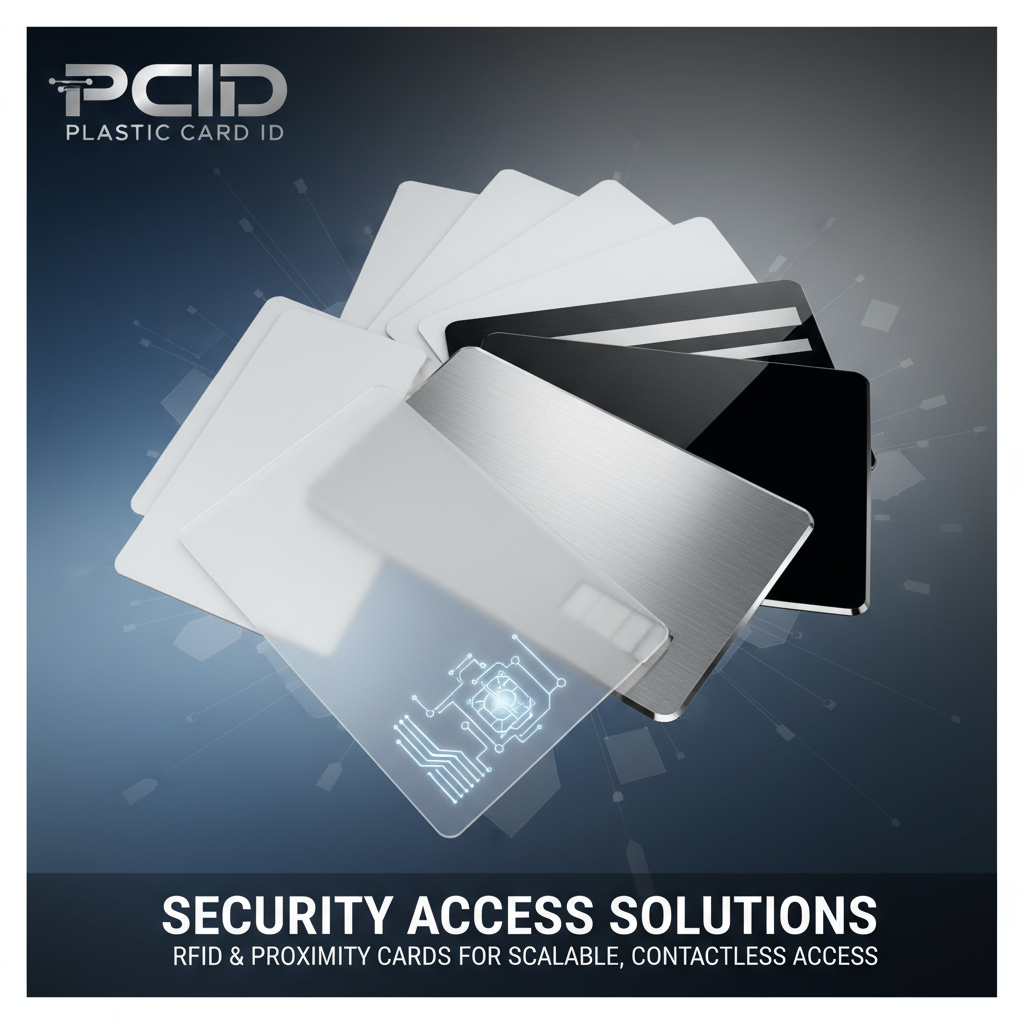 The shift toward contactless credentialing has been accelerating for years, and the reasons are compelling. Contactless cards are faster to use at access points - no fumbling to align a stripe, no physical contact with a reader that wears out over time. In high-throughput environments like manufacturing plants, hospital corridors, or university buildings, the seconds saved at every door access point add up to meaningful operational efficiency.
Proximity cards operating at 125kHz have been the workhorse of contactless access control for decades. They work with the vast majority of commercial access control systems deployed across American businesses and institutions. RFID smart cards operating at 13.56 MHz - including MIFARE DESFire - offer substantially greater data capacity, encryption capabilities, and multi-application support for organizations with advanced security requirements.
Proximity Cards: Reliable, Compatible, Cost-Effective
Blank proximity cards from Plastic Card ID are compatible with the most widely deployed access control reader families in the market. Each card carries a unique embedded ID number that is read by the door controller when the cardholder presents their credential. The result is fast, hands-free access without any swipe motion required - a meaningful advantage in environments where staff may have their hands full.
Proximity cards are passive devices - they carry no battery and require no user action beyond presenting the card to the reader. This passive design translates directly into long card life and virtually zero maintenance burden on the credential itself. The card simply works, day after day, until administrative policy retires it. That durability is why proximity remains so dominant even as newer technologies continue to mature.
MIFARE DESFire and Advanced Smart Card Technology
For organizations operating high-security environments - data centers, pharmaceutical facilities, government contractors, financial institutions - MIFARE DESFire represents a meaningful security upgrade over standard proximity. DESFire uses AES-128 encryption, mutual authentication, and a multi-application file structure that allows a single card to serve as an access credential, a time-attendance token, and even a cashless vending or cafeteria payment card simultaneously.
The ability to consolidate multiple credential functions onto a single smart card reduces the number of cards employees need to carry and simplifies the administrative burden of managing separate credential programs. When every employee only needs one card on their lanyard, compliance with carry requirements goes up and the risk of credential confusion goes down. CPE can help you spec the right MIFARE product for your system architecture.
Specialty and Custom Formats for Unique Access Needs
Standard CR80 is the right format for most programs. But some applications demand something different. Plastic Card ID offers specialty card formats including clear and frosted plastic, custom die-cut shapes, and luxury metal cards in stainless steel, brass, and gold for executive-level credentials or high-security VIP access programs where the card itself communicates status and exclusivity.
Casino player cards and hotel key cards are additional specialty areas where the product catalog runs deep. These applications have specific technical requirements - particular encoding formats, specific substrate thicknesses, surface treatments compatible with dedicated printer systems - and having a supplier experienced in these verticals means you get the right product the first time rather than learning through expensive trial and error.
| Frequency | Technology Family | Typical Range | Security Level |
|---|---|---|---|
| 125kHz | Proximity (EM4100, HID) | 2-12 inches | Standard |
| 13.56MHz | MIFARE Classic | Up to 4 inches | Medium |
| 13.56MHz | MIFARE DESFire EV2/EV3 | Up to 4 inches | High (AES-128) |
Building a Complete In-House ID and Access Card Program
A fully functional in-house card program has several moving parts - card stock, printer hardware, encoding equipment, design software, and consumables like ribbons and cleaning kits. Getting all of those elements right simultaneously is where many organizations stumble. They buy a great printer but source cheap card stock. Or they get quality blanks but pair them with a ribbon not optimized for that card's surface. The details matter, and experience matters in knowing which details to watch.
Building your program around a single supplier who carries every component simplifies procurement, ensures compatibility, and gives you a single point of accountability when questions arise. Plastic Card ID has spent 25 years helping organizations do exactly that - assemble complete card programs that run reliably and scale cleanly as organizational needs evolve.
Choosing the Right Card Printer for Your Volume and Features
Card printer selection hinges on three key variables: print volume, encoding requirements, and security features. An organization issuing 200 cards per month has very different hardware needs than one producing 5,000 cards per month. Entry-level printers from Evolis and Zebra handle lower-volume applications beautifully, while mid-range and high-throughput models from Fargo are engineered for demanding production environments.
Security features to consider include lamination modules for over-laminate protection against tampering, holographic overlaminates that add visual security to printed credentials, and magnetic stripe or smart card encoding modules built directly into the printer. A printer with integrated encoding capabilities eliminates a separate encoding step and speeds up the card issuance workflow considerably for high-volume operations.
Ribbons, Cleaning Kits, and the Supplies That Keep Programs Running
Card printers are precision devices, and they perform best when maintained correctly. Cleaning kits - rollers, cards, swabs, and solutions specifically designed for card printers - prevent the buildup of card dust and ink residue that degrades print quality over time. Skipping routine cleaning is one of the most common reasons card programs experience print defects and premature printhead failure.
Printer ribbons are consumable items that need regular replacement, and using the right ribbon for your specific printer and card stock combination is not optional - it is essential. CPE carries OEM-compatible ribbons for Evolis, Zebra, and Fargo printers, ensuring your prints are vivid, your card text is sharp, and your images are accurate. Using off-brand ribbons with incompatible chemical formulations is a false economy that typically ends in printhead damage.
Card Carriers, Sleeves, and Mailing Services
Issuing credentials is only part of the workflow. Getting cards to the right people - especially in distributed organizations where employees are not all in one location - requires thoughtful card delivery logistics. Plastic Card ID offers card affixing and mailing services that take the distribution burden off your team entirely, handling everything from stuffing cards into branded carriers to applying mailing labels and dropping packages in the mail stream.
Card sleeves and holders protect credentials during daily use, extending card life and maintaining the professional appearance of your program. A card that looks sharp after two years of use reinforces the credibility of your organization's security program in a way that a beat-up, scratched credential simply cannot. These small accessories are the finishing touch that separates a mature card program from an improvised one.
Frequently Asked Questions: Blank Plastic Cards for Security Access Control
Buyers new to in-house card programs often arrive with the same foundational questions. The answers below reflect the real-world experience of over 100,000 customers who have worked with Plastic Card ID to build and operate successful access control card programs across the United States.
What card format should I order for my access control system?
Start with your access control system's documentation or contact your system vendor to confirm which card technology they support. Most installed systems in the United States support either 125kHz proximity cards or 13.56MHz MIFARE cards - and many newer systems support both. Ordering the wrong technology is a costly mistake that a quick spec check before purchase easily avoids. The team at CPE can help you verify compatibility if you are uncertain.
For organizations with no existing infrastructure, the choice of card technology should be driven by your long-term security requirements and expected scale. Proximity is cost-effective and widely compatible. MIFARE DESFire is the right investment if advanced encryption, multi-application use, or future-proofing for higher security requirements is a priority.
How many blank cards should I keep on hand?
The right buffer stock depends on your monthly issuance rate, your lead time tolerance, and how unpredictable your credential demand is. A practical rule of thumb for most organizations is to maintain at least a 60-90 day supply of blank cards on hand at all times. Running out of card stock during a high-activity period - a new employee onboarding wave, a facility expansion, a security audit - is an easily avoidable disruption.
- Organizations issuing 50-200 cards per month typically maintain a buffer of 250-500 cards
- Mid-volume programs issuing 200-1,000 cards per month typically buffer 1,000-2,500 cards
- High-volume programs should calculate buffer stock based on their specific lead time and issuance variability
- Seasonal operations should order ahead of peak periods to avoid supply crunches
- Multi-site organizations benefit from centralized inventory with standardized card specs across all locations
Can I print on RFID and proximity cards?
Yes - most proximity and RFID cards are designed to accept printing from standard ID card printers. The embedded antenna and chip are laminated inside the card core, leaving the card surfaces available for full-color printing. This means your access cards can carry a photo, name, department, logo, and any other visual identification elements your policy requires - all on the same card that provides contactless access. Call 800.835.7919 to confirm which specific card products in the catalog are compatible with your printer model before ordering.
Combining visual ID with electronic access control on a single credential is a security best practice that allows visual verification to serve as a backup layer when electronic readers are offline or when staff need to identify an unfamiliar badge holder visually. It is also simply more convenient - one card does everything.
Industries Served: Who Uses Blank Plastic Cards for Security Access Control
The answer, frankly, is almost every type of organization operating in the United States. Security credentialing is not a specialized niche - it is a fundamental operational need that spans industries, sectors, and organizational sizes. What varies is the specific card technology, the volume, and the security requirements. Plastic Card ID has served them all.
Corporate and Commercial Facilities
Office buildings, corporate campuses, and commercial facilities of every scale rely on plastic access cards to control entry to restricted areas, track time and attendance, and manage visitor credentials. A well-managed access card program is a visible symbol of an organization's commitment to security - both to employees and to clients or visitors who observe the system in operation. Blank PVC cards with magnetic stripe or proximity technology are the standard for most corporate deployments.
Multi-tenant office buildings present a particular challenge: the same door hardware must serve employees of different companies, each with their own access permissions. Magnetic stripe and MIFARE cards both support the kind of tiered permission structures that property managers need to run a secure multi-tenant environment without issuing separate card sets to each tenant's staff.
Healthcare, Education, and Government
Healthcare facilities face regulatory requirements around facility access that make credential management a compliance issue as well as a security one. Schools and universities must balance open campus culture with meaningful access restrictions for sensitive areas like administrative offices, labs, and server rooms. Government contractors often operate under security clearance requirements that demand auditable access control with strong credential integrity.
Each of these sectors benefits from the combination of visual identification and electronic access on a single card - a combination that blank printable proximity or smart cards make straightforward to deploy. The ability to print in-house also means compromised or lost cards can be replaced quickly, limiting the window of vulnerability after a credential is reported missing.
Manufacturing, Warehousing, and Logistics
Industrial environments put credentials through punishing daily conditions - exposure to moisture, grease, temperature swings, and mechanical stress. Standard 30 mil CR80 PVC cards are built for these environments. The durability of a quality plastic card is not incidental - it is engineered, and that engineering shows up in reduced re-issue rates and fewer access failures in demanding operational settings.
Time and attendance tracking in manufacturing and logistics environments often uses the same proximity or magnetic stripe card that handles door access, giving workers a single credential for multiple functions. This consolidation simplifies the cardholder experience and reduces the number of credential types HR and facilities teams need to manage simultaneously.
Your Program Starts Here - Contact Plastic Card ID Today
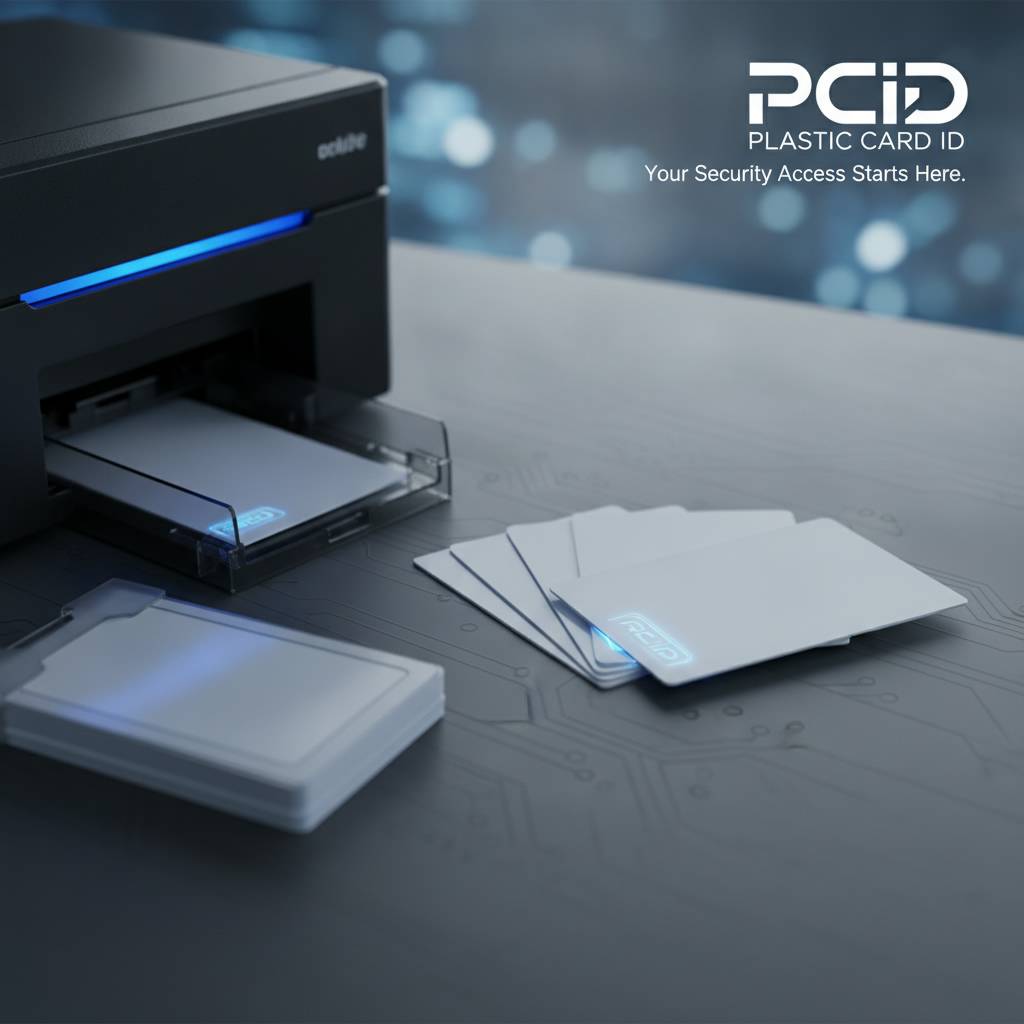 Twenty-five years. More than 100,000 customers. Over 50 million cards shipped. These numbers reflect something real - a sustained commitment to helping American organizations run card programs that work, day in and day out, at every scale from small business to enterprise. Plastic Card ID is not just a card vendor. It is a program partner.
Whether you are standing up a brand-new access control credential program, sourcing blank stock to keep an existing program running, or upgrading from an older technology to modern RFID smart cards, the catalog, the expertise, and the customer service infrastructure are ready to support you. Blank plastic cards for security access control are not a commodity purchase - the right card, the right technology, and the right supplier make a measurable difference in how well your program performs.
Call 800.835.7919 today and talk to a specialist at Plastic Card ID who understands what it takes to build a card program that is secure, scalable, and built to last. Your credentials define your access control - make sure they are built on a foundation you can trust.
Previous Page