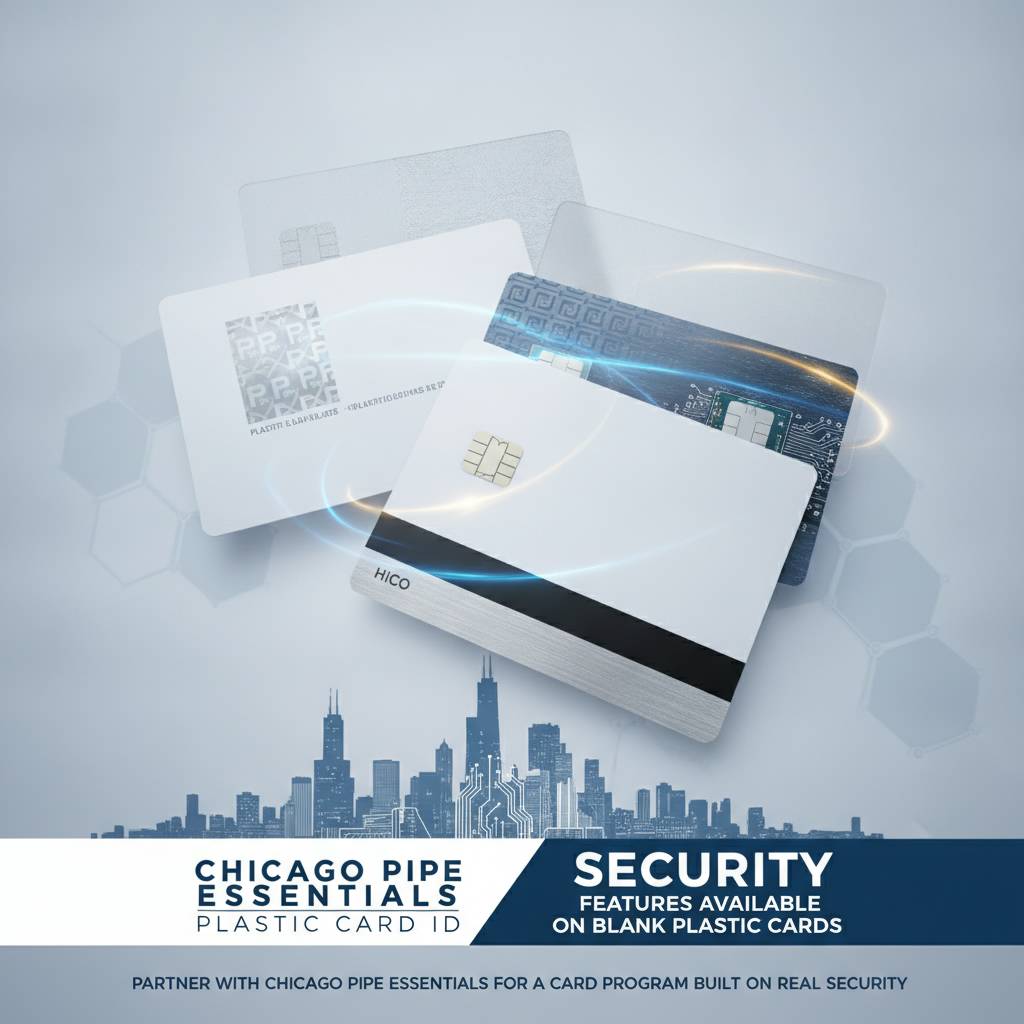
Security Features Available on Blank Plastic Cards
Table of Contents []
- What Security Features Are Actually Available on Blank Plastic Cards? Plastic Card ID
- The Foundation: CR80 PVC Card Construction and Why It Matters
- Magnetic Stripe Technology: HiCo vs. LoCo and What Each Protects
- RFID and Smart Chip Cards: Contactless Security at a Higher Level
- Specialty Card Options That Add Visual and Physical Security
- Building a Layered Security Strategy for Your Card Program
- Frequently Asked Questions About Security Features on Blank Plastic Cards
- Partner With Plastic Card ID for a Card Program Built on Real Security
What Security Features Are Actually Available on Blank Plastic Cards? Plastic Card ID
Most people assume blank plastic cards are just... blank. Featureless. A starting point with nothing interesting going on beneath the surface. That assumption costs businesses every single year - in fraud losses, counterfeiting exposure, and credential abuse that a few smart decisions at the procurement stage could have prevented entirely.
The truth is more compelling. Blank plastic cards can carry an impressive array of security features built right into the card stock itself, before a single image is printed or a single byte of data is encoded. Understanding what is available - and how to match those features to your program's actual threat model - is the difference between a card that looks professional and one that actually performs like a secure credential.
Plastic Card ID has spent over 25 years helping organizations across the United States make exactly that distinction. Whether you are running a loyalty program for 200 customers or deploying access credentials for a facility with thousands of employees, the security architecture of your card matters from day one.
| Feature Category | Best For | Security Level | Typical Use Case |
|---|---|---|---|
| HiCo Magnetic Stripe | High-traffic environments | Moderate | Employee badges, loyalty cards |
| RFID / Proximity | Access control systems | High | Facility entry, hotel keys |
| Smart Chip (Contact) | Secure data storage | Very High | Healthcare ID, campus cards |
| MIFARE DESFire RFID | Encrypted contactless systems | Very High | Casino player cards, enterprise access |
| Signature Panel | Identity verification | Low-Moderate | Membership and ID cards |
| Specialty Laminates | Tamper evidence | Moderate-High | Event credentials, VIP passes |
The Foundation: CR80 PVC Card Construction and Why It Matters
Before layering on any specific security technology, the card itself has to be worth protecting. Standard CR80 cards - measuring 3.375 inches by 2.125 inches at 30 mil thickness - conform to ISO 7810 specifications, which means they work in every standard card printer, reader, and wallet slot on the planet. That dimensional consistency is itself a baseline security feature, because counterfeit cards made from cheaper substrates frequently fail dimensional tolerances in ways that detection equipment can flag.
PVC construction provides durability that paper and thin-film alternatives simply cannot replicate. A card that holds its shape under normal handling for three to five years is a card that cannot easily be altered, bent-flat to obscure a stripe, or manipulated at the edges without visible evidence. When CPE sources these cards, the material spec is non-negotiable - and that uncompromising stance on substrate quality is the invisible foundation beneath every security feature discussed below.
Card Thickness and Substrate Integrity
Thirty mil is the standard, but it is worth understanding what that means structurally. A 30-mil PVC card is a laminated assembly - typically multiple layers fused under heat and pressure - which creates a rigid structure that resists delamination under normal use. Delamination attacks, where a fraudster tries to separate card layers to access or modify embedded features, are significantly harder to execute against properly manufactured CR80 stock.
Substrate integrity determines whether every other security feature performs as intended. A magnetic stripe on a flimsy card warps and loses data faster. An RFID chip in a poorly laminated card may delaminate under flexing stress, making the card unpredictable in high-security readers. Choosing quality card stock from the outset protects your downstream investment in encoding technology.
Ultraviolet Fluorescent Elements Embedded in Blank Stock
Some blank card stock options include UV-reactive elements built directly into the card material - not printed on top, but part of the substrate construction. These fluoresce visibly under ultraviolet light, allowing security personnel to verify card authenticity quickly without any specialized digital infrastructure. UV verification is fast, inexpensive to implement, and nearly impossible to replicate without access to the original card stock.
For event credentials, VIP passes, and employee badges in facilities where visual verification is a routine checkpoint, UV-reactive card stock provides an elegant authentication layer that requires only a handheld UV light. The counterfeiting challenge for bad actors becomes immediately significant - sourcing matching UV-reactive PVC card stock is not a trip to any office supply store.
Holographic Overlaminates and Surface Security
Certain blank card options arrive with holographic overlaminates or offer compatibility with holographic laminate patches applied during the printing process. These optically variable elements shift appearance as the viewing angle changes, making photographic reproduction of card images impossible to produce credibly. A scanned or photographed card image looks like a flat, static object - the moment that fake card is held up and tilted, the missing holographic shift exposes the fraud instantly.
Holographic overlaminates also serve a secondary function: they protect printed card surfaces from abrasion, solvent exposure, and tamper attempts. Trying to alter any printed data underneath a properly applied holographic laminate visibly destroys the overlaminate layer, leaving tamper evidence that cannot be concealed. The protective and the security functions work together, making these a high-value addition to ID and membership card programs.
Magnetic Stripe Technology: HiCo vs. LoCo and What Each Protects
The magnetic stripe is perhaps the most recognized security and encoding feature on a plastic card - familiar from hotel keys, loyalty cards, and employee badges across every industry. But not all magnetic stripes are equivalent, and the difference between High Coercivity and Low Coercivity affects both the card's data durability and its resistance to accidental erasure or deliberate tampering.
CPE carries both HiCo and LoCo magnetic stripe cards, and helping clients choose correctly is a conversation worth having before cards are ordered. The wrong coercivity choice creates operational headaches that compound over the life of the program - cards that erase too easily, or systems that cannot write strong enough fields to encode reliably.
High Coercivity (HiCo) Magnetic Stripes
High Coercivity stripes require a significantly stronger magnetic field to encode and, critically, to erase or overwrite. This makes them dramatically more resistant to accidental erasure from proximity to everyday magnetic sources - cell phones, other cards with magnetic closures, magnetized surfaces in industrial settings. HiCo stripes are the professional standard for any card program expecting real-world, repeated use.
For employee access control, loyalty programs, and any application where the card will pass through readers dozens or hundreds of times over months or years, HiCo is the appropriate specification. The data encoded on a HiCo stripe will remain readable through the operational life of the card without degradation under normal conditions. Cards sourced from Plastic Card ID include clear spec documentation so your card printer is configured correctly from the first batch.
Low Coercivity (LoCo) and Appropriate Use Cases
Low Coercivity stripes encode more easily and at lower field strengths, which suits specific environments: hotel key cards are the classic example, where room assignments are written and overwritten repeatedly by front-desk encoding equipment. LoCo cards are also appropriate for short-duration event badges where the card will be used once or a few times and then retired.
Understanding LoCo as a deliberate choice - rather than a cheaper alternative - is important. Using LoCo cards in a high-traffic retail or access control environment is a hidden program cost, because cards will need replacement far more frequently as encoded data degrades. The right specification from the start is always less expensive than repeated card replacement cycles later.
Three-Track Stripe Configurations and Data Capacity
Standard magnetic stripes carry up to three tracks of encoded data, each with different capacity and usage conventions defined by ISO standards. Track 1 holds alphanumeric data and is traditionally used for cardholder name and account information. Track 2 is numeric-only and carries the machine-readable identifier data most commonly read by access control and loyalty systems. Track 3 is less commonly used but available for additional numeric data fields.
Designing your data encoding scheme across all three tracks correctly is a security decision, not just a technical one. Systems that only read Track 2 leave counterfeiting easier than programs that cross-validate data across multiple tracks simultaneously. Consulting with CPE on encoding strategy before procurement can meaningfully improve the security posture of your entire card program. Contact us at 800.835.7919 to discuss your specific requirements.
RFID and Smart Chip Cards: Contactless Security at a Higher Level
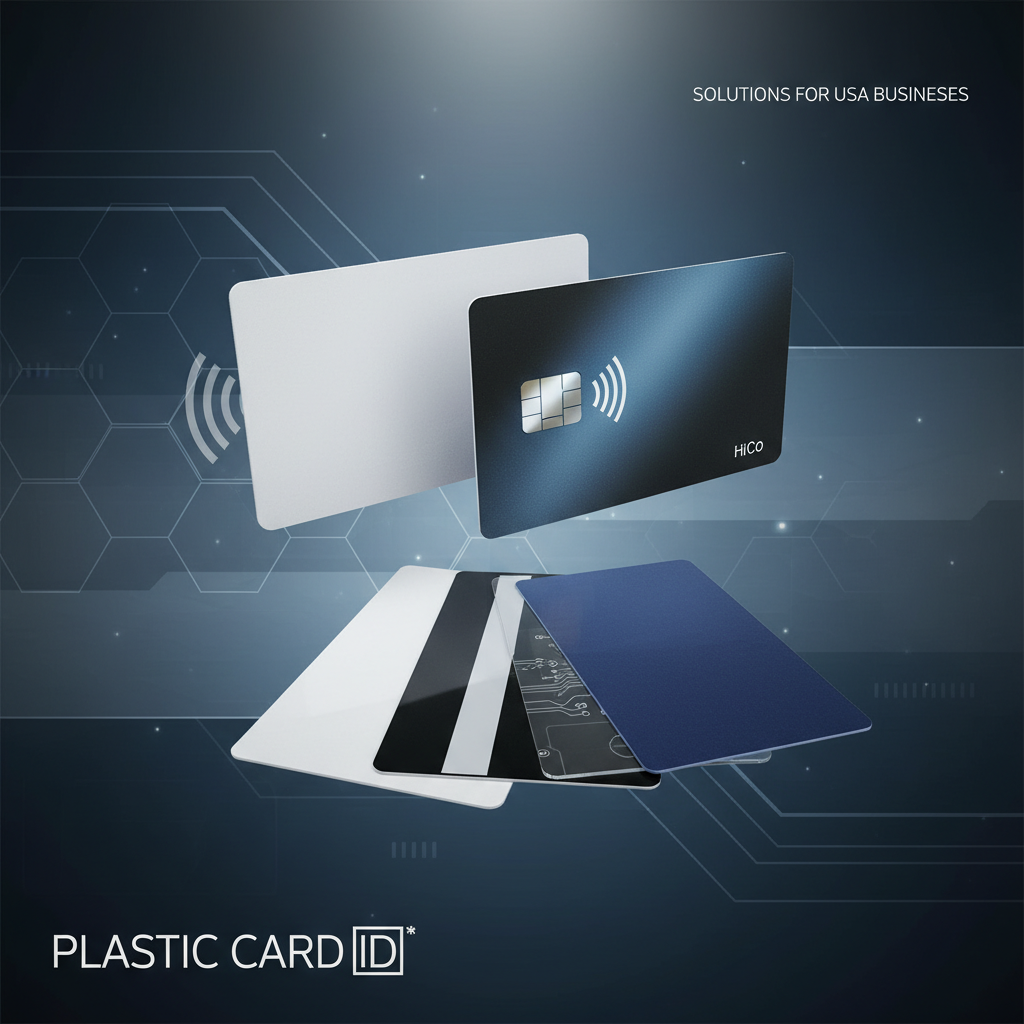 When a magnetic stripe is not sufficient - when the threat model includes sophisticated duplication attempts, when data volumes exceed stripe capacity, or when the environment demands hands-free card reading - RFID and smart chip technologies step in. These are not exotic or expensive specialty products reserved for Fortune 500 implementations. They are available in blank card form, ready for in-house encoding and personalization.
The security advantages over magnetic stripes are meaningful and measurable. An RFID chip in a proximity card communicates via radio frequency, and the data it transmits can be encrypted in ways that magnetic stripe data simply cannot be. Copying an encrypted RFID credential requires overcoming cryptographic protection, not just running a magnetic stripe through a $20 cloner purchased online.
Proximity Cards for Access Control
125kHz proximity cards are the workhorse of physical access control in facilities across the United States - offices, warehouses, manufacturing plants, healthcare facilities, and government buildings all rely on them. These cards communicate their unique identifier to a reader without physical contact, at distances typically ranging from one inch to several inches depending on reader configuration.
Blank proximity cards are available from Plastic Card ID with pre-programmed unique facility codes and card numbers, or with configurable parameters depending on the access control platform in use. The cards themselves carry no readable data on their surface - the credential is entirely internal and electronic, which means visual inspection of the card reveals nothing an attacker could use to replicate the credential.
MIFARE DESFire: Encrypted Contactless Technology
MIFARE DESFire represents a significant step up in contactless card security. Operating at 13.56MHz, DESFire cards support AES-128 encryption of all data transmissions, making them resistant to eavesdropping and relay attacks that can compromise simpler RFID credentials. Casino player cards, enterprise access programs, and transit applications routinely specify DESFire precisely because of this cryptographic capability.
The cards also support multiple independent applications stored on a single chip - a single DESFire card can carry access credentials for a facility, loyalty program points, and cafeteria account balance simultaneously, each application isolated from the others by cryptographic separation. This multi-application capability makes DESFire an exceptionally efficient credential for organizations running complex card programs.
Smart Chip Contact Cards for Secure Data Storage
Contact smart cards carry embedded integrated circuit chips that make direct electrical contact with a reader through a visible gold contact pad on the card surface. These chips can store significantly more data than magnetic stripes and can execute cryptographic operations on-chip, meaning sensitive data never leaves the card in a readable form during authentication. Healthcare ID programs, campus credential systems, and high-security enterprise deployments use contact smart cards for exactly this reason.
The processing capability of the chip itself is a security feature - the card participates actively in the authentication exchange rather than passively presenting stored data to be read. A smart card chip can challenge, respond, and verify before granting any access, creating a dynamic authentication process that static credentials cannot replicate. Plastic Card ID stocks blank contact smart card options compatible with major card printer and encoding platforms.
Specialty Card Options That Add Visual and Physical Security
Security does not live only in electronic features. Visual and physical characteristics of the card itself communicate authenticity, deter casual counterfeiting, and make credential verification accessible to anyone holding the card rather than dependent on reader infrastructure alone. Specialty card options available from CPE expand the security palette significantly beyond standard white PVC.
These specialty formats also serve branding and program distinctiveness goals - a clear frosted card or a die-cut custom shape is both harder to counterfeit and more memorable to the cardholder. When security and design objectives align, program performance improves across every metric.
Clear and Frosted Transparent Cards
Clear PVC cards and frosted semi-transparent cards are visually distinctive in ways that white cards are not. The transparency itself becomes a security indicator - anyone familiar with your credential program knows what the card should look like when held up to light. A counterfeit on white stock is immediately visually wrong to a trained observer.
Frosted cards add a tactile dimension: the surface texture of a properly manufactured frosted card feels distinctively different from a standard glossy PVC surface. This tactile verification layer costs nothing to implement and adds a sensory authentication check that requires no equipment. For VIP membership programs, premium loyalty tiers, and event access credentials, frosted cards deliver security and perceived value simultaneously.
Custom Die-Cut Shapes and Unique Form Factors
Standard CR80 card dimensions are universal and familiar. A custom die-cut card - in a distinctive shape that reflects your brand or program - is neither universally available nor easily replicated. The tooling required to produce non-standard card shapes represents a barrier that casual counterfeiters cannot easily overcome. Form factor uniqueness is underrated as a security feature and overrated as a complexity challenge - Plastic Card ID handles the production details so you simply receive correctly shaped cards ready for personalization.
Custom shapes also dramatically increase the card's visual distinctiveness in a cardholder's wallet. A card that looks unlike every other card is noticed, remembered, and - importantly - noticed when missing. Cardholders are more likely to report loss of a distinctive credential than a white rectangular card that looks like twenty others in their possession.
Luxury Metal Cards as Premium Security Credentials
- Stainless steel cards are physically impossible to replicate with standard card printing equipment - the material alone screens out the vast majority of counterfeiting attempts.
- Brass and gold-finished metal cards carry significant tactile and visual distinctiveness that communicates credential authenticity to anyone handling them.
- Weight and rigidity of metal cards are immediately perceptible and cannot be replicated in lightweight paper or thin-film counterfeits.
- Laser engraving on metal card surfaces creates permanent personalization that cannot be chemically or mechanically altered without visible destruction of the card surface.
- Metal cards are ideal for premium membership programs, VIP access credentials, executive ID programs, and any application where perceived value directly supports program prestige.
Building a Layered Security Strategy for Your Card Program
The most effective card security programs do not rely on a single feature. They layer multiple independent security mechanisms so that defeating any one layer does not compromise the credential entirely. A magnetic stripe card with a UV-reactive substrate and a signature panel combines three independent verification methods - each one individually bypassable, but the combination significantly harder to defeat simultaneously.
Layering decisions should be driven by a clear-eyed assessment of who might attempt to abuse your credentials, what resources they are likely to have, and what the consequence of a successful credential compromise would be. A gym loyalty card has a different threat model than a healthcare facility access badge - and the appropriate security architecture differs accordingly.
Matching Security Features to Program Risk Levels
Low-risk programs - retail loyalty, basic membership, event attendance - benefit from cost-effective security layers: distinctive card stock, UV-reactive substrates, and HiCo magnetic stripes provide meaningful deterrence without significant per-card cost impact. These features protect against opportunistic abuse while keeping program economics sensible.
Medium-risk programs - employee ID, facility access, campus credentials - warrant RFID or proximity technology, potentially combined with photographic personalization applied in-house through a card printer from Evolis, Zebra, or Fargo. The investment in card printer infrastructure pays back through per-card cost savings over time and the flexibility to personalize and reissue cards on-demand without minimum order delays.
In-House Personalization as a Security Advantage
Ordering pre-personalized cards from an external vendor introduces a window during which card data is handled outside your organization's control. In-house personalization using blank card stock and your own card printer eliminates that exposure entirely. Cards are personalized at the moment they are needed, by personnel under your supervision, using equipment you control and maintain.
This model also dramatically reduces lead time for credential issuance - new employees receive badges on day one rather than waiting for an external print run. Lost cards are replaced within hours, not days. The security benefits of this operational model compound over time as your card program scales. Plastic Card ID supplies both the blank card stock and the printers, ribbons, and cleaning kits to run a complete in-house card program.
Encoding Standards and Reader Compatibility
A security feature is only effective if it is consistently read and verified. An RFID credential that occasionally fails to read trains staff to override the verification check - creating a vulnerability through operational habituation. Matching card encoding specifications precisely to your reader infrastructure is critical, and it is a step that deserves attention before cards are ordered rather than after.
CPE has deep experience helping clients navigate encoding compatibility questions across access control platforms, loyalty system readers, and time-and-attendance hardware. Blank cards ordered to the correct specification work reliably from the first card to the millionth - and that operational reliability is itself a security outcome worth prioritizing. Reach us at 800.835.7919 to review your encoding requirements before placing your order.
Frequently Asked Questions About Security Features on Blank Plastic Cards
Over 25 years and more than 100,000 customers, certain questions come up consistently. Here are honest answers to the ones that matter most when evaluating blank plastic card options for a secure credential program.
Can I Add Security Features After Ordering Blank Cards?
Some features, yes - and some, no. Magnetic stripes can be encoded after card issuance using the appropriate card printer or encoder. RFID chips can be programmed after card production. Printed security elements like UV-reactive inks can be applied during your in-house printing process using the right printer ribbons and overlaminates.
However, substrate-level features - UV-reactive card stock, embedded holographic elements, clear or frosted material properties - are part of the card manufacturing and cannot be added post-production. This is why choosing the right card stock specification at the ordering stage matters so much. The Plastic Card ID team is available to walk through your requirements before you commit to a card specification.
What Is the Minimum Order for Specialty Security Cards?
Minimum order quantities vary by card type and feature set. Standard blank HiCo magnetic stripe CR80 cards are available in quantities as low as quantities that suit small card programs. Specialty options like RFID cards, DESFire chips, and metal cards may carry higher minimums reflecting their production complexity. CPE serves programs ranging from 50 cards per month to tens of thousands - and the team is experienced at structuring orders that match actual program scale without forcing unnecessary inventory investment.
Right-sizing your card inventory is itself a security practice - excess card stock represents a loss or theft exposure that scales with the quantity stored. Ordering appropriate quantities on a regular cadence, rather than huge batches infrequently, keeps your card security posture tighter across the program lifecycle.
Do Security Features Affect Card Printer Compatibility?
This is an important practical question. RFID and smart chip cards require printers or separate encoding stations with the appropriate encoding hardware installed. Not every Evolis, Zebra, or Fargo model includes encoding capability by default - it may be a module or configuration option. Magnetic stripe encoding requires the correct write head and driver settings configured for your card's coercivity specification.
- Confirm your printer model supports the encoding technology your cards require before ordering card stock.
- Check whether encoding is a base feature or an add-on module for your specific printer model.
- Verify that your printer driver and software support the data format your access control or loyalty system expects.
- Test encoding and read-back on a small batch before committing to large card inventory purchases.
- Use the correct ribbon specification for your card type - laminate ribbons, for example, are essential for holographic overlaminate application.
The Plastic Card ID team can help match card specifications to your printer capabilities, preventing the frustrating and costly mismatch between card stock and printing hardware that creates program delays and wasted inventory.
Partner With Plastic Card ID for a Card Program Built on Real Security
 Twenty-five years. More than 100,000 customers. Over 50 million cards shipped across the United States. That history reflects something more than volume - it reflects the compounding trust that comes from getting card programs right consistently, at every scale, for organizations that depend on their credentials to perform reliably in the real world.
Security features on blank plastic cards are not an afterthought or an upgrade - they are foundational decisions that shape every card your program issues from the first batch forward. The substrate, the stripe coercivity, the RFID technology, the laminate choices - each one represents a commitment to how seriously your organization takes the credentials it places in people's hands and readers' slots.
CPE exists to make those decisions straightforward, well-informed, and correctly executed. From the initial conversation about your program requirements through card stock selection, printer configuration, encoding specification, and ongoing supply - the entire journey is supported by a team with genuine depth in every aspect of plastic card programs for USA-based businesses and organizations.
Ready to build a card program with security features that actually protect what matters? Connect with the team today.
Contact Plastic Card ID now at 800.835.7919 - and let's build something worth carrying.
Previous Page