How Proximity Cards Work for Building Security
Table of Contents []
- How Proximity Cards Work for Building Security - Plastic Card ID
- The Technology Inside Every Proximity Card
- How Access Control Systems Process Proximity Card Reads
- Proximity Cards Versus Key Fobs, Mobile Credentials, and Keys
- Selecting the Right Proximity Card for Your Security Program
- Maintaining and Managing a Proximity Card Program Long-Term
- Partner With Plastic Card ID for Your Proximity Card Program
How Proximity Cards Work for Building Security - Plastic Card ID
Walk up to a secured door, hold a small card near a reader, and the lock releases in under a second. No fumbling with keys, no PIN to forget, no contact required. That seamless moment is the result of sophisticated radio frequency technology packed into something that fits in your wallet - and it is transforming how businesses, campuses, and facilities manage access across the United States.
Understanding how proximity cards work for building security is no longer a question only for IT departments or security integrators. Any organization managing employee access, visitor flow, or multi-door credential systems needs to grasp the fundamentals. Whether you run a mid-sized office, a healthcare facility, a school district, or a manufacturing plant, proximity cards are likely your most practical, scalable access control tool available today.
| Card Type | Frequency | Typical Read Range | Common Use Case |
|---|---|---|---|
| Standard Prox Card (125 kHz) | 125 kHz LF | 2-6 inches | Office access, time and attendance |
| HID iCLASS (13.56 MHz) | 13.56 MHz HF | 2-4 inches | High-security enterprise, hospitals |
| MIFARE DESFire (13.56 MHz) | 13.56 MHz HF | Up to 4 inches | Encrypted access, transit, campuses |
| UHF RFID Card | 860-960 MHz UHF | Up to 20 feet | Parking, vehicle access, warehouses |
The Technology Inside Every Proximity Card
Crack open a proximity card - not literally, since the laminated PVC shell is sealed tight - and you would find a copper antenna coil wound around the inner perimeter, connected to a tiny embedded microchip. That combination is the entire working mechanism. There are no batteries, no moving parts, and no external power source inside the card itself. The elegance of the design is part of what makes these cards so durable and dependable over years of daily use.
The system relies on a principle called inductive coupling. When a cardholder brings the credential within range of a reader, the reader emits a continuous low-power radio frequency field. That field energizes the antenna coil inside the card, which powers the chip just long enough to transmit a stored identification number back to the reader. The entire exchange happens in milliseconds, invisibly, reliably, every single time.
How the Antenna and Chip Communicate
The antenna is not just a passive wire - it is tuned to resonate at a specific frequency, either 125 kHz for traditional proximity cards or 13.56 MHz for higher-frequency smart card variants. That frequency tuning determines read range, data transfer speed, and compatibility with the access control readers installed at your doors. Swapping card frequencies without replacing readers is a common - and costly - mistake organizations make when upgrading systems.
When the chip receives enough harvested energy from the reader's field, it wakes up and broadcasts its programmed credential number. In a standard 125 kHz prox card, this number is fixed at the factory and cannot be changed. More advanced smart cards like MIFARE DESFire allow dynamic encrypted data exchange, meaning the information transmitted changes with each transaction - a significant security advantage in high-risk environments.
Fixed Credentials Versus Encrypted Smart Cards
Traditional proximity cards carry a fixed facility code and card number embedded during manufacturing. The access control system is programmed to recognize those numbers and either grant or deny entry. This setup is straightforward and cost-effective, which is why millions of doors across the U.S. still use 125 kHz prox technology. However, fixed credentials can be cloned using commercially available devices, which is a known vulnerability security professionals address with system design and policies.
Encrypted smart cards - particularly those using MIFARE DESFire EV2 or EV3 - use mutual authentication protocols, meaning both the card and the reader must verify each other before any data is exchanged. Cloning these cards is dramatically more difficult, and each data packet is encrypted with rotating keys. For organizations handling sensitive areas - server rooms, pharmaceutical storage, executive floors - this level of protection justifies the modest additional cost per card.
Read Range and Why It Matters Operationally
Standard prox cards typically read at 2-6 inches from the reader face. That short range is actually a design feature, not a limitation - it forces deliberate, intentional credential presentation, reducing tailgating risk. Long-range UHF RFID cards can read at 20 feet or more, which is ideal for vehicle access control in parking structures or loading docks where stopping to badge in would create bottlenecks.
Choosing the wrong read range for an application creates friction. Employees waving badges from a foot away at a reader calibrated for 2 inches get frustrated. Conversely, a long-range reader on a narrow hallway door may grant access to someone standing near the door without any intentional interaction. Matching read range to your physical environment is as important as the card technology itself.
How Access Control Systems Process Proximity Card Reads
The card-to-reader interaction is only the first step. Once the reader captures the credential number, it passes that data - typically over a Wiegand protocol wire or modern OSDP connection - to an access control panel. That panel checks the credential against an authorization database in real time. Authorized? The panel signals the door controller to release the electric strike or magnetic lock. Denied? The door stays shut and an audit log entry is created.
This three-component architecture - card, reader, panel - is what gives proximity-based systems their flexibility. Cards can be added, modified, or revoked at the software level without ever touching a door or a lock. An employee leaving the company? Deactivate the credential instantly from any internet-connected device. Lost card? Disable it before it reaches the wrong hands. Software-level control is the operational advantage that physical keys simply cannot match.
Wiegand Protocol and Modern OSDP
Most legacy access control infrastructure communicates using the Wiegand protocol, a one-way, unencrypted data format developed in the 1980s. While Wiegand works reliably and has near-universal reader compatibility, its unencrypted nature means data transmitted between reader and panel can theoretically be intercepted on the wire. For most commercial installations, this risk is managed through physical wire security and layered system design rather than protocol-level encryption.
OSDP - Open Supervised Device Protocol - is the modern alternative, offering bidirectional communication, encrypted data transfer, and real-time tamper detection between reader and panel. Security integrators increasingly specify OSDP for new installations, and organizations upgrading their infrastructure often make the switch at the same time they refresh their proximity card stock. CPE carries credentials compatible with both protocol environments.
Credential Enrollment and Database Management
Every proximity card issued by an organization must be enrolled in the access control software before it works. Enrollment involves programming the card number and facility code into the system, assigning it to an individual, and defining that person's access schedule and door permissions. This is where access control becomes genuine workforce management - you can specify that a contractor's badge only works weekdays from 7 AM to 6 PM on the loading dock entrance, not the executive wing.
Good credential management practices are what separate professional card programs from chaotic ones. Organizations should audit their credential databases at least annually, immediately deactivate credentials for terminated employees, maintain a numbered inventory of issued cards, and log all access events for review. These are not just security best practices - in regulated industries like healthcare and finance, they are compliance requirements with real consequences for lapses.
Multi-Door and Multi-Site Access Architectures
One of the most powerful features of proximity card systems is their ability to scale. A single credential can be authorized for dozens - or hundreds - of readers across a facility, a campus, or even multiple geographically dispersed locations networked through a central access control platform. A university using campus-wide HID credentials can grant a faculty member access to their department building, the library after hours, and the parking structure, all from a single card enrollment record.
For organizations managing multiple facilities, networked access control means a single administrator can view door events, manage credentials, and respond to alarms across all sites simultaneously. Centralized control eliminates the administrative chaos of managing independent key rings, combination codes, and locally stored access lists that grows exponentially as organizations expand.
Proximity Cards Versus Key Fobs, Mobile Credentials, and Keys
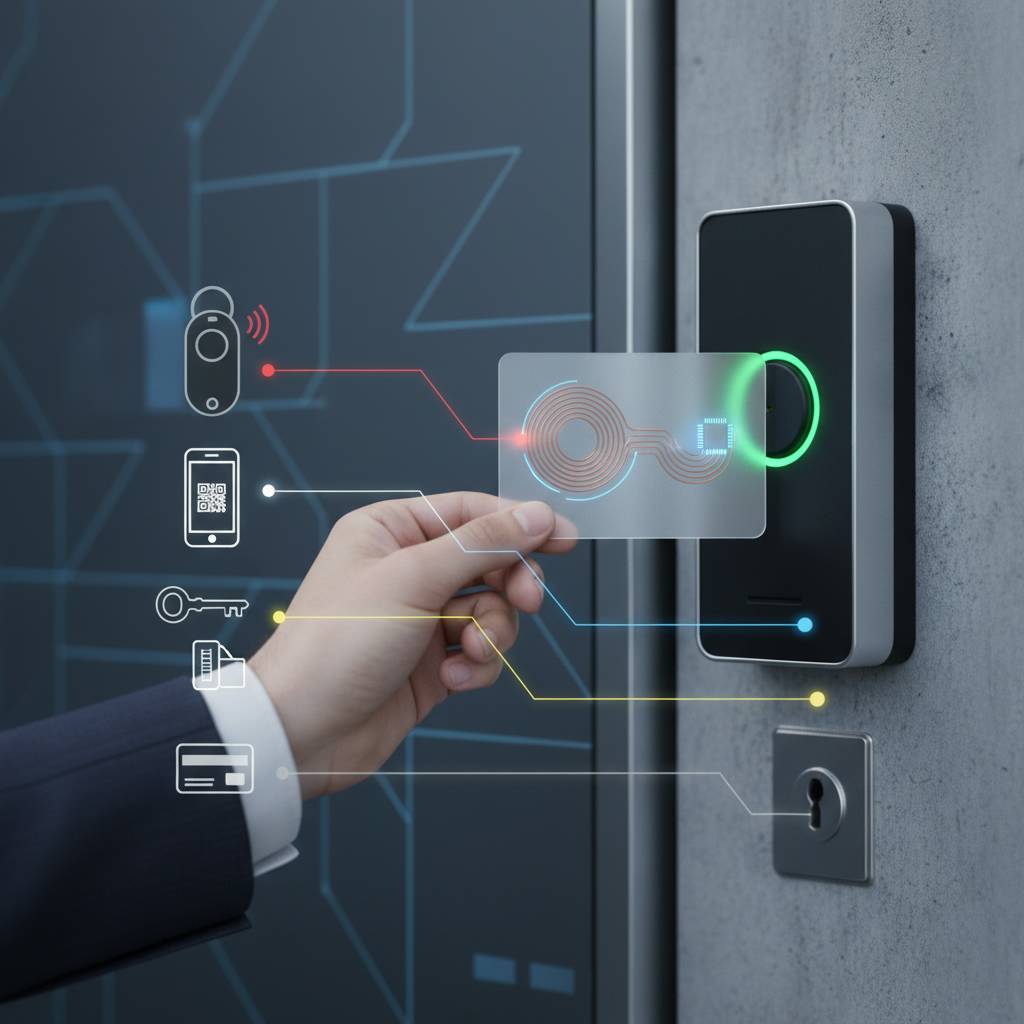 Every organization evaluating access control eventually faces the format question: cards, fobs, or mobile credentials on smartphones? Each format has genuine advantages, and the answer often involves a combination. Physical proximity cards remain the dominant format for employee badge programs because they double as visual identification - a printed card with a photo, name, and department serves purposes that an invisible mobile credential cannot replicate.
Key fobs use identical RFID technology to proximity cards and work on the same readers. Their advantage is convenience - clip to a keyring and forget about it. Their disadvantage is that they offer no visual ID surface and are easy to loan to unauthorized users without anyone noticing. Cards are harder to casually share because they are visually tied to the cardholder through the printed photo. Call 800.835.7919 to discuss which credential format fits your organization's workflow.
The Printed Card Advantage in Secured Environments
Physical identity cards printed in-house with a card printer from Evolis, Zebra, or Fargo create a combined electronic and visual credential. Security personnel can verify identity at a glance - photo, name, department, expiration date, color-coded department designation - without requiring any electronic interaction. In healthcare, manufacturing, and government facilities, visual verification is often a procedural requirement independent of electronic access control.
Printing credentials in-house also gives organizations complete control over card design, issuance timing, and per-card cost. Blank CR80 PVC cards stock serves as the foundation for these programs - the same ISO 7810 standard card size used in every wallet in America. Plastic Card ID supplies the blank card stock, the proximity-encoded cards, the printers, and the ribbons, making in-house issuance genuinely straightforward.
Mobile Credentials: Complementary, Not Replacement
Smartphone-based access credentials using NFC or Bluetooth Low Energy are growing in enterprise environments, particularly among technology companies comfortable managing mobile device policies. They offer convenience and eliminate the physical card loss problem entirely. However, they require employees to always carry a charged phone, they depend on mobile device management infrastructure, and they provide no visual identification capability at all.
Practical access control programs typically use mobile credentials for specific populations - executives, remote workers, IT staff - while maintaining physical proximity cards as the standard for the broader workforce. The two formats coexist on the same readers in modern installations. Rather than choosing sides, smart security managers evaluate each credential type by the specific population and access point it serves.
Selecting the Right Proximity Card for Your Security Program
- Determine your existing reader infrastructure first - 125 kHz legacy readers cannot read 13.56 MHz smart cards without hardware replacement.
- Identify your security risk level - standard office environments may be well-served by traditional prox, while research labs, pharmacies, or data centers should evaluate encrypted smart card options.
- Consider whether the card will also serve as a visual ID badge - if so, select a card with a printable PVC surface rather than a card with a full-face RFID overlay that interferes with printing.
- Evaluate read range requirements by door type - entrance lobbies versus elevator floors versus parking barriers each have different operational needs.
- Account for total credential lifecycle cost - card price, enrollment labor, printer ribbon cost, and loss/replacement rates all factor into the real per-employee number.
- Verify compatibility with your access control software platform before ordering in volume - most major platforms publish compatibility lists for credential formats and frequencies.
Proximity Card Formats Available from Plastic Card ID
Plastic Card ID stocks proximity cards across the full technology spectrum, from standard 125 kHz HID-compatible credentials through 13.56 MHz MIFARE DESFire EV2 and EV3 cards suitable for the most demanding encrypted access environments. Cards are available as blank white PVC stock ready for in-house printing, or as pre-encoded credentials programmed to facility code specifications. Both Clamshell and Credit Card (CR80) form factors are available for program flexibility.
For organizations running combined programs - access control plus loyalty, membership, or time-and-attendance - dual-technology cards that combine a proximity chip with a magnetic stripe or printed barcode provide a single credential that serves multiple systems. Eliminating the need to carry two separate cards reduces lost credential incidents and simplifies the employee experience without compromising any system's functionality.
Evaluating Quantity and Program Scale
CPE has worked with organizations at every scale imaginable, from 50-employee professional offices issuing cards for the first time to enterprise manufacturers managing credentials for thousands of workers across regional facilities. Pricing and format options shift meaningfully with volume, and understanding your program's actual scale - both now and projected over three years - shapes the best purchasing decision considerably.
Low-volume programs often benefit most from blank PVC card stock plus an in-house card printer, giving full design control and rapid reissuance capability for turnover. Higher-volume programs may benefit from pre-encoded card orders with custom printing completed by the supplier before delivery, reducing the in-house labor load. The Plastic Card ID team helps clients map their specific situation to the most efficient fulfillment model without unnecessary overhead.
Maintaining and Managing a Proximity Card Program Long-Term
A proximity card program is not a one-time purchase decision - it is an ongoing operational system that requires consistent management attention to remain effective. Cards get lost, employees turn over, readers get upgraded, security policies evolve. Organizations that build structured credential lifecycle management into their standard HR and facilities operations run measurably tighter, more secure access environments than those treating cards as interchangeable office supplies.
The physical card itself is only as strong as the program behind it. A proximity card issued to an employee who left the company eighteen months ago and never returned is not a card - it is an active security vulnerability walking around. Credential audits, immediate deactivation workflows, and numbered card inventories are the operational disciplines that determine whether your access control investment delivers real security or merely the appearance of it.
Card Printers, Ribbons, and In-House Issuance
Organizations issuing proximity cards as visual ID badges need a reliable card printer capable of producing professional-quality output consistently. Plastic Card ID carries desktop card printers from Evolis, Zebra, and Fargo - three of the most respected names in the industry - along with the full range of compatible printer ribbons, cleaning kits, and card carriers for every model stocked. Having a printer on-site means a new employee can have a printed, encoded access credential in hand on their first morning, not their third week.
Ribbon and supply inventory management matters more than most program administrators expect. Running out of ribbon during an onboarding week is a genuine operational problem. Plastic Card ID ships printer supplies alongside card stock and pre-encoded credentials, functioning as the single source for everything a card program needs to keep running smoothly day after day. One supplier, one relationship, one call to resolve any program supply question.
Lost Card Procedures and Replacement Protocols
Lost proximity cards represent both a security event and an operational one. On the security side, the card should be deactivated in the access control system the moment loss is reported - not at end of day, not when the administrator gets around to it. On the operational side, the employee needs a replacement credential quickly enough that they can continue doing their job without significant disruption to their workflow or their team's productivity.
Having blank card stock, a pre-programmed replacement credential, or an in-house printer ready to produce a new badge immediately is the difference between a minor inconvenience and a half-day productivity loss. Organizations managing high-turnover roles - hospitality, healthcare support, manufacturing - find that maintaining a small buffer inventory of pre-encoded replacement credentials dramatically smooths out the daily credential management workload their security administrators face.
When to Upgrade Your Proximity Card Technology
Technology refreshes in access control follow a different rhythm than most IT purchases. Legacy 125 kHz prox systems installed fifteen years ago still work - readers function, cards read, doors open. But the security posture of a fixed-credential, unencrypted system has degraded relative to current threat environments and compliance expectations in regulated industries. The practical upgrade trigger is usually a facility renovation, a security audit finding, or a compliance requirement rather than spontaneous obsolescence.
When the upgrade moment arrives, CPE is the right partner to call early in the process. Understanding the card technology options, pricing at realistic quantities, and the interaction between card format and printer capability before committing to a new reader infrastructure prevents expensive mismatches downstream. Plastic Card ID has guided organizations through credential transitions for over 25 years - that depth of experience is a genuine asset when navigating a system change that will define your access program for the next decade.
Partner With Plastic Card ID for Your Proximity Card Program
Over 100,000 businesses across the United States have trusted Plastic Card ID to supply the credentials, printers, and supplies that power their card programs - and that trust is built on one consistent reality: Plastic Card ID treats every client as a partner, not a transaction. Whether you are deploying 50 proximity cards for a small professional office or managing a rolling credential program for thousands of employees at multiple sites, the expertise and inventory depth behind your order is identical.
Proximity cards are not commodity products when they are the physical mechanism standing between your secured spaces and unauthorized access. The card technology, encoding specifications, credential format, and print quality all matter in ways that a careless supplier will not think to discuss with you. CPE does. Call 800.835.7919 and speak directly with someone who understands access control credential programs from the ground up - not a call center script, but a genuine conversation about what your organization actually needs.
Ready to build a smarter, more secure access program? Plastic Card ID has the cards, the printers, the supplies, and the expertise to get your program running right. Call 800.835.7919 today and put 25 years of proximity card program experience to work for your organization.
Previous Page