Blank Proximity Cards Explained: Uses Key Features
Table of Contents []
- Blank Proximity Cards Explained - What Every Business Should Know Plastic Card ID
- What Exactly Is a Proximity Card?
- Why Blank Proximity Cards Make Operational Sense
- Choosing the Right Blank Proximity Card for Your System
- Pairing Blank Proximity Cards with the Right Card Printer
- Frequently Asked Questions About Blank Proximity Cards
- Ready to Build a Smarter Access Card Program? Contact Plastic Card ID
Blank Proximity Cards Explained - What Every Business Should Know Plastic Card ID
Walk into almost any modern office building, university campus, or hospital and you will see it happen dozens of times a day: someone waves a card near a reader, a light blinks green, and a door opens. That card is almost certainly a proximity card. But what exactly is inside it, how does it work, and why does buying them blank and in bulk make so much financial sense for organizations running their own access control programs? This page breaks it all down.
Plastic Card ID has supplied proximity cards to businesses across the United States for over 25 years, shipping to more than 100,000 customers and moving tens of millions of cards in the process. Whether you need 50 cards to badge a small office or 50,000 for a multi-site enterprise rollout, CPE has the inventory, the expertise, and the pricing structure to make your program work.
| Card Type | Frequency | Read Range | Common Use |
|---|---|---|---|
| Standard Proximity (125 kHz) | 125 kHz | Up to 6 inches | Office door access, parking |
| HID Compatible Prox | 125 kHz | Up to 6 inches | HID-based access systems |
| MIFARE Classic (RFID) | 13.56 MHz | Up to 4 inches | Ticketing, loyalty, access |
| MIFARE DESFire (RFID) | 13.56 MHz | Up to 4 inches | High-security enterprise, transit |
| Contactless Smart Card | 13.56 MHz | Up to 4 inches | Multi-application, hotel keys |
What Exactly Is a Proximity Card?
A proximity card is a contactless credential that communicates with a card reader using radio frequency energy. Unlike a magnetic stripe card, which requires physical contact with a swipe head, a proximity card needs only to be brought close to a compatible reader. The transaction is nearly instantaneous and requires no orientation - you do not need to swipe it in a particular direction or insert it into a slot.
Inside the card, sandwiched between layers of PVC plastic, sits an antenna coil and a tiny integrated circuit. When the card enters the electromagnetic field emitted by the reader, the antenna harvests enough energy to power the chip, which then broadcasts a unique identification number. The reader captures that number and passes it to the access control software, which decides whether to grant or deny access. The entire exchange takes less than a second.
The Technology Stack Inside a Prox Card
Most proximity cards operate at 125 kHz, which is considered the classic frequency for access control. Cards at this frequency are often referred to simply as "prox cards" and are compatible with reader systems from brands like HID, Farpointe Data, and many others. They are passive devices, meaning they carry no internal battery and derive all operating power from the reader's field.
Higher-frequency cards, operating at 13.56 MHz, fall under the broader RFID or smart card umbrella. These offer greater data capacity, faster read speeds, and stronger encryption options - making them preferable for applications requiring more than simple door access, such as cashless vending, time and attendance, or multi-application campus programs.
Blank vs. Programmed: Understanding the Distinction
A blank proximity card arrives without any custom printing and, in most cases, without any application-specific programming loaded into it. The chip contains a factory-encoded identification number, but no organization-specific data has been written to it yet. This is precisely what makes blank prox cards so versatile and cost-effective for organizations that manage their own card issuance programs.
Programmed or encoded cards, by contrast, have been configured for a specific reader system or application during the manufacturing process. While convenient for some scenarios, they lock you into a specific vendor's workflow. Buying blank cards gives your team full control over how each card is deployed, encoded, and printed - on your schedule, not someone else's.
When you call CPE at 800.835.7919, the team can walk you through exactly which blank proximity card format is compatible with your existing reader infrastructure before you commit to any order.
CR80 Standard and Physical Specifications
Proximity cards are manufactured to the CR80 standard, meaning they match the dimensions of a standard credit card: 3.375 inches by 2.125 inches at 30 mil thickness. This is the ISO 7810 ID-1 specification, and it ensures your cards fit every standard card holder, lanyard clip, badge reel, and wallet slot without issue.
The PVC construction is durable, resistant to everyday wear, and compatible with most desktop card printers that support contactless or smart card encoding. Because the antenna is laminated internally, there is no external component to snag or damage during daily use.
Why Blank Proximity Cards Make Operational Sense
Ordering pre-printed or fully programmed proximity cards from an outside vendor every time you need a batch sounds convenient in theory. In practice, it creates delays, increases per-card costs, and removes your organization's ability to respond quickly to staffing changes, access level updates, or security incidents. Blank proximity cards fundamentally shift that equation in your favor.
Consider a mid-sized company onboarding 30 new employees at once after a hiring surge. With a stock of blank prox cards on hand and an in-house card printer, HR can issue personalized, fully encoded badges the same day - complete with the employee's photo, name, department, and the correct access permissions. Compare that to the days or weeks required when ordering customized cards from an outside vendor on a per-batch basis.
Cost Efficiency at Scale
The per-unit cost of blank proximity cards drops significantly as order quantity increases. Organizations that regularly issue cards - whether for employees, contractors, visitors, or event staff - almost always save money by maintaining an inventory of blank cards and printing on demand. The upfront investment in a card printer pays for itself quickly when measured against the premium charged for pre-printed, individually ordered cards.
Blank cards also eliminate waste. When a pre-printed card is never used because an employee leaves before starting, that card's customization cost is gone forever. A blank card pulled from the same unused inventory can simply be reassigned to the next person who needs one.
Flexibility Across Multiple Applications
One of the most underappreciated advantages of blank proximity cards is their application neutrality. The same card stock can serve as an employee access badge for one person, a contractor temporary pass for another, and a visitor credential for a third. Your printer and access control software determine the role each card plays - not the card itself.
Universities have used this model for decades, issuing a single card type that handles dormitory access, library checkouts, cafeteria payments, and campus transit. Hospitals use them for staff ID, department access, and time tracking. A single blank card format can power an entire institutional infrastructure when the software and reader systems are properly configured.
Security and Replacement Logistics
When a card is lost or compromised, speed of replacement matters. With blank prox cards in stock and a printer at the ready, a replacement card can be issued and the compromised card deactivated in minutes. There is no waiting for a new batch to arrive from a vendor, no temporary badge awkwardness that can last days, and no security gap that lingers while paperwork processes.
Access control administrators also benefit from the ability to run test cards, demo new reader configurations, or issue temporary elevated access during special events - all from the same blank card inventory. It is a level of operational agility that pre-programmed cards simply cannot match.
| Ordering Method | Lead Time | Per-Card Cost | Customization Control |
|---|---|---|---|
| Pre-printed from vendor (per batch) | 5-15 business days | Higher | Limited |
| Blank cards in-house printer | Minutes (on demand) | Lower | Complete |
Choosing the Right Blank Proximity Card for Your System
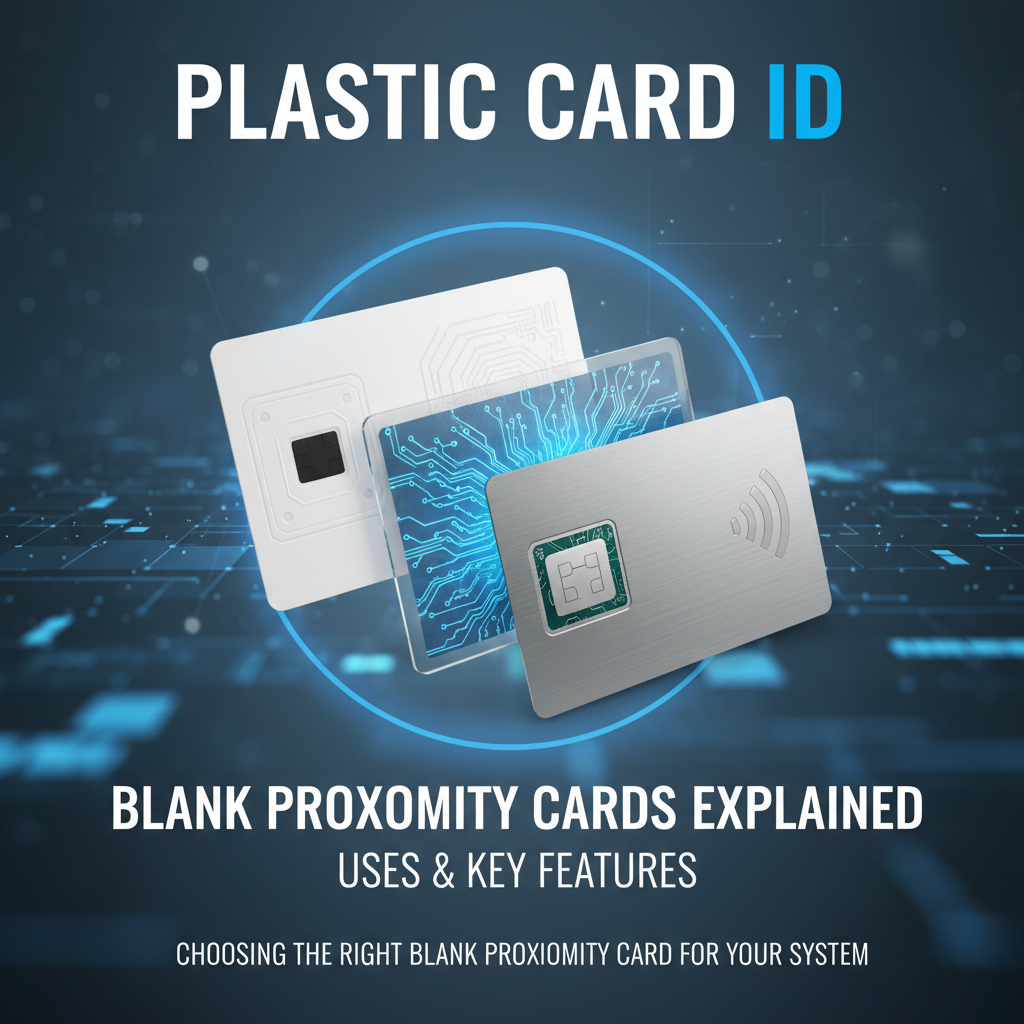 Not all proximity cards are interchangeable. The technology inside the card must match the reader technology installed at your facility. Ordering the wrong format is a costly and frustrating mistake - which is why understanding your existing reader system before purchasing blank cards is absolutely essential.
Plastic Card ID stocks proximity cards across multiple formats and frequencies to cover the full spectrum of access control systems deployed across American businesses and institutions. CPE has the experience to help you identify exactly what you need based on your reader brand, model, and application requirements.
Matching Card Format to Reader Technology
If your facility uses HID readers, you will need cards encoded with the appropriate HID format - whether that is HID Prox, HID iCLASS, or another variant. If your readers are Farpointe, EM4100, or another standard, the card's internal chip and programming must match accordingly. Using a card that operates on the wrong frequency or carries an incompatible chip format will simply produce no response from the reader.
Your access control system documentation or the manufacturer of your card readers should specify which card formats are supported. If you are unsure, CPE can help cross-reference reader model numbers against compatible card formats to ensure you get the right product on your first order.
High-Security Options: MIFARE DESFire and Smart Cards
For organizations requiring encrypted data storage, multi-application capability, or compliance with higher security standards, MIFARE DESFire cards offer a significant step up from standard 125 kHz proximity. Operating at 13.56 MHz with AES-128 encryption, DESFire cards are favored in enterprise environments, government facilities, transit systems, and anywhere that simple identification number broadcasting is not sufficient.
MIFARE DESFire EV2 and EV3 variants support multiple independently secured application partitions on a single card, allowing a university, for example, to use one card for access control, library services, meal plans, and campus bus transit - each application isolated from the others in terms of data security.
Smart contactless cards more broadly also support hotel key programming, casino player tracking, and loyalty program data storage. These are robust, versatile credentials that blank cards enable your team to configure precisely according to your specific program needs.
Specialty Proximity Formats and Custom Options
Beyond the standard white CR80 blank prox card, Plastic Card ID offers proximity cards in colored PVC stock, clear and frosted finishes, and even custom die-cut shapes for organizations that want their access credentials to carry distinct branding. Luxury metal cards in stainless steel, brass, and gold are available for VIP programs where the physical card itself is part of the experience.
These specialty formats carry the same internal proximity technology but present in ways that are visually distinctive and memorable. A hotel issuing premium guest key cards in brushed metal leaves an impression that a plain white card simply does not. The credential becomes part of the brand experience without sacrificing any of the functional access control technology inside.
Pairing Blank Proximity Cards with the Right Card Printer
A blank proximity card is only half of the in-house issuance equation. The other half is the card printer - specifically, a printer capable of encoding contactless smart card chips as well as printing full-color graphics, photos, and text onto the card surface. Plastic Card ID carries a full lineup of card printers from Evolis, Zebra, and Fargo, each suited to different volume levels and encoding requirements.
Selecting the right printer depends on how many cards you issue per month, whether you need single-sided or double-sided printing, and whether encoding proximity chips is a requirement. Getting this match right from the start avoids buying a printer that lacks the contactless encoding module your cards require.
Desktop Printers for Small to Mid-Volume Programs
Organizations issuing fewer than 500 cards per month typically find that a compact desktop printer from the Evolis Primacy or Zebra ZC Series handles the workload comfortably. These printers are quiet, compact, and capable of encoding smart card and proximity formats when equipped with the appropriate encoding module - which is a configurable option at the time of purchase.
For CPE, helping customers match printer to card type is a routine part of the sales conversation. You do not want to discover post-purchase that your new printer lacks the encoding capability your proximity cards require.
High-Volume Printers for Enterprise and Institutional Programs
Enterprise-scale programs - think hospital systems, universities, or large corporate campuses issuing thousands of cards annually - need printers built for continuous, high-throughput operation. The Fargo HDP6600 and Zebra ZXP Series 8 are designed for exactly this environment, with higher duty cycles, faster print speeds, and robust encoding modules that handle proximity and smart card formats reliably under heavy use.
High-volume printers also support lamination overlaminates, which extend the visual life of printed cards significantly - particularly important when cards are carried and used daily for years at a time.
Ribbons, Cleaning Kits, and Ongoing Supplies
Plastic Card ID supplies the full range of consumables needed to keep your card printer running at peak performance. Printer ribbons, holographic overlay films, cleaning kits, and card sleeves are all available from the same source as your blank proximity cards - eliminating the hassle of sourcing supplies from multiple vendors.
- YMCKO and YMCKT ribbons for full-color printing with overlay protection
- Monochrome ribbons for cost-efficient single-color printing
- Printer cleaning kits (roller cleaning cards and swabs) for maintenance intervals
- Card sleeves and card carriers for protecting issued credentials
- Card affixing and mailing services for programs that require fulfillment support
Maintaining a regular printer cleaning schedule dramatically extends the life of your print head and ensures consistent print quality. CPE recommends a cleaning cycle every 250-500 cards or whenever you load a fresh ribbon, whichever comes first.
Frequently Asked Questions About Blank Proximity Cards
Buyers new to proximity card programs often come in with the same set of questions. Here are the most common ones, answered plainly and completely so you can move forward with confidence.
Can I print on a proximity card with any card printer?
Standard inkjet or laser printers cannot print on PVC proximity cards. You need a dedicated PVC card printer - the kind Plastic Card ID stocks from Evolis, Zebra, and Fargo. These printers use dye-sublimation or retransfer printing processes designed specifically for plastic card stock. The proximity card's internal antenna and chip are not damaged by the heat or pressure of the printing process when cards are manufactured to specification.
Always verify that your printer model is rated for the card thickness you are using. Standard proximity cards at 30 mil (0.030 inches) are compatible with most desktop card printers, but always confirm before printing a large batch.
What is the difference between HiCo and LoCo in proximity cards?
HiCo and LoCo refer to magnetic stripe coercivity - the magnetic strength of the stripe used to store encoded data. These terms apply specifically to magnetic stripe cards, not to proximity-only cards. Many proximity cards are available in combination formats that include both a proximity chip and a magnetic stripe, giving the card dual functionality for systems that use both technologies.
If your access control system uses proximity technology exclusively, the HiCo versus LoCo distinction does not apply to your blank card selection. If you need a combo card, CPE can help you specify the right combination format.
How many blank proximity cards should I keep in stock?
A good rule of thumb is to maintain enough inventory to cover three months of typical card issuance, plus a buffer for unexpected needs - security incidents requiring mass reissuance, sudden headcount growth, or event-driven access programs. For most small to mid-sized organizations, this means keeping 100-500 blank cards on hand at all times.
- Small offices (under 50 employees): 100-200 card buffer recommended
- Mid-sized organizations (50-500 staff): 300-500 card buffer recommended
- Large campuses or enterprise (500 cardholders): 1,000 or more, reviewed quarterly
- Event-driven programs: Order 10-15% above expected attendance for attrition coverage
- High-turnover industries: Maintain larger buffers to support frequent reissuance cycles
Volume pricing from Plastic Card ID rewards larger orders, so there is both a logistical and financial incentive to ordering generously and maintaining a healthy inventory rather than placing small frequent orders.
Ready to Build a Smarter Access Card Program? Contact Plastic Card ID
Blank proximity cards are not complicated once you understand the technology, the formats, and the workflow they enable. What they represent is a fundamentally more efficient, more affordable, and more flexible approach to managing credentials for access control, employee identification, visitor management, or any of the dozens of other applications where a contactless card adds value.
Plastic Card ID has spent over 25 years becoming the go-to partner for businesses across the United States that take their card programs seriously. With more than 100,000 customers served and over 50 million cards shipped, CPE brings both the inventory depth and the operational expertise to support programs of any scale - from a 50-card startup pilot to a multi-site enterprise deployment in the tens of thousands.
Talk to a Card Program Specialist Today
Whether you are just beginning to research blank proximity cards or you are ready to place a specific order, the Plastic Card ID team is available to help. No guesswork, no generic catalog browsing - just a straightforward conversation about what your program needs and which products will get you there most efficiently and cost-effectively.
Call 800.835.7919 to speak directly with a specialist who understands access control card formats, printer compatibility, and the practical realities of running an in-house card issuance program. From product selection to ongoing supply replenishment, CPE is the partner your program deserves.
Explore the Full Plastic Card ID Catalog
Beyond proximity cards, Plastic Card ID stocks the complete range of plastic card products American businesses rely on - blank PVC CR80 cards, magnetic stripe cards in HiCo and LoCo formats, RFID smart cards, combo cards, clear and frosted specialty cards, custom die-cut options, metal VIP cards, and every printer, ribbon, and accessory needed to run a complete card program without relying on multiple vendors.
Everything your card program needs is available from one trusted source, backed by over 25 years of experience and a genuine commitment to the success of every customer's program. Explore the catalog online or call to discuss your specific requirements.
Contact Plastic Card ID today at 800.835.7919 and put 25 years of plastic card expertise to work for your access control program.
Previous Page