Preventing Counterfeit Plastic ID Cards
Table of Contents []
- Preventing Counterfeit Plastic ID Cards: What Every Organization Needs to Know - Plastic Card ID
- Why Counterfeit ID Cards Are a Bigger Problem Than You Think
- Layers of Security: Building a Card That's Hard to Fake
- Choosing the Right Card Technology for Your Security Needs
- Card Printers, Ribbons, and In-House Printing Best Practices
- Program Management: Policies and Processes That Prevent Fraud
- Partner with Plastic Card ID to Protect Your Card Program
Preventing Counterfeit Plastic ID Cards: What Every Organization Needs to Know - Plastic Card ID
Counterfeit ID cards are not a hypothetical threat. They walk through doors, bypass checkpoints, and drain real money from businesses that believed their systems were secure. Whether you manage a corporate campus, a university, a loyalty program, or a membership organization, the integrity of your plastic cards is the integrity of your operation - and the gap between a credible card and a compromised one is smaller than most organizations realize.
The good news? Defeating counterfeit cards is entirely achievable. It requires understanding where vulnerabilities live, choosing the right card technologies, and working with a supplier who treats your card program as a genuine business priority - not just an order to fill. CPE has spent over 25 years doing exactly that, helping more than 100,000 customers across the United States build card programs that are both functional and hard to fake.
| Card Type | Primary Security Feature | Best Use Case | Counterfeit Resistance Level |
|---|---|---|---|
| Blank PVC CR80 | Custom print visual design | Employee badges, event passes | Moderate |
| HiCo Magnetic Stripe | Encoded magnetic data | Access control, loyalty programs | Moderate-High |
| Proximity / RFID | Encrypted contactless data | Building access, smart ID | High |
| MIFARE DESFire Smart Chip | Cryptographic authentication | High-security ID, casino cards | Very High |
| Custom Die-Cut / Metal | Form factor material rarity | Premium membership, VIP access | Very High |
Why Counterfeit ID Cards Are a Bigger Problem Than You Think
Most organizations underestimate counterfeit risk until something goes wrong. A fake employee badge grants an unauthorized visitor access to a restricted server room. A copied loyalty card drains a rewards balance before the legitimate cardholder even notices. A replicated membership card lets someone attend an event, take a discount, or enter a venue they never paid to access. These aren't edge cases - they are documented failure modes in card programs that skipped security fundamentals.
The scale of exposure depends heavily on what your cards control. Low-stakes cards - like a basic paper-to-plastic upgrade for a small retail loyalty program - carry relatively contained risk. But as the value behind the card increases, so does the incentive to counterfeit it. Casino player cards, corporate access badges, and premium membership credentials sit at the high end of this spectrum. Understanding what your card protects is the first step in deciding how much security it needs.
The Real Cost of a Compromised Card Program
Financial loss is the most visible damage, but it's rarely the only damage. When a counterfeit card is used successfully, it signals to bad actors that your system is vulnerable - and word travels. Organizations that discover a counterfeiting problem often find it has been ongoing for months, sometimes longer, by the time the pattern becomes visible.
There's also reputational exposure. A hotel that discovers duplicated key cards, a gym whose membership cards were being cloned and resold, a business whose employee badges were replicated - these incidents erode trust among legitimate cardholders and staff alike. Reputational damage from a card security failure can outlast the financial hit by years.
How Counterfeiters Target Plastic ID Cards
Modern counterfeiters don't need sophisticated equipment. Consumer-grade card printers, blank PVC stock purchased from generic suppliers, and freely available design software are enough to produce visually convincing fakes when an organization relies solely on printed appearance for verification. This is why visual-only card programs are inherently the most vulnerable.
Magnetic stripe cloning is another common attack vector. Standard LoCo (low-coercivity) magnetic stripes are significantly easier to overwrite and duplicate than HiCo (high-coercivity) stripes. Organizations that haven't evaluated which stripe type they're using - and why - are often surprised to discover their cards are far easier to clone than expected. The fix is straightforward, but only if you know what to look for.
Who Is Most at Risk?
Any organization issuing cards that grant access, confer value, or verify identity carries some level of risk. Retail loyalty programs with high point balances, corporate campuses with sensitive physical access zones, healthcare facilities using photo ID for medication access, educational institutions managing student credentials - all sit within the target zone. The common thread is not industry, it's the combination of scale and value.
Smaller organizations sometimes assume counterfeit risk is a large-enterprise problem. That assumption is dangerous. A small membership club with 500 members and a modest card program can still lose thousands of dollars annually to a handful of replicated cards. Size does not determine vulnerability - card design and technology do.
Layers of Security: Building a Card That's Hard to Fake
There is no single silver bullet for preventing counterfeit plastic ID cards. The most effective programs layer multiple security mechanisms so that defeating one does not defeat the system. Think of it as defense in depth - each layer independently slows or stops a counterfeiter, and together they make the card genuinely difficult to replicate at meaningful scale.
The layers range from visible to invisible, from print-based to electronic. A well-designed card might combine a distinctive visual design with a HiCo magnetic stripe, an embedded RFID chip, and a serialized numbering system tracked in a live database. That combination is not impossible to fake, but it is prohibitively difficult - which is functionally the same thing for most threat environments.
Visual Security Features That Deter Copying
Custom-printed cards are substantially harder to counterfeit than blank or generic cards. Intricate logo designs, full-bleed color photography, micro-text, and consistent brand elements all raise the bar for anyone trying to replicate the card using standard equipment. A counterfeiter copying a plain white card with a black logo faces a very different challenge than one trying to duplicate a card with a full-bleed gradient background, embedded UV-reactive ink, and precise pantone-matched brand colors.
Holographic overlaminates add another visible layer that is virtually impossible to replicate without industrial equipment. Applied over the printed surface of the card, they create an iridescent visual effect that shifts under light - and that cannot be reproduced with a desktop card printer. For organizations printing cards in-house, this is one of the highest-value upgrades available at relatively low cost per card.
Magnetic Stripe Security: HiCo vs. LoCo
High-coercivity (HiCo) magnetic stripes require a stronger magnetic field to write - and to overwrite. That physical property makes them significantly more resistant to casual cloning attempts than low-coercivity (LoCo) stripes. For any card program where the magnetic stripe carries access credentials or encoded value, HiCo is the appropriate choice. CPE supplies both, but the recommendation for security-sensitive applications is clear and consistent.
Beyond the stripe type, the encoding itself matters. Proprietary data formats, custom field arrangements, and encrypted values all increase the complexity a counterfeiter must overcome. A stripe that simply stores a plain-text ID number is far easier to clone than one encoding a salted, hashed value validated server-side. This is a software and system design consideration as much as a card hardware one, but the card has to support the capability - and HiCo stripes do.
Call CPE at 800.835.7919 to discuss the right magnetic stripe specification for your card program.
RFID, Proximity, and Smart Chip: The Electronic Security Layer
Contactless card technologies represent the most significant leap in counterfeit resistance available in plastic ID cards today. Proximity cards and RFID cards carry an embedded antenna and chip that transmit a unique identifier when queried by a compatible reader. Unlike magnetic stripes, the data on these chips is not stored on a readable surface - it's inside the card, responding to authenticated reader requests.
MIFARE DESFire cards, which CPE supplies, go further. They implement cryptographic mutual authentication - meaning both the card and the reader must prove their legitimacy before any data is exchanged. This eliminates the possibility of a simple replay attack, where a counterfeiter captures a legitimate card's transmission and rebroadcasts it. Cryptographic authentication is currently the gold standard in plastic ID card security.
Choosing the Right Card Technology for Your Security Needs
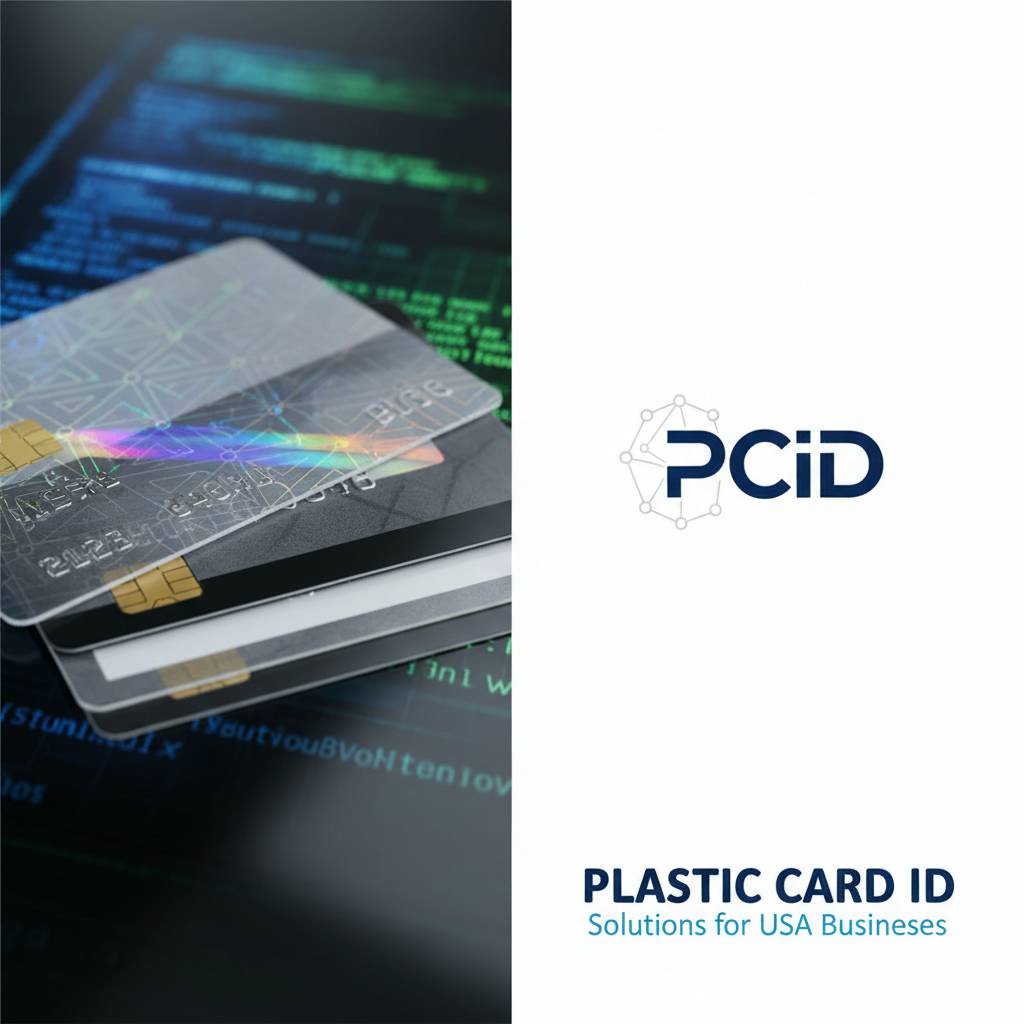 Not every card program needs the same level of protection. The right technology choice is always a function of what the card controls, the scale of your program, and the budget available. Overengineering a low-stakes loyalty card with MIFARE DESFire encryption is unnecessary. Underprotecting a corporate access badge with a plain visual-only design is negligent. The goal is proportionality - matching the security layer to the real-world risk.
CPE has worked with programs ranging from 50 cards per month to mass-production runs in the tens of thousands, and the conversation about technology selection is always the same: start with what the card needs to do, identify the threat model, and choose the simplest card technology that reliably defeats it. That discipline keeps costs controlled without sacrificing protection.
When Blank PVC Cards Are the Right Starting Point
Blank CR80 PVC cards - 30 mil thickness, ISO 7810 standard - are the foundation of almost every in-house card printing program. They give organizations total design control, a lower per-card cost over time, and the flexibility to produce cards on demand rather than waiting on outside print runs. For programs where the primary security need is visual verification combined with an in-house printed photo or barcode, blank cards printed on a quality card printer are an entirely appropriate solution.
The critical point is that "blank" refers to the starting material, not the end product. A blank PVC card that passes through an Evolis, Zebra, or Fargo printer and emerges with a high-resolution photo ID, a personalized barcode, and a security overlay is a far more credible and harder-to-fake credential than anything produced on paper. The card printer and the ribbon quality are as important as the card stock itself.
Specialty Cards for High-Security Environments
Casino player cards, hotel key cards, and premium membership credentials live in environments where the card's authority is tested constantly. Casino player cards track significant reward balances and must resist both physical duplication and digital cloning. Hotel key cards control room access for hundreds of guests simultaneously. Premium membership cards are frequently scrutinized by staff trained to spot fakes. These use cases call for the advanced technologies CPE specializes in.
Luxury metal cards - available in stainless steel, brass, and gold - add a form-factor-based security layer that is genuinely difficult to replicate. The weight, the finish, the tactile experience of a metal card signals authenticity in a way no plastic copy can match. For VIP programs, high-value membership tiers, or executive credentials, metal cards are both a security asset and a premium brand statement.
Matching Card Technology to Program Scale
- 50-200 cards/month: Blank PVC with in-house printing, holographic overlaminates, and photo ID capability is typically sufficient. Focus on print quality and overlay protection.
- 200-1,000 cards/month: Consider HiCo magnetic stripe for value-linked programs, or proximity RFID for access control. Serial numbering with database validation adds a meaningful layer.
- 1,000-10,000 cards/month: Smart chip technology, MIFARE DESFire encryption, custom die-cut formats, or metal card tiers become cost-effective and strategically appropriate at this scale.
- High-risk environments at any scale: Casino cards, healthcare ID, and secure facility access should prioritize cryptographic authentication regardless of program size.
- Event and temporary credentials: Consider clear or frosted specialty cards with event-specific printing and limited encoding - they look distinctive and are harder to stockpile and reuse.
Card Printers, Ribbons, and In-House Printing Best Practices
Preventing counterfeit plastic ID cards isn't only about the card itself. The printing system used to produce credentials is a critical variable. A high-quality card printer from a reputable manufacturer, loaded with the correct ribbon, maintained on a regular cleaning schedule, produces cards with resolution and consistency that are genuinely difficult to match with off-the-shelf equipment. That gap in print quality is a form of security in itself.
CPE carries card printers from Evolis, Zebra, and Fargo - three of the most trusted names in professional card printing. Each manufacturer offers models scaled to different program volumes and feature requirements, from compact desktop units for small programs to high-volume dual-sided printers capable of encoding magnetic stripes and RFID chips in a single pass.
Why Ribbon Quality Matters for Security
The ribbon determines the print quality, the durability of the image, and the availability of security features like UV panels. Genuine OEM ribbons from Evolis, Zebra, and Fargo are engineered to the exact tolerances of their respective printers. Generic or third-party ribbons often produce subtly degraded image quality - slightly lower resolution, less vibrant color, reduced UV reactivity - that trained staff can identify, but that also signals to counterfeiters where the quality ceiling is.
UV ribbon panels, in particular, are a powerful and underutilized security feature. When a card is printed with a UV panel, it deposits an invisible layer of ink visible only under ultraviolet light. A logo, a pattern, or a serial number in UV ink is trivially fast to verify with a handheld UV light and completely invisible to anyone attempting a visual copy. This is a practical, cost-effective security feature accessible to any organization using a printer with UV ribbon capability.
Cleaning Kits and Maintenance as a Security Function
A dirty card printer is not just a maintenance issue - it's a security risk. Dust, debris, and residue buildup on printer rollers and print heads produce cards with inconsistent quality: banding, color shifts, and surface irregularities. Beyond the quality problem, cards produced on poorly maintained printers are easier to replicate, because the counterfeiter only needs to match the degraded output rather than the pristine standard.
Regular cleaning with manufacturer-approved cleaning kits keeps the printer performing at its designed specification, ensuring every card produced meets the quality standard that makes duplication genuinely challenging. CPE supplies cleaning kits compatible with all major printer brands, making maintenance straightforward and affordable for any program size.
Card Carriers, Sleeves, and Controlled Distribution
Physical card security extends beyond production to distribution. Cards intercepted in transit or improperly distributed can become counterfeit templates. Card carriers and protective sleeves serve multiple functions: they protect card surfaces during shipping, signal tamper evidence, and create a branded, professional distribution experience that reinforces the card's perceived value and authority.
Controlled distribution with numbered carriers is a simple and effective audit trail. When each card ships in a serialized carrier, discrepancies between cards issued and cards reported as received become immediately visible. This is not a technological solution - it's a process solution - but it closes a distribution vulnerability that purely technological defenses do not address.
Program Management: Policies and Processes That Prevent Fraud
Technology and materials set the ceiling for counterfeit resistance, but policies and processes determine whether that ceiling is actually reached. The most cryptographically sophisticated card in the world provides no security benefit if the verification reader is never checked, if lost cards are not promptly deactivated, or if staff are not trained to spot the visual signs of a fake. Card security is always a system - not a product.
Organizations that treat card issuance as a one-time setup rather than an ongoing managed program consistently leave gaps that motivated counterfeiters can exploit. The most effective card programs combine the right technology with active program management: regular audits, clear replacement policies, staff training, and a supplier relationship that supports program evolution as threats and needs change.
Lost and Stolen Card Protocols
Every card program needs a defined, immediate-response process for lost and stolen cards. For magnetic stripe and RFID programs, this means a live database that can deactivate a card's credentials within minutes of a report. For visual-only programs, it means issuing replacement cards with a new design element or serial number that distinguishes them from the previous generation - effectively retiring the compromised card at the design level.
The speed of deactivation is the most critical variable in containing exposure from a lost card. A card that is deactivated within an hour of loss limits the window of potential misuse to that hour. A card that remains active for days or weeks because no clear protocol exists becomes an open invitation to fraud, whether by the finder or by a counterfeiter who uses the lost card as a reference template.
Staff Training and Verification Standards
Card readers and electronic verification systems are highly reliable - but they are also the first thing a sophisticated counterfeiter attempts to bypass. Staff who understand what a legitimate card looks and feels like provide a secondary verification layer that complements electronic systems. Training doesn't need to be elaborate: knowing the card's visual security features, understanding the weight and texture differences between genuine and counterfeit cards, and recognizing when a card looks subtly "off" are learnable skills.
For programs using UV printing or holographic overlaminates, providing verification tools - handheld UV lights, loupe magnifiers - at key access points operationalizes these security features. A UV feature that no one checks provides no deterrence. A UV feature checked routinely deters counterfeiters from targeting the program at all, because the cost-benefit ratio of faking a card that will be UV-checked is fundamentally unfavorable.
Regular Card Program Audits
Periodic audits of active card populations reveal discrepancies that indicate potential fraud: more cards in use than were issued, cards appearing in unexpected locations, unusual patterns in access logs or loyalty redemptions. These signals are only detectable if baseline data is being tracked - which means audit capability must be designed into the program from the start, not retrofitted after a problem emerges.
An annual card refresh cycle is one of the simplest and most effective anti-counterfeiting strategies available. Retiring the current card generation and issuing new cards with updated design elements or encoding schemes renders any existing counterfeits obsolete. The operational cost of a refresh is often lower than organizations expect, particularly when working with a supplier like CPE who can support rapid production of new card stock in any quantity.
Partner with Plastic Card ID to Protect Your Card Program
Fifty million cards sold. Over 100,000 customers served. More than 25 years of experience helping organizations across the United States build card programs that work, hold up, and stay secure. CPE is not simply a card supplier - it is a program partner, available to help you select the right card technology, configure the right printing system, and build the processes that keep counterfeit threats from becoming a real-world problem.
Whether you're building a brand-new card program, upgrading an existing one after a security incident, or simply doing due diligence on a program that has been running without a formal review, the conversation starts with understanding what your card needs to do. From blank CR80 PVC cards to MIFARE DESFire smart chips, from Evolis desktop printers to full magnetic stripe encoding systems, the right solution exists - and CPE can help you find it.
Reach out to Plastic Card ID today at 800.835.7919 and take the first step toward a card program that is genuinely difficult to counterfeit, built for the long term, and backed by over two decades of real-world expertise. Your cards represent your organization - make sure they're the kind that can't be faked.
Previous Page