Signature Panels on Blank Plastic Cards
Table of Contents []
- Signature Panels on Blank Plastic Cards: What Every Card Program Manager Should Know - Plastic Card ID
- What Exactly Is a Signature Panel on a Plastic Card?
- Why Signature Panels Matter More Than Most Organizations Realize
- Ordering Blank Plastic Cards with Signature Panels: A Buyer's Guide
- Signature Panels Across Specialty Card Types
- Common Questions About Signature Panels on Blank Cards
- Build a Card Program That Works - Plastic Card ID
Signature Panels on Blank Plastic Cards: What Every Card Program Manager Should Know - Plastic Card ID
There is something quietly powerful about a signature panel. Small, precise, positioned with purpose - it transforms a plain plastic card into a professional credential that carries accountability, authenticity, and authority. Yet many businesses ordering blank plastic cards overlook this feature entirely, or misunderstand exactly what it does and why it matters for their program.
Whether you are running a loyalty program, issuing employee ID badges, managing membership credentials, or distributing event access cards, the signature panel on a blank plastic card is a detail that deserves real attention. CPE has helped over 100,000 customers across the United States build smarter, more effective card programs - and signature panels come up more often than you might expect.
| Card Type | Signature Panel Included | Common Use Case |
|---|---|---|
| Blank PVC CR80 Card | Optional | ID badges, loyalty, membership |
| HiCo Magnetic Stripe Card | Optional (rear panel) | Gift cards, access cards, loyalty |
| LoCo Magnetic Stripe Card | Optional (rear panel) | Hotel keys, short-term credentials |
| Smart Chip Card | Often included | Secure ID, access control |
| RFID Proximity Card | Optional | Building access, time and attendance |
What Exactly Is a Signature Panel on a Plastic Card?
A signature panel is a specially coated strip, typically located on the reverse side of a plastic card, that accepts ink from a ballpoint or fine-tip pen. It is not just a white rectangle printed onto the card surface. The panel is manufactured with a micro-textured coating that grips ink without smearing, allows a clean signature impression, and - critically - shows tampering when someone attempts to alter or remove what has been written.
On standard CR80 blank plastic cards (the ISO 7810 format measuring 3.375 x 2.125 inches at 30 mil thickness), signature panels are a pre-applied feature embedded during card manufacturing. The panel itself is usually white or lightly tinted, often featuring fine horizontal lines or a subtle repeating pattern that becomes visible when disturbed. This tamper-evident design is what separates a true signature panel from a plain white sticker.
The Physical Makeup of a Signature Panel
Most signature panels consist of a specially prepared polyester or vinyl surface bonded to the card substrate before lamination. The material is engineered to accept ink permanently - meaning signatures do not rub off under normal handling. Some panels include a security background pattern printed in light blue or yellow that fragments visibly if someone tries to erase or chemically alter the signature.
The coating also matters for card printing. When you print over or around a signature panel using a card printer from brands like Evolis, Zebra, or Fargo, the panel area must be excluded from the print zone or handled carefully. Printing directly onto the signature panel surface can compromise its ink-acceptance properties, which is why card programs that include both printed graphics and signature panels require deliberate card design planning.
Where the Panel Is Positioned on the Card
Almost universally, the signature panel sits on the reverse face of the card - the side that typically carries magnetic stripes, barcodes, or terms and conditions text. This placement makes practical sense: the front of the card displays identity information, branding, or access credentials, while the back is reserved for technical and verification elements.
Standard panel positioning follows conventions influenced by financial card design, but non-payment card programs have more flexibility. For ID badges, a signature panel on the front of a card - below the photo field - is sometimes used. For loyalty and membership cards, a rear-positioned panel next to issuer information is most common. Positioning matters because it affects both your card printer setup and your cardholder's experience.
How Signature Panels Interact with Magnetic Stripes
On cards that include both a magnetic stripe and a signature panel, the stripe runs along the top edge of the card back while the signature panel sits below it - a layout familiar to anyone who has ever held a standard ID card. These two features do not interfere with each other physically, but their placement must be precisely coordinated. Cards ordered with both features from CPE are manufactured to consistent dimensional tolerances that ensure neither feature overlaps or conflicts.
When ordering HiCo or LoCo magnetic stripe cards with signature panels, it is important to communicate this requirement at the point of purchase. Not all blank magnetic stripe cards automatically include a panel. Confirming your card specifications upfront prevents mismatches between what you order and what your card issuance workflow requires. A small specification detail at order time saves significant operational headaches later.
Why Signature Panels Matter More Than Most Organizations Realize
Here is where things get interesting. Businesses that dismiss signature panels as a legacy feature - a carryover from financial card design that no longer applies to modern card programs - are missing something important. The panel is not just about capturing a signature. It is a physical trust mechanism. It tells the cardholder that this credential was issued to them personally, and it tells anyone verifying the card that ownership has been established through a tamper-evident record.
For employee ID programs, membership organizations, club cards, and event credentials, a signed card is a claimed card. Staff at entry points, event check-in desks, or retail counters can perform a quick visual verification - does the signature on the back match the person presenting the card? That simple check, requiring zero technology, adds a meaningful layer of identity assurance. No app, no scanner, no network connection required.
Signature Panels in Employee ID and Access Credential Programs
Employee ID cards with signature panels communicate a level of institutional seriousness that unsigned cards simply do not. When an organization issues a signed credential, they are establishing a chain of accountability - the cardholder has taken possession of an identified item, and any misuse can be traced. For organizations managing physical access to facilities, labs, server rooms, or restricted areas, this accountability matters.
Combined with photo printing, barcodes, or RFID encoding, a signature panel completes the multi-layer identity package on a single card. CPE supplies blank cards designed to accept all these features simultaneously, so your in-house card printer can produce a complete, professional credential in a single pass. One card. Multiple layers of identity assurance. Total control over your issuance process.
Membership and Loyalty Cards: Why a Signed Card Stays in the Wallet
Think about what happens to unsigned loyalty or membership cards. They accumulate in a drawer. They get passed around casually. They feel disposable. A signed card is different - it carries the psychological weight of personal ownership. Research consistently shows that plastic loyalty cards that live in wallets outperform paper punch cards significantly, and a card that has been personally signed reinforces that wallet residency.
Membership organizations - gyms, clubs, professional associations, libraries - benefit from signature panels because verification becomes straightforward. When the signature on the card matches the member presenting it, front desk staff can complete check-in confidently without logging into a database or scanning a barcode. Speed, simplicity, and accountability in one small panel.
Event and Temporary Credentials with Signature Panels
Events present a unique credentialing challenge: you need to issue cards quickly, often in high volume, while still maintaining enough security to prevent fraud or unauthorized access. Signature panels solve part of this problem elegantly. A blank card with a signature panel can be printed on-site using a desktop card printer, handed to the attendee, and signed before they enter - creating an immediate, verified credential in under two minutes.
For conferences, trade shows, VIP events, or multi-day festivals, this approach scales efficiently. Cards can be pre-printed in batches or produced on demand, and the signature step takes no additional equipment. Compare this to wristband systems that require scissors, adhesives, and cannot be easily verified at multiple checkpoints. A plastic card with a signature panel is reusable as a reference, durable enough to survive a weekend event, and professional enough to leave a lasting impression.
Ordering Blank Plastic Cards with Signature Panels: A Buyer's Guide
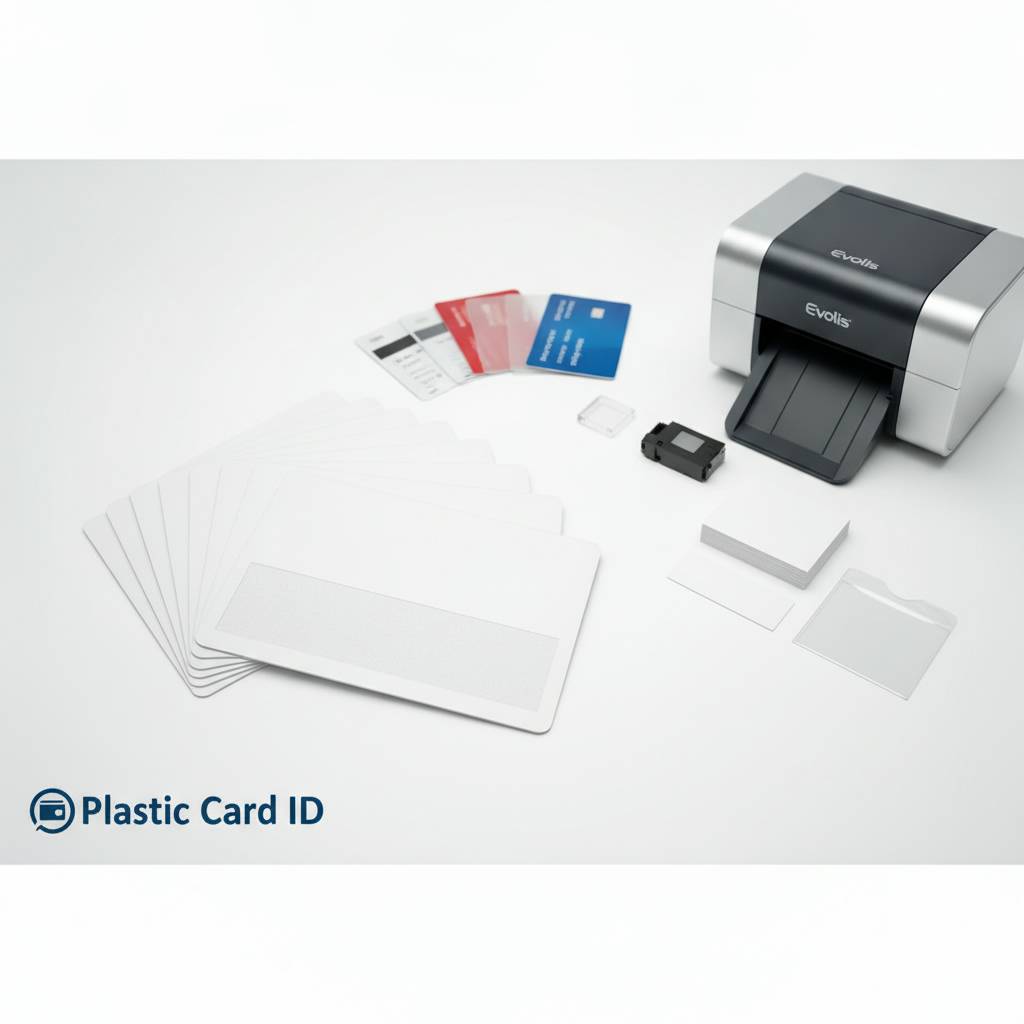 Navigating the details of a blank card order is easier when you know what questions to ask. Signature panels are not a universal default - they are a specified feature that must be selected at the point of ordering. Understanding the available options helps you communicate clearly and receive cards that match your program's needs exactly.
Volume matters too. Blank CR80 cards with signature panels are available from small starter quantities up through tens of thousands of units. Whether you are launching a new membership program with 200 cards or scaling an established loyalty program to 25,000 cards per quarter, the right order structure keeps your per-card cost manageable without sacrificing quality.
Key Specifications to Confirm Before Ordering
- Panel size and position: Standard signature panels measure approximately 2.75 inches wide by 0.375 inches tall, positioned on the card back. Custom positions are available for specialty programs.
- Panel color: White is most common, but tinted panels (light blue, beige) are available and can align with your brand palette.
- Security background pattern: Some panels include a fine-line security pattern in the background that becomes visible when tampered. Specify this if your program requires a higher trust level.
- Magnetic stripe compatibility: If ordering combo cards (signature panel plus magnetic stripe), confirm that the stripe placement (HiCo or LoCo, track configuration) is specified separately.
- Card thickness: Standard 30 mil CR80 is the most common. Thicker 40 mil options are available for premium programs where a heavier card feel is desirable.
- Quantity tiers: Pricing typically improves significantly at 500, 1,000, 5,000, and 10,000 unit thresholds. Know your annual volume to order at the best tier.
Placing a well-specified order upfront avoids back-and-forth corrections that delay your program launch. CPE has processed millions of card orders over 25 years and can guide you through specification selection quickly. The right order, placed right the first time, is always better than a fast order that requires replacement.
Printer Compatibility with Signature Panels
Not every card printer handles signature panel cards identically. Direct-to-card printers - the standard workhorse for in-house programs - print directly onto the card surface. When printing on a card with a pre-applied signature panel, you need to ensure your printer's print zone is configured to avoid the panel area, or accept that ink coverage on the panel will be inconsistent.
Retransfer printers, which print onto a clear film that is then laminated over the card surface, can actually print over signature panels without damaging them - because the print happens on the film, not directly on the panel. For programs that want full bleed graphics on both sides of the card plus a functional signature panel, a retransfer model from Fargo or Zebra may be the better investment. Call 800.835.7919 to discuss which printer model fits your card design and panel requirements.
Volume, Pricing, and Program Scaling
Blank plastic cards with signature panels are priced competitively when ordered at appropriate volumes. The economics of a well-planned card program are straightforward: higher initial volume means lower per-card cost, and lower per-card cost means your program stays financially sustainable as it grows. Retailers who have switched from paper gift cards to plastic have reported sales increases of 35-50% - a figure that makes even a modest increase in card unit cost entirely worthwhile.
Long-term program managers often establish standing order schedules - monthly or quarterly replenishment - that lock in pricing and ensure inventory never runs short. CPE supports programs of every scale, from 50 cards a month to mass production runs in the tens of thousands. Building a card program that scales with your organization is exactly the kind of strategic partnership we are built for.
Signature Panels Across Specialty Card Types
Standard PVC CR80 cards are not the only format that supports signature panels. As card programs grow in complexity and sophistication, specialty card types enter the picture - and understanding how signature panels interact with these formats helps program managers make informed decisions without unnecessary surprises.
From RFID proximity cards used in building access systems to clear plastic cards that showcase creative printing from beneath, the signature panel feature carries across formats in ways that most buyers have not fully explored. Specialty cards are not just about aesthetics - they are about expanding what a single credential can accomplish.
RFID and Proximity Cards with Signature Panels
RFID and proximity cards contain an embedded antenna and microchip beneath the card surface. Adding a signature panel to these cards requires manufacturing precision - the panel cannot be positioned over embedded components, and the card lamination process must accommodate both the electronic components and the surface features. Despite this complexity, RFID cards with signature panels are a standard product available from CPE.
For access control programs where cardholders present credentials at building readers and also need to provide visual verification at staffed checkpoints, a combo RFID card with signature panel is the optimal solution. One card handles both automated and human verification. MIFARE DESFire compatible cards, 125kHz proximity cards, and other RFID formats are all available with signature panel specifications upon request.
Clear and Frosted Cards with Signature Panels
Clear and frosted plastic cards create striking visual effects - printing appears to float in transparent material, and the overall impression is one of premium quality. Adding a signature panel to a clear card introduces a practical consideration: the panel is opaque by nature, which creates a deliberate contrast against the transparent card body. Many designers find this contrast visually effective, grounding the card's functional element against its dramatic transparency.
Frosted cards present a slightly different challenge. The matte surface of frosted PVC can sometimes accept pen ink directly without a dedicated panel - but that acceptance is inconsistent and not tamper-evident. For programs where signature authenticity matters, a properly specified signature panel on a frosted card is always the right call over relying on the card surface itself.
Smart Chip Cards and Signature Panel Placement
Smart chip cards present the most constrained real estate of any card format. The chip module occupies a significant portion of the card face (typically positioned in the left-center area per ISO 7816 standards), which means front-side signature panel placement is rarely practical on smart chip cards. The card back, however, remains fully available and is where signature panels are standardly positioned on chip card formats.
For secure ID programs, government contractor credentials, or enterprise access control programs that require smart chip technology, a rear-panel signature specification keeps all functional elements organized and accessible. The discipline of smart card design often produces cleaner, more professional-looking credentials than less constrained formats. Careful planning from the start pays dividends in every card you issue.
Common Questions About Signature Panels on Blank Cards
Over 25 years and 50 million cards sold, certain questions come up reliably. The signature panel topic generates genuine curiosity - both from buyers new to card programs and from experienced program managers expanding into new card types. Here are the questions worth answering directly.
Can I Print Over or Around a Signature Panel?
Yes, with the right equipment and card design. Direct-to-card printers should be configured to skip the signature panel area during printing - most modern card printers allow you to define exclusion zones in the print driver settings. Attempting to print over a signature panel with a direct-to-card printer will typically result in inconsistent ink adhesion and may damage the panel's ink-acceptance surface.
Retransfer printers offer more flexibility, as noted above. If your design requires full bleed printing on the same face as a signature panel, a retransfer model is the technically correct choice. Matching your printer technology to your card design is one of the most impactful decisions in building a card program. Getting this right from the start avoids costly reprints and program delays.
Do Signature Panels Wear Out Over Time?
Plastic cards are built for durability, and properly manufactured signature panels match the card's lifespan under normal use conditions. The coating will maintain its tamper-evident properties and signature legibility through typical wallet wear - the same conditions that the card body itself is engineered to withstand. Heavy abrasion or exposure to solvents can degrade a panel faster, but under normal program conditions, this is not a common concern.
For programs where cards cycle through active daily use - gym memberships, frequent access credentials, high-volume retail loyalty cards - 30 mil standard thickness cards with quality panel materials perform reliably. For premium programs where perceived quality is a key brand signal, upgrading to 40 mil cards provides a heavier, more substantial feel that also tends to exhibit longer panel durability under heavy-use conditions.
Are There Alternatives to Traditional Signature Panels for Verification?
Yes - barcodes, QR codes, RFID chips, and magnetic stripes all serve verification functions, but none of them replace the specific function of a signature panel, which is human-verified identity ownership. These technologies require readers, networks, or software. A signature panel requires none of those things, which is precisely why it remains relevant in multi-layered card programs even as digital verification technology advances.
- Barcodes and QR codes enable fast digital lookup but cannot confirm personal identity without a matching database check.
- Magnetic stripes encode data efficiently but provide no visual identity signal.
- RFID chips enable contactless authentication but require compatible readers at every checkpoint.
- Signature panels provide instant, equipment-free, visual identity verification that any staff member can perform.
- Combining signature panels with one or more of the above creates the most robust credential available on a single card.
The most effective card programs do not choose between these features - they stack them deliberately. A single card can carry a photo ID, a magnetic stripe, an RFID chip, and a signature panel, covering every verification scenario your program will encounter.
Build a Card Program That Works - Plastic Card ID
The difference between a card program that thrives and one that quietly underperforms often comes down to the details - card stock quality, feature specifications, printer compatibility, and yes, whether that signature panel is properly specified and positioned. Details are not afterthoughts in card program design. They are the foundation.
With over 25 years of experience, more than 100,000 customers served, and over 50 million cards shipped across the United States, Plastic Card ID brings a depth of program knowledge that goes far beyond simply fulfilling orders. From the first consultation through ongoing replenishment and printer support, the goal is a card program that runs smoothly, represents your organization professionally, and scales as your needs grow.
Ready to get the details right from the start? Contact Plastic Card ID today at 800.835.7919 and let us help you build a blank card program with exactly the features your operation requires.
Previous Page