Microtext Security Printing on Plastic ID Cards
Table of Contents []
- Microtext Security Printing on Plastic ID Cards - Plastic Card ID
- What Microtext Security Printing Actually Is
- Industries That Rely on Microtext ID Card Security
- Choosing the Right Card Printer for Microtext Printing
- Designing Microtext Into Your Card Program
- Combining Microtext With Other Card Security Features
- Getting Started With a Secure Card Program Through Plastic Card ID
Microtext Security Printing on Plastic ID Cards - Plastic Card ID
Most people never notice it. That is precisely the point. Microtext - those impossibly small strings of letters, numbers, or patterns printed at a scale that defeats casual observation - is one of the most effective anti-counterfeiting tools available on a plastic card today. When a forger attempts to reproduce your ID card, membership credential, or event pass, microtext becomes a nightmare. It blurs. It breaks. It gives the fake away instantly under a loupe or magnifying glass.
At Plastic Card ID, we have spent over 25 years helping businesses across the United States build card programs that actually hold up - in wallets, in access readers, and under scrutiny. Microtext security printing is one of the advanced features we help clients incorporate into cards that need to do more than look professional. They need to be impossible to fake.
| Card Type | Microtext Application | Security Level |
|---|---|---|
| Employee ID Cards | Company name, department, or serial embedded in design | High |
| Membership Cards | Tier code, organization name, validation phrase | Medium-High |
| Event Credentials | Event date, venue, or access tier hidden in border | Medium |
| Access Control Cards | Authorization code, facility identifier | Very High |
| Casino Player Cards | Patron ID, casino branding, anti-clone markers | Very High |
What Microtext Security Printing Actually Is
Microtext refers to text printed at an extremely small point size - typically 0.2mm to 0.5mm in height - that appears to the naked eye as a line, a pattern, or a decorative border element. It is only when you apply magnification that the text reveals itself. This deceptive simplicity is the source of its power. Anyone who has ever held a genuine banknote under a loupe has seen this technology in action.
On plastic ID cards, microtext is embedded into the card design during the printing stage. It can run along borders, inside logos, beneath photographs, or as a repeating pattern in the card's background. When reproduced on a standard office printer or consumer-grade card printer, the text collapses into an unreadable smear. The reproduction fails the test - and that failure is immediate and obvious to anyone trained to look.
The Technical Mechanics Behind Microtext
Producing legible microtext on a plastic card requires a printer capable of extremely fine dot placement. High-resolution retransfer printers - such as those in the Fargo HDP series - can achieve print resolutions sufficient to render microtext clearly. The card substrate also matters. Smooth, high-quality PVC card stock allows for tighter dot registration. Rough or low-grade substrates cause dot spread that destroys fine detail before the card even leaves the printer.
Font selection is equally critical. Microtext demands fonts with clean, simple geometries - think narrow sans-serif characters without elaborate flourishes. The encoding itself can be a simple repeat of a company name, a unique serial sequence, or a phrase known only to security staff. This hidden phrase becomes your first-line verification tool.
Why Microtext Defeats Most Forgery Attempts
Consumer-grade card printers cannot reproduce microtext accurately. Inkjet and laser reproductions at small point sizes generate bleed and halation - the ink or toner spreads slightly beyond the intended boundary, turning crisp characters into blobs. Even a skilled counterfeiter with access to a quality printer faces the challenge of matching the exact font, spacing, and character string embedded in your original card design.
Microtext is not just a deterrent - it is a forensic marker. If a fraudulent card is ever confiscated and examined, the absence or degradation of microtext provides concrete, documentable evidence that the card is a fake. This matters enormously in industries where fraud carries legal consequences - casinos, healthcare facilities, corporate campuses, and government-adjacent organizations.
Microtext Versus Other Security Print Features
Microtext is one layer in a broader security printing toolkit. Other techniques include guilloche patterns (complex mathematical line art), UV-reactive inks that are invisible under normal light, holographic overlaminates, and laser-engraved personalization. Each has its strengths. Microtext is particularly valued because it requires no special reader or light source for verification - just a magnifying glass, which any security guard can carry.
When combined with other features - say, a UV element on the front and microtext in the border - you create a multi-layer security architecture that would require a sophisticated and expensive reproduction effort to defeat. For most threat environments that businesses face, this level of protection is more than sufficient. It signals that your organization takes credential integrity seriously.
Industries That Rely on Microtext ID Card Security
Not every organization needs microtext. A small gym handing out membership cards to 150 regular clients probably does not face a forgery threat. But once a card carries meaningful access rights - entry to a building, access to financial accounts, admission to an exclusive event, or eligibility for valuable member benefits - the calculus changes. The more valuable the privilege the card grants, the more attractive it becomes as a forgery target.
CPE has worked with clients in a wide range of industries where credential security is a genuine operational concern, not a theoretical one. Understanding which industries lean hardest on microtext helps illustrate when and why to invest in it.
Corporate Campus and Enterprise Access Control
Large enterprises with sensitive facilities - data centers, research labs, manufacturing floors, executive suites - issue access control cards to employees and contractors. A forged badge that passes a visual inspection could allow an unauthorized individual to walk through a door they should never approach. Microtext embedded in employee ID and access control cards adds a verification layer that stands independent of the RFID or magnetic stripe technology in the card itself.
The visual and electronic layers reinforce each other. A security officer who suspects a card is fake can confirm it in seconds with a loupe - no system query required. This is especially valuable during a system outage or a situation where electronic verification is unavailable. Physical card security features are always on.
Casino and Gaming Facilities
Casino player cards are among the most sophisticated plastic cards issued by private enterprises. They control access to loyalty points, complimentary benefits, and sometimes restricted gaming areas. The financial value attached to a legitimate player card makes it a high-value forgery target. Casinos routinely use microtext alongside other advanced security features to protect card integrity.
The Nevada Gaming Control Board and other state regulators take credential fraud seriously. A well-designed casino player card with embedded microtext, RFID encoding, and holographic overlaminates is a serious undertaking - and Plastic Card ID has the catalog and expertise to supply the card stock, printers, and accessories that serious card programs require. Call 800.835.7919 to discuss your casino card program requirements.
Healthcare and Clinical Environments
Hospital and clinic staff ID badges are access credentials, not just name tags. They open medication dispensaries, secure wards, and restricted equipment areas. A forged staff badge is a genuine safety and liability risk. Microtext, combined with photo ID printing and RFID or proximity card technology, creates a credential that is difficult to replicate and easy to verify at a glance.
Healthcare organizations also use ID cards for patient identification - wristbands and portable cards that carry critical information. While microtext is more commonly applied to staff credentials, the principle extends anywhere that accurate identification prevents harm or error. The investment in a secure card program is modest compared to the cost of a single serious incident caused by a credential failure.
Choosing the Right Card Printer for Microtext Printing
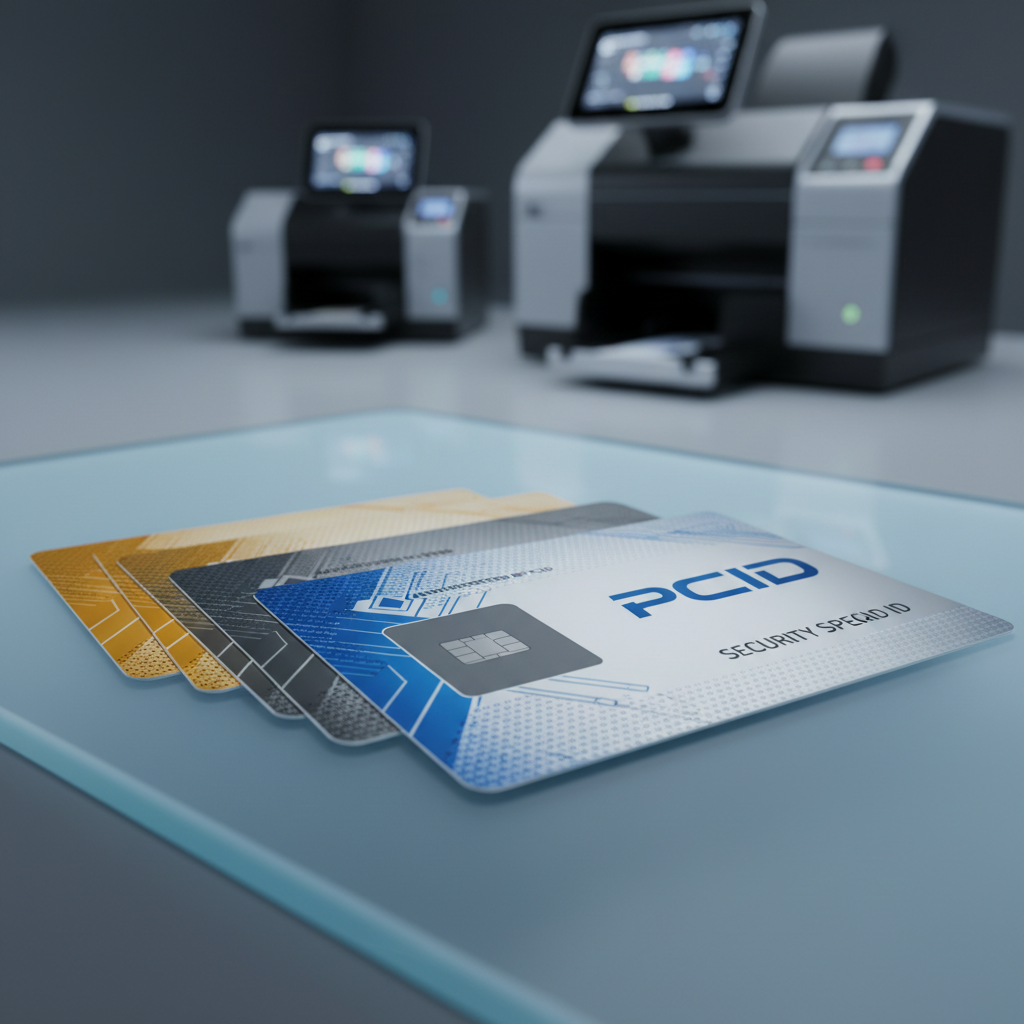 This is where a lot of organizations make a costly mistake. They invest in a well-designed card with microtext elements - and then try to print it on an entry-level direct-to-card printer that simply cannot produce the required resolution. The microtext smears. The security layer is lost. The cards look unprofessional and fail verification tests.
Printer selection for microtext applications is not a minor technical detail. It is the difference between a working security feature and an expensive decoration. Plastic Card ID carries card printers from Evolis, Zebra, and Fargo - three of the industry's most respected brands - and can help you match the right printer to your specific security printing requirements.
Retransfer vs. Direct-to-Card Technology
Direct-to-card (DTC) printers print directly onto the card surface, which means the printhead makes contact with the card. This is cost-effective and produces good results for standard card programs. However, DTC printing has inherent resolution limitations when it comes to extremely fine detail like microtext. The printhead gap and substrate interaction can cause slight dot spread at very small text sizes.
Retransfer printers - such as the Fargo HDP5000 and HDP6600 - print onto a clear film first, then thermally transfer that film onto the card surface. This process achieves sharper edges and better fine-detail reproduction. For microtext applications, retransfer printing is the gold standard. The image is crisper, the text is more legible under magnification, and the overall card quality is visibly superior.
Resolution Specifications That Matter
When evaluating printers for microtext work, look at the DPI (dots per inch) specification - but understand that advertised DPI does not always reflect actual fine-detail reproduction. A printer claiming 600 DPI may or may not reliably render 0.3mm text, depending on the printhead design, the ribbon quality, and the card stock. Request a test print before committing to a printer for a high-security card program.
CPE recommends pairing a high-resolution printer with premium card stock - smooth, white, 30-mil CR80 PVC cards that provide a clean printing surface. The combination of a quality substrate and a capable printer is what makes microtext work in the real world. Cutting corners on either element undermines the security feature you are paying to include.
Printer Ribbons and Their Role in Fine-Detail Printing
The ribbon is the third variable in fine-detail printing quality. Premium YMCKO and YMCKOK ribbons from Evolis, Zebra, and Fargo are formulated for specific printer models and provide consistent dye transfer across the card surface. Off-brand or generic ribbons may save a few dollars per print but often produce inconsistent color density and edge definition that undermines microtext legibility.
Plastic Card ID stocks OEM ribbons for all the printer brands we carry, along with cleaning kits that maintain printhead performance over time. A dirty or worn printhead is one of the most common causes of fine-detail degradation in card printing programs. Regular cleaning cycles are not optional when microtext quality matters.
Designing Microtext Into Your Card Program
Microtext does not add itself. It has to be intentionally incorporated into the card artwork during the design phase. This is where many organizations need guidance - not because the concept is complex, but because the practical details of font size, placement, contrast, and encoding require deliberate decisions. Getting it right the first time saves costly reprints and program delays.
There are several best-practice principles that experienced card program managers follow when incorporating microtext. Understanding these principles helps you brief your design team or work more productively with a card program partner like Plastic Card ID.
Placement Strategies for Maximum Effect
Microtext is most effective when it is positioned within a design element that naturally draws the eye as a decorative feature. A repeating border, the edge of a color band, the inner ring of a circular logo - these are natural homes for microtext that conceal its presence while embedding it firmly in the design. Placing microtext in an obvious blank area of the card invites counterfeits to simply omit it from reproductions.
The best microtext placements are those where a casual observer would never look for text. Inside the shadow beneath a photograph. Along the bottom millimeter of a colored stripe. As the apparent texture of a background pattern. When integrated this way, microtext becomes a forensic element that only emerges under deliberate inspection - exactly the behavior you want from a security feature.
Encoding Content That Adds Verification Value
What you encode in the microtext matters. A simple repeat of your organization name or a generic phrase is better than nothing, but a card-specific serial number, a department code, or a date-range validity marker adds verification depth. Security staff checking a suspicious card can compare what the microtext says against a known expected value - turning visual verification into a knowledge-based check as well.
Some organizations use microtext to encode information that never appears anywhere else on the card - a secret phrase known only to authorized personnel. This approach turns every verification interaction into a two-factor process: the card looks right, and it says the right thing under magnification. For high-security environments, this combination is extraordinarily difficult to circumvent without inside knowledge.
Common Microtext Design Mistakes to Avoid
- Using ornate or script fonts - Fine serifs and decorative flourishes collapse into noise at small sizes. Stick with clean, narrow sans-serif typefaces.
- Printing microtext in low-contrast colors - Light yellow microtext on a white background may be invisible even under magnification. Ensure sufficient contrast between text and background.
- Setting text too small for your printer's capability - Below approximately 0.2mm, even retransfer printers struggle. Test your design at the intended output device before finalizing artwork.
- Placing microtext in areas subject to heavy wear - Card edges and high-touch surfaces degrade over time. Critical security microtext should be positioned away from high-wear zones.
- Neglecting to document the microtext content - If the people responsible for verification do not know what the microtext says, it cannot be used as a verification tool. Maintain a secure record of encoded content.
Combining Microtext With Other Card Security Features
Microtext is most powerful as part of a layered security architecture. No single feature is undefeatable in isolation. The goal is to create a credential that requires so many simultaneous elements to be correctly reproduced that the effort becomes economically and practically prohibitive for a would-be counterfeiter. Layering is the principle, and microtext is one indispensable layer.
Plastic Card ID supplies the full range of card types and security features that allow you to build genuinely robust card programs. From basic printed PVC cards to RFID-enabled smart cards with MIFARE DESFire technology, the catalog is comprehensive. The question is not whether we have what you need - it is which combination of features best fits your threat environment and budget.
UV Fluorescent Printing
UV-reactive inks are invisible under standard lighting and glow vividly under a UV lamp. Combined with microtext visible under a loupe, UV printing creates two independent verification layers that require two different tools to confirm. A security checkpoint equipped with both a UV lamp and a magnifying glass can perform thorough verification in under ten seconds.
UV printing and microtext complement each other perfectly because they appeal to different verification workflows. Rapid-throughput situations - event entry, building access during shift change - favor the quick UV sweep. Detailed secondary checks, or forensic examination of a seized card, employ the microtext layer. Having both means your cards are covered across the full spectrum of verification scenarios.
Holographic Overlaminates
Holographic overlaminates apply a thin, optically complex film to the card surface that produces rainbow interference patterns visible to the naked eye. These patterns are extraordinarily difficult to reproduce without specialized equipment. Overlaminates also protect the printed surface beneath, extending card life and maintaining microtext legibility over time by shielding it from surface abrasion.
Adding a holographic overlaminate to a card featuring microtext and UV printing creates a three-layer security package that places your credentials in a very different category from standard printed cards. The visual signal alone - a card that shimmers with authenticated holographic patterns - communicates legitimacy to anyone who handles it, even before closer inspection begins.
RFID and Smart Chip Integration
Electronic security features - RFID proximity technology, contactless smart chips, magnetic stripes with HiCo encoding - operate on a completely different attack surface from visual security features. A counterfeiter who successfully reproduces the visual appearance of your card still faces the challenge of cloning the electronic credential. Combining visual microtext security with RFID or smart chip technology means a successful attack must defeat both layers simultaneously.
For access control applications in particular, this combination is considered best practice. The physical security of the card - microtext, UV, holographic elements - handles visual verification and credential authentication in low-tech or offline scenarios. The electronic layer handles automated access control at readers. Together, they create a credential that is genuinely difficult to defeat without extraordinary resources.
Getting Started With a Secure Card Program Through Plastic Card ID
Building a card program that incorporates microtext security printing is not a complicated undertaking when you have the right partner. It requires deliberate planning - choosing the right card stock, the right printer, the right ribbon, and the right design approach - but none of those decisions are beyond the reach of any organization willing to invest a little time in getting them right.
Plastic Card ID has guided thousands of organizations through exactly this process over more than 25 years and more than 50 million cards sold. We understand what works, what does not, and how to match the right combination of products to your specific application. Whether you are running 50 cards a month or scaling to tens of thousands, we have the depth to support your program at every stage.
What to Expect When You Contact Us
When you reach out to CPE, you are not talking to an automated quoting system. You are connecting with people who understand card programs from the substrate up - from the card stock and the printer to the ribbon, the overlaminate, and the security features embedded in the artwork. We ask the right questions: What is the card for? Who will be verifying it? What is the threat level? How many cards per month?
Those answers shape a card program recommendation that is right-sized for your needs and budget. We do not sell you technology you do not need, and we do not under-specify a program that genuinely requires advanced security features. Reach our team directly at 800.835.7919 and let us help you design a card that does its job - every time, under every kind of scrutiny.
Products That Support Microtext Card Programs
- High-resolution retransfer card printers from Fargo, Evolis, and Zebra
- Premium OEM printer ribbons for sharp fine-detail reproduction
- Smooth white CR80 30-mil PVC card stock optimized for security printing
- Holographic overlaminate patches and laminate ribbons
- RFID and proximity card blanks for multi-layer credential programs
- Smart chip cards including MIFARE DESFire compatible blanks
- Printer cleaning kits for maintaining printhead performance
- Card carriers, sleeves, and affixing and mailing fulfillment services
A Long-Term Partner for Card Program Success
Card programs are not one-time purchases. Printers need ribbons. Ribbons need to be reordered. Card stock depletes. Printheads need cleaning. Programs grow, add features, or change design requirements over time. Plastic Card ID is structured to be your long-term partner through all of it - not a vendor you order from once and never hear from again.
With over 100,000 customers served and a catalog that covers everything from blank card stock to advanced smart card technology, we are the one-stop shop for serious card programs across the United States. The combination of depth, experience, and genuine service orientation is what makes working with CPE different from shopping for cards online. We are invested in your program's success because our reputation depends on it.
Ready to add microtext security printing to your plastic ID card program? Contact Plastic Card ID today at 800.835.7919 - your partner in building card credentials that hold up under any scrutiny.
Previous Page