Blank Plastic Cards for Healthcare Worker IDs - Essential Guide
Table of Contents []
- Blank Plastic Cards for Healthcare Worker IDs: Why Plastic Card ID Is the Partner Your Facility Needs
- Card Technology Options That Serve Modern Healthcare Security Needs
- In-House Card Printing: Building a Healthcare Badge Program That Runs Itself
- Specialty Cards for Unique Healthcare Credential Applications
- Frequently Asked Questions: Blank Cards for Healthcare Worker IDs
- Why Healthcare Organizations Across the USA Choose Plastic Card ID
Blank Plastic Cards for Healthcare Worker IDs: Why Plastic Card ID Is the Partner Your Facility Needs
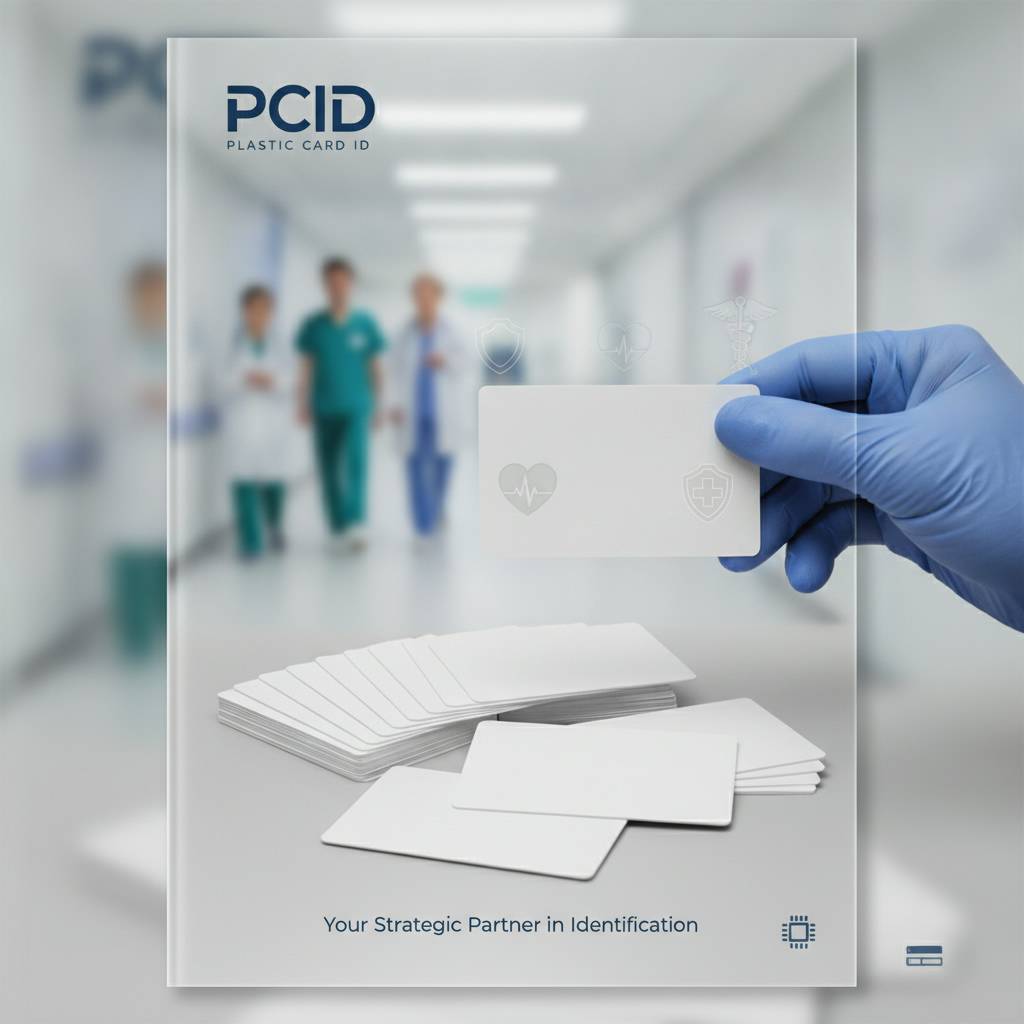
Walk into any hospital, clinic, or outpatient center in America and look at the staff. Every nurse, physician, technician, and administrator is wearing one thing in common: an ID badge. That badge is not decoration. It signals authorization, builds patient trust, enables access control, and in many facilities, it doubles as a time-tracking credential or door access token. The card underneath the printed face - that blank CR80 plastic card - is where the entire program starts.
Plastic Card ID has supplied blank plastic cards to healthcare organizations across the United States for over 25 years. More than 100,000 customers and 50 million cards later, they understand what healthcare HR directors, facility managers, and security teams actually need: consistent card quality, reliable supply, and a partner who treats your program as if it were their own.
The Foundation of Every Healthcare ID Badge Program
Blank CR80 PVC cards - measuring 3.375 x 2.125 inches at 30 mil thickness - are the ISO 7810 standard for ID credentials worldwide. That specification matters in healthcare because it means your cards will feed cleanly through any compatible card printer, whether you are running an Evolis Primacy 2, a Zebra ZC300, or a Fargo HDP5000. Consistency is non-negotiable when you are badging dozens of new hires every month.
When a facility orders blank cards in bulk, they retain complete control over the design and encoding process. Print today's new hires in-house, update badge templates without redesigning an entire order, and reprint lost or damaged cards within minutes. That kind of operational agility is simply not possible with pre-printed card programs managed by outside vendors on long lead times.
Why PVC Plastic Outperforms Paper and Laminate Alternatives
Paper badges curl at the edges, fade under fluorescent lighting, and absorb moisture in high-humidity clinical environments. Laminate pouches add bulk and peel over time. A solid PVC plastic card does none of those things. It holds a crisp printed image through hundreds of badge swipes and daily contact with badge holders, lanyards, and clip attachments without degrading visually or structurally.
Healthcare workers wear their IDs every single shift. A badge that looks worn, faded, or unprofessional reflects poorly on the facility in the eyes of patients, visitors, and regulatory inspectors. Plastic cards project a standard of professionalism that matches the clinical environment they operate in. Durability is not a luxury in this context - it is a baseline requirement.
Volume Flexibility: From Small Clinics to Large Hospital Networks
CPE works with healthcare clients of every scale. A single urgent care clinic might need 100 blank cards per quarter. A regional hospital network may require tens of thousands annually across multiple campuses. Either way, the per-card quality is identical, and the ordering process is straightforward. No minimum order headaches, no one-size-fits-all contracts - just clean, reliable supply that scales with your program.
Bulk ordering also drives meaningful cost savings. Ordering 500 cards versus 50 drops per-card costs significantly, and for a facility that prints badges continuously, those savings accumulate quickly across departments like nursing, administration, laboratory services, dietary, housekeeping, and security - all of which may operate independent badging schedules.
| Card Type | Best Use Case | Key Feature |
|---|---|---|
| Blank CR80 PVC (30 mil) | Standard staff ID badges | Universal printer compatibility |
| HiCo Magnetic Stripe Cards | Time and attendance, door access | High coercivity for durability |
| LoCo Magnetic Stripe Cards | Short-term visitor credentials | Lower coercivity, cost-effective |
| RFID / Proximity Cards | Contactless door access control | Tap-and-go convenience |
| Smart Chip Cards (MIFARE) | Multi-function credentials | Encrypted data storage |
Card Technology Options That Serve Modern Healthcare Security Needs
Modern healthcare facilities are not simply printing names and photos on plastic anymore. Today's ID badges carry embedded technology that ties directly into physical security infrastructure, time-tracking systems, and access control platforms. Understanding which card technology aligns with your facility's existing systems is critical before placing your first order - and Plastic Card ID helps clients navigate that decision every day.
The choice between magnetic stripe, RFID proximity, and smart chip cards is not purely a technology decision. It is an operational one. Each technology type comes with different encoding requirements, reader compatibility considerations, and use case strengths. Getting this decision right from the start saves facilities from expensive re-carding projects down the road.
Magnetic Stripe Cards: HiCo vs. LoCo for Healthcare Applications
Magnetic stripe cards remain one of the most widely deployed credential technologies in healthcare settings. High Coercivity (HiCo) cards offer stronger magnetic resistance against everyday interference - including proximity to other magnetic fields common in clinical environments like MRI suites and radiology departments. For permanent staff credentials, HiCo is the recommended choice.
Low Coercivity (LoCo) magnetic stripe cards are better suited to temporary or short-term applications, such as visitor passes or contractor credentials that cycle frequently. The lower coercivity makes encoding easier and the per-card cost slightly lower, making them a smart choice when the card's lifespan is measured in days rather than years.
RFID and Proximity Cards: Contactless Access for Secure Areas
Hospitals contain areas that require strict access control: pharmacies, server rooms, surgical suites, pediatric wards, and administrative offices housing sensitive records. Proximity cards and RFID-enabled credentials give security teams the ability to grant and revoke access remotely, log entry events, and integrate with comprehensive access control platforms - all without the friction of key management.
Contactless card technology has become a standard expectation in facilities undergoing security infrastructure upgrades. Proximity cards operate at 125kHz and are compatible with most legacy reader systems, while MIFARE DESFire smart cards offer encrypted contactless communication for high-security zone requirements. Plastic Card ID supplies both, along with the technical guidance to help facilities choose correctly.
Smart Chip Cards: The Multi-Function Credential
For larger healthcare systems that want a single card to function as an ID badge, door access credential, and time-tracking token simultaneously, smart chip cards offer the most powerful solution. MIFARE DESFire EV2 and EV3 chips support multiple encrypted applications on a single card - reducing the number of credentials employees need to carry and streamlining the onboarding process significantly.
The upfront cost per card is higher compared to standard PVC blanks, but the operational value of a unified credential often outweighs that premium within the first year. Facilities report measurable reductions in badge reprints, lost card incidents, and IT overhead once they transition to smart credential programs. Call 800.835.7919 to discuss smart card options for your specific infrastructure.
In-House Card Printing: Building a Healthcare Badge Program That Runs Itself
Outsourcing badge production to a third-party printer sounds convenient until the reality of healthcare hiring timelines sets in. New hires start Monday. Contractors arrive with little notice. Temporary agency staff rotate weekly. The turnaround time for an externally-printed badge - often five to ten business days - simply does not match the pace of healthcare workforce management. In-house card printing solves that gap entirely.
Plastic Card ID supplies not only blank cards but the full printer ecosystem to support in-house production: Evolis, Zebra, and Fargo card printers, printer ribbons matched to each printer model, cleaning kits for optimal print quality, and card accessories including holders, lanyards, and badge reels. Everything needed to run a self-sufficient badging station is available from a single supplier.
Choosing the Right Card Printer for Your Healthcare Facility
Card printer selection depends on three primary factors: print volume, card complexity, and budget. A small clinic printing 20-30 badges per month has very different needs than a hospital network processing hundreds of credentials weekly. Entry-level desktop printers handle single-sided monochrome or color printing efficiently for lower volumes. Higher-throughput facilities benefit from retransfer printers like the Fargo HDP5000, which delivers photo-realistic print quality and works well with specialty card surfaces.
Dual-sided printing capability matters significantly in healthcare, where the reverse side of a badge may carry emergency contact information, department color coding, barcode identifiers, or compliance text. Facilities that anticipate growing their program should invest in dual-sided capability from the start rather than upgrading hardware prematurely. CPE can advise on printer selection based on your current and projected volume.
Ribbons, Cleaning Kits, and Accessories: Keeping Print Quality Sharp
A common oversight among facilities setting up in-house badge programs is underestimating the importance of consumable supply management. Using the wrong ribbon for a given printer model results in poor color accuracy, banding, and premature printhead wear. Plastic Card ID supplies printer-matched ribbons - YMCKO full-color, K monochrome, and specialty overlaminates - ensuring every badge prints cleanly from the first card to the last in the ribbon roll.
Regular cleaning is equally essential. Dust, debris, and card residue accumulate inside the printer transport path and on the printhead over time. Cleaning kits designed for specific printer models - including cleaning cards, swabs, and roller cleaning films - remove contaminants that degrade print quality and shorten printer lifespan. A well-maintained printer running quality blanks and matched ribbons can produce consistently sharp ID badges for years.
Card Carriers, Holders, and Mailing Solutions
For healthcare systems onboarding remote employees, distributing cards to multiple campuses, or mailing credentials to temporary or traveling clinical staff, Plastic Card ID offers card affixing and mailing services. Cards can be delivered ready-to-use, paired with a carrier document containing onboarding instructions, access setup guides, or compliance reminders - reducing the administrative workload on HR and security teams.
Badge accessories including rigid holders, flexible sleeves, retractable badge reels, and lanyards are also available. These may seem like minor details, but the right badge holder protects card surface quality, keeps printed information legible over extended use, and signals that the facility takes its credentialing program seriously. Small details reinforce the professional standard that healthcare environments demand.
Specialty Cards for Unique Healthcare Credential Applications
 Not every credential in a healthcare environment fits the standard employee badge mold. Visitor management programs, volunteer recognition, contractor identification, event access for medical conferences, and executive-level credentials all have distinct requirements. Plastic Card ID offers specialty card options that address these varied applications without requiring custom manufacturing minimums that price out smaller programs.
Clear and Frosted Cards for Distinctive Credential Designs
Clear and frosted PVC cards offer a visually distinctive alternative to standard white stock. Volunteer and visitor credentials designed on clear card stock stand out immediately - which is precisely the point in a clinical environment where staff need to visually distinguish between personnel classifications at a glance. Frosted cards offer a softer semi-opaque appearance that pairs well with modern, minimalist badge designs.
These specialty blanks are compatible with standard card printers and print cleanly with YMCKO full-color ribbons. They carry the same CR80 dimensions and 30 mil thickness as standard blanks, ensuring seamless compatibility with existing badge holders and lanyards. Visual differentiation between credential types is a genuine security benefit, not merely an aesthetic choice.
Colored Card Stock for Department Color-Coding Systems
Many hospitals and large healthcare systems use color-coded badge systems to immediately communicate departmental affiliation or clearance level to anyone in the facility. A nurse in green, a physician in blue, a visitor in red - this kind of instant visual communication reduces the cognitive load on staff verifying credentials quickly in high-pressure environments. Pre-colored card stock eliminates the need to print background colors, which saves ribbon usage and reduces print complexity.
Plastic Card ID stocks colored PVC card blanks in multiple colors that support department color-coding programs. Ordering colored stock in bulk for each department category standardizes the program and keeps per-card costs down while maintaining the visual differentiation that makes the system functional. Contact 800.835.7919 to inquire about available color stock options for your program.
Luxury and Specialty Cards for Healthcare Leadership and Recognition
Executive identification, board member credentials, physician recognition awards, and VIP access cards for facility events represent situations where the standard PVC blank is not the right fit. Plastic Card ID offers metal cards in stainless steel, brass, and gold finishes for applications where the credential itself is meant to convey distinction and permanence. These are not novelty items - they are professional-grade credentials with real functional and symbolic weight.
Custom die-cut card shapes are also available for facilities that want to issue something genuinely unique for special events, fundraiser access, or branded executive programming. Die-cut cards maintain CR80-compatible thickness and can carry printed or encoded data like any standard card. When the occasion calls for something beyond the ordinary, these specialty options deliver.
Frequently Asked Questions: Blank Cards for Healthcare Worker IDs
Healthcare procurement teams, HR directors, and security managers frequently arrive with the same set of questions when building or expanding a card program. The following answers address the most common points of confusion and decision-making friction encountered by facilities working with Plastic Card ID.
What Quantity Should a Healthcare Facility Order to Start?
Most small to mid-sized facilities begin with a case of 500 blank CR80 cards, which provides enough supply to badge new hires, replace lost cards, and maintain a reserve without over-committing budget. Larger facilities with active turnover and multiple departments may start with 1,000-2,500 cards to ensure uninterrupted supply. CPE works with clients to estimate realistic starting quantities based on headcount and projected turnover rates.
- Single urgent care clinics: 100-250 cards per order is typically sufficient
- Community hospitals with 200-500 staff: 500-1,000 cards per order recommended
- Regional hospital networks: 2,500-10,000 per order depending on campus count
- Facilities with high contractor or temporary staff volume: consider separate LoCo mag stripe stock for short-term credentials
- Organizations running color-coded systems: order colored stock per department in individual lots
Are Blank PVC Cards Compatible With All Card Printers?
Standard CR80 blank PVC cards at 30 mil thickness are compatible with virtually all major card printer brands, including Evolis, Zebra, Fargo, Matica, and IDP. The ISO 7810 standard specification that defines CR80 dimensions exists precisely to ensure this universal compatibility. Facilities do not need to purchase cards from the same manufacturer as their printer - a common misconception that leads to unnecessarily higher per-card costs.
The exceptions worth noting: specialty card surfaces like clear, frosted, or pre-laminated cards may require adjusted printer settings or specific ribbon types to achieve optimal print quality. Plastic Card ID provides compatibility guidance with every specialty card purchase so facilities do not encounter print quality surprises when switching card stock types.
How Long Do Printed PVC Healthcare ID Badges Typically Last?
A properly printed CR80 PVC card in a quality badge holder or sleeve will maintain visual and structural integrity for two to three years under regular daily use. Cards worn on lanyards without holders tend to show surface wear more quickly due to friction and handling. Overlaminate ribbons add a protective clear layer over the printed surface that extends badge life significantly, particularly for high-contact areas like the printed photo and name.
Facilities that reprint badges annually as part of a standard credentialing cycle find that PVC cards rarely need to be replaced for quality reasons before that scheduled refresh. The main driver of early replacement is card loss, damage from improper storage, or facility rebranding - not material degradation. PVC is a genuinely durable credential substrate built for the demands of daily professional wear.
Why Healthcare Organizations Across the USA Choose Plastic Card ID
Twenty-five years in business, 100,000-plus customers, and over 50 million cards delivered is a track record that speaks before any sales pitch begins. But the number that matters most to healthcare clients is not the volume - it is the consistency. Every order, regardless of size, arrives on specification. Every blank card feeds through the printer clean. Every magnetic stripe encodes correctly. Reliability is the product, not just the card.
Healthcare organizations operate in environments where a missing badge is not merely an inconvenience - it is a security event. When a replacement needs to be printed within the hour, the supply chain behind that moment has to be dependable. Plastic Card ID has built the kind of institutional reliability that healthcare procurement teams can lean on, not just the first time, but every time for years on end.
A True One-Stop Shop for the Complete Healthcare Badge Program
The operational advantage of sourcing everything through a single supplier is underappreciated until facilities experience the friction of managing multiple vendors for cards, printers, ribbons, and accessories separately. Plastic Card ID eliminates that friction entirely. Blank cards, magnetic stripe stock, RFID and smart card options, card printers from leading brands, printer ribbons, cleaning kits, badge holders, and mailing services - all available from one source, with one point of contact.
For healthcare HR and security teams already managing complex operational priorities, streamlining the badge supply chain into a single vendor relationship saves real time and reduces errors. Reorder triggers are simpler, invoicing is consolidated, and the institutional knowledge of a long-term supplier relationship means your program gets better service over time, not less. That is what a strategic partnership looks like in practice.
Serving USA Healthcare Facilities of Every Size and Specialty
From rural critical access hospitals to urban academic medical centers, from single-location dental practices to multi-state behavioral health networks - Plastic Card ID has served healthcare clients across virtually every facility type and size classification. The needs differ, but the commitment to supply quality and service consistency does not. CPE applies the same attention to a 100-card order for a small clinic as to a 50,000-card annual contract for a large health system.
Specialty healthcare environments including outpatient surgery centers, dialysis clinics, rehabilitation facilities, hospice organizations, and home health agencies all have credentialing requirements that generic office supply solutions do not address well. A supplier with deep healthcare sector experience understands those nuances and can advise accordingly - which is exactly the kind of partnership Plastic Card ID delivers.
Getting Started: From First Inquiry to First Printed Badge
Starting a new badge program or transitioning an existing one to in-house production does not require a lengthy procurement process. Most healthcare facilities can be operational within days of placing their first order. Cards ship quickly, printer setup is straightforward with manufacturer support resources, and Plastic Card ID is available to answer configuration and compatibility questions throughout the process.
Facilities upgrading from an outdated credential format - paper, laminate, or an older PVC card design - find the transition straightforward. Existing badge artwork can typically be adapted to work with a new printer and card stock combination with minimal rework. The investment in an in-house plastic card program pays back rapidly through reduced outsourcing costs, faster credential turnaround, and improved badge quality that reflects well on the facility at every patient and visitor interaction.
Ready to upgrade your healthcare worker ID program? Contact Plastic Card ID today at 800.835.7919 and speak with a card program specialist who understands what your facility needs.
Whether you are ordering blank CR80 PVC cards for the first time, expanding an existing badge program across multiple departments, or evaluating smart card technology for your access control upgrade, Plastic Card ID has the products, expertise, and track record to make your program successful. Call Plastic Card ID now at 800.835.7919 - because every healthcare worker deserves a credential that matches the professionalism they bring to work every day.
Previous Page