Blank Plastic Cards for Hotel Key Cards: Buyers Guide
Table of Contents []
- Blank Plastic Cards for Hotel Key Cards - Plastic Card ID
- Why Hotels Need the Right Blank Card - Not Just Any Card
- Magnetic Stripe Hotel Key Cards - HiCo vs. LoCo Explained
- RFID and Contactless Hotel Key Cards
- Building a Complete Hotel Card Program
- Frequently Asked Questions - Hotel Key Card Purchasing
- Beyond Hotel Keys - Expanding Your Card Program
- Partner with Plastic Card ID for Your Hotel Card Program
Blank Plastic Cards for Hotel Key Cards - Plastic Card ID
Walk into any hotel lobby today and you'll notice something consistent: the key card handed to you feels substantial, professional, and deliberate. That small rectangular card carries more responsibility than most people realize - it controls room access, represents the property's brand, and shapes the guest's first tactile impression. Hotels, resorts, boutique inns, and extended-stay properties across the United States rely on blank plastic cards built to exact specifications to make that moment count.
Plastic Card ID has been the trusted source behind millions of those cards for over two decades. With more than 50 million cards sold and over 100,000 customers served nationwide, the depth of experience here is not theoretical - it's measurable, proven, and ready to work for your property.
| Card Type | Technology | Best Use Case | Encoding Standard |
|---|---|---|---|
| Blank RFID Card | Contactless (13.56 MHz) | Modern electronic door locks | MIFARE, HID |
| Proximity Card | 125 kHz | Legacy access control systems | EM4100, HID Prox |
| Magnetic Stripe Card (HiCo) | High Coercivity Magnetic | Hotel lock systems, loyalty | ISO 7811 |
| Smart Chip Card | Contact/Contactless IC | High-security properties | ISO 7816 |
| Blank CR80 PVC Card | None (print-ready) | In-house printing, branding | ISO 7810 |
Why Hotels Need the Right Blank Card - Not Just Any Card
There's a meaningful difference between a card that works and a card that works well. Hotel key cards endure a specific kind of punishment - slipped into wallets next to credit cards, tossed on nightstands, swiped repeatedly, sometimes bent, exposed to heat in pockets - and they need to perform flawlessly every single time. A guest locked out at midnight is not an inconvenience; it's a brand problem.
The substrate matters enormously. Standard CR80 PVC cards at 30 mil thickness meet ISO 7810 specifications and are the baseline for professional hotel card programs. But the technology embedded or encoded in that card - magnetic stripe, RFID chip, proximity antenna - must align precisely with the property's door lock system. Mismatched specifications mean costly reprints, frustrated guests, and operational headaches at the front desk.
Matching Card Specs to Your Lock System
Most hotel lock systems fall into two broad categories: magnetic stripe systems and contactless RFID systems. Older properties often run Saflok, Onity, or VingCard magnetic stripe locks, which require HiCo (High Coercivity) magnetic stripe cards encoded to ISO 7811 standards. These cards resist demagnetization from proximity to other cards - a critical detail that budget magnetic stripe cards often fail to deliver.
Newer installations and boutique hotels increasingly favor RFID-based locks, particularly those using MIFARE technology operating at 13.56 MHz. Selecting the wrong chip frequency or the wrong encryption protocol means the card simply won't communicate with the lock. CPE offers expert guidance on card selection based on your existing hardware - eliminating the guesswork that trips up so many first-time card buyers.
The Role of Card Thickness and Durability
At 30 mil, a standard CR80 PVC card offers the right balance of rigidity and flexibility for hotel applications. Thinner cards flex under pressure and crack at edges over repeated use. Cards that are too rigid can jam in older card readers. The 30 mil standard has persisted precisely because it works across the broadest range of hardware and survives the real-world handling patterns of hotel guests.
Overlay laminates and surface coatings also play a role. Cards that will be printed in-house benefit from a smooth, matte or glossy finish that accepts dye-sublimation ink cleanly. If a card looks faded or streaky after printing, the issue is often the card surface itself - not the printer or ribbon. Starting with a quality blank card is the single most important variable in your final printed output.
Quantities, Lead Times, and Program Planning
A 50-room boutique hotel replacing cards quarterly has very different needs than a 400-room convention property cycling through thousands of keys per month. Plastic Card ID serves both ends of that spectrum with equal competence - from modest monthly orders of 50 cards to mass production runs in the tens of thousands, all shipped across the United States.
Smart program planning means keeping an adequate buffer stock on hand. Front desk staff running out of key cards mid-week is avoidable. Understanding your average cards-per-stay, your breakage and loss rate, and your peak occupancy periods allows you to set reorder points that prevent shortages without over-purchasing. CPE works with properties to model these numbers and build a supply rhythm that keeps operations smooth.
Magnetic Stripe Hotel Key Cards - HiCo vs. LoCo Explained
The distinction between HiCo and LoCo magnetic stripe cards is one of the most frequently misunderstood topics in the card industry, and it has direct consequences for hotel operations. High Coercivity (HiCo) cards require a stronger magnetic field to encode - which is exactly why the data stays stable longer and resists accidental erasure. LoCo cards are easier and cheaper to encode but far more susceptible to demagnetization from everyday wallet contact.
For hotel key cards, HiCo is almost universally the correct choice. The cost difference between HiCo and LoCo cards at volume is minimal, but the operational difference - measured in fewer re-key requests, fewer guest complaints, and fewer late-night front desk emergencies - is significant. Plastic Card ID stocks both types, but properties investing in guest experience consistently choose HiCo.
Encoding and In-House Programming
Blank magnetic stripe cards arrive unencoded, meaning the property programs them using their existing front desk software and encoder hardware - the same encoder connected to the property management system (PMS). This workflow is standard across Saflok, VingCard, Onity, and ASSA ABLOY systems. The encoder writes the room number, check-in, and checkout data to the card's magnetic stripe at the time of guest check-in.
Because encoding happens on-site, properties maintain complete control over their security data. Bulk ordering blank HiCo cards - rather than pre-encoded cards - keeps costs low and operations flexible. A card that sits in a drawer does not expire; it encodes fresh for every guest on demand. This is the model that professional hotel operations have relied on for decades.
Stripe Placement and Track Configuration
Magnetic stripe cards come in standard configurations: single-stripe across Track 2 is the most common for hotel applications. Some properties use dual-stripe or three-track configurations to store additional data - loyalty account numbers, room service credits, or spa access permissions - all on one card. The stripe placement on the card must match what the reader hardware expects, making card selection a specification exercise, not just a commodity purchase.
Contact Plastic Card ID at 800.835.7919 to confirm the stripe configuration that matches your specific lock system before placing a bulk order. This single conversation can prevent a costly mismatch and get your program running right from the first card.
Volume Pricing and Bulk Order Advantages
Blank magnetic stripe cards ordered at volume offer substantially better per-card economics than small batch purchases. Properties that plan their annual card usage and place larger orders less frequently save meaningfully compared to repeated small reorders. Beyond unit price, fewer transactions mean less administrative overhead and more predictable budget line items.
The math is straightforward: a 400-room property replacing key cards for 70% occupancy over 365 days, with two cards per room, is consuming roughly 200,000 card-days per year. At that scale, the difference between a well-priced bulk contract and ad hoc purchasing is measurable in thousands of dollars annually. CPE helps properties model this and structure purchasing accordingly.
RFID and Contactless Hotel Key Cards
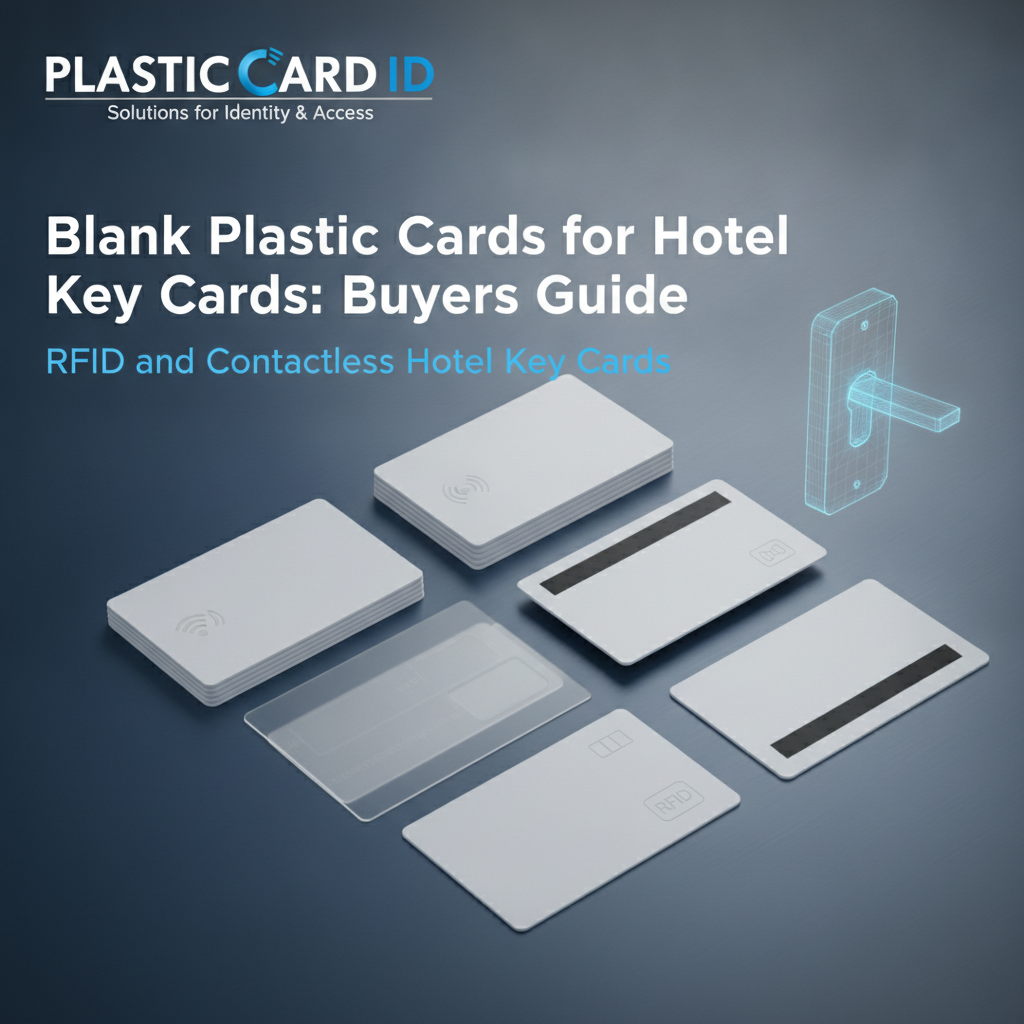 Contactless key cards have become the standard for new hotel construction and renovation projects across the country. The guest experience is seamless - tap the card, hear the click, enter the room. No swiping, no orientation confusion, no degraded stripe issues. RFID hotel key cards represent the current best practice for guest-facing access technology.
But "RFID card" is not a single specification. Frequency, chip type, memory size, encryption standard, and form factor all vary. Selecting the right blank RFID card for a hotel application requires matching the card to the door lock hardware, the encoder software, and the security requirements of the property. Plastic Card ID stocks a range of RFID and proximity card options to serve this exact need.
MIFARE and High-Security Contactless Options
MIFARE DESFire is the gold standard for high-security contactless applications. Used in properties where data security, cloning resistance, and advanced encryption matter - think urban boutique hotels, resorts with high-value guest data, or casino hotel properties - MIFARE DESFire cards deliver AES encryption and mutual authentication that basic contactless cards cannot match.
For properties with standard security requirements, MIFARE Classic and MIFARE Ultralight variants offer a reliable, cost-effective contactless solution compatible with the majority of modern hotel lock systems. The key variable is always the lock manufacturer's specification sheet - matching chip type to reader hardware is non-negotiable for a functioning system.
Proximity Cards for Legacy Systems
125 kHz proximity cards remain relevant in properties running older access control infrastructure. These cards communicate with readers at short range using radio frequency, requiring no physical contact. They're durable, reliable, and compatible with a wide range of legacy reader hardware still operating in hotels built in the 1990s and early 2000s.
While many properties are migrating toward 13.56 MHz contactless systems, proximity cards remain the right solution for any property not yet ready for a full lock system upgrade. Running a mixed environment - proximity for staff, RFID for guests, for example - is entirely manageable with a well-structured card inventory.
Clear and Specialty RFID Card Options
Clear plastic RFID cards have become popular among luxury hotel brands and design-forward boutique properties. The transparent substrate allows custom artwork, logo placement, or a minimalist aesthetic that standard white PVC cards cannot achieve. The RFID antenna and chip are embedded within the card body, invisible to the eye but fully functional.
Custom die-cut shapes - key fobs, rounded rectangles, card-sized with cutouts - expand the format options beyond the standard CR80 size. These specialty formats carry a premium but deliver a branded experience that genuinely differentiates a property. Plastic Card ID sources these specialty options for properties ready to invest in that level of guest experience.
Building a Complete Hotel Card Program
A card program is more than the card itself. The workflow that surrounds it - how cards are printed, encoded, tracked, stored, issued, and replaced - determines whether the program runs smoothly or creates constant friction. Properties that invest in the complete ecosystem around their card program outperform those treating cards as pure commodity purchases.
This means the right cards, the right printer, the right ribbons, and the right processes working together. Plastic Card ID functions as a strategic partner in building this ecosystem - not simply a vendor shipping boxes of cards and hoping for the best. The depth of the catalog, the relationships with hardware manufacturers, and the institutional knowledge built over 25-plus years of operation make a real difference in program outcomes.
Card Printers for In-House Personalization
Hotels printing room numbers, guest names, arrival/departure dates, or custom branding on cards in-house need a reliable card printer matched to their volume and card type. Plastic Card ID carries printers from Evolis, Zebra, and Fargo - three of the most respected names in ID and card printing hardware. Each brand has models suited to different volume tiers and feature requirements.
A small boutique property printing 20-30 cards per day has different hardware needs than a large resort operation running 500 cards daily. Ribbon consumption, printhead longevity, encoder integration, and connectivity options all factor into the selection. Getting the right printer from the start prevents the frustrating experience of outgrowing hardware within a year.
Ribbons, Cleaning Kits, and Consumables
The blank card and the printer are only as good as the consumables running through the system. Low-quality or incorrect ribbons produce streaked, faded, or peeling card prints that reflect poorly on the property. Genuine manufacturer ribbons or certified compatible alternatives ensure consistent output and protect printheads from premature wear.
Cleaning kits - cleaning cards, cleaning swabs, and roller cleaning supplies - are the single most underappreciated item in a card program. A dirty printer transport system produces bad cards and shortens hardware life. A cleaning schedule costs almost nothing and prevents expensive service calls. Plastic Card ID supplies cleaning consumables alongside cards and printers as part of a complete program approach.
Card Carriers, Sleeves, and Mailing Services
- Card carriers present key cards professionally at check-in and provide space for room number, Wi-Fi credentials, and checkout instructions.
- Card sleeves protect cards during storage and transit, reducing edge damage and surface scratches before cards are issued.
- Card affixing and mailing services support loyalty card programs, pre-arrival mailings, or membership card distribution - all available through Plastic Card ID.
- Bulk packaging options allow high-volume properties to receive cards in formats that minimize handling time at the front desk.
- Custom carrier designs can be coordinated to match property branding, creating a cohesive guest experience from check-in envelope to room door.
These value-added services transform a card order into a complete guest touchpoint solution. Properties that use branded carriers alongside high-quality key cards consistently receive better first-impression feedback from guests than those handing over a bare card in a plain envelope.
Frequently Asked Questions - Hotel Key Card Purchasing
Buyers new to structured card programs - and even experienced purchasing managers switching vendors or upgrading systems - frequently encounter the same questions. Answering them clearly upfront prevents costly ordering mistakes and builds a foundation for a successful long-term program.
What is the minimum order quantity for blank hotel key cards?
Plastic Card ID accommodates orders from small independent properties needing as few as 50 cards per order up through mass production quantities in the tens of thousands. There is no single minimum that applies universally across card types - RFID and smart chip cards often carry different minimums than standard PVC or magnetic stripe cards. Contacting CPE directly is the fastest way to get accurate minimums for the specific card type needed.
Small properties should not feel disadvantaged by lower volume needs. Every customer - from a 20-room bed and breakfast to a 1,000-room convention resort - receives the same quality standards and professional service. The per-card price adjusts with volume, but the card specification and quality do not.
Can I use any blank card with my existing hotel lock system?
No - and this is a critical point that costs buyers money when misunderstood. The card type must match the lock hardware. A magnetic stripe card must have the correct coercivity and track configuration for the encoder. An RFID card must use the correct frequency and chip protocol for the reader. Using the wrong card with the right equipment produces a non-functional system.
Always verify the lock manufacturer's card specification before ordering. The lock manual, the lock manufacturer's technical support line, or Plastic Card ID's own product specialists can confirm compatibility before any purchase is made. This verification step is free and takes minutes; a wrong card order is neither.
How are blank cards shipped, and what are typical lead times?
Standard blank PVC and magnetic stripe cards typically ship quickly from existing stock, often within one to two business days. Specialty cards - RFID, smart chip, custom die-cut, or clear plastic variants - may require additional lead time depending on current inventory levels and order specifications. Urgent orders and rush programs can often be accommodated - reach out to Plastic Card ID at 800.835.7919 to discuss timeline requirements before placing an order.
All shipments go to USA-based businesses and organizations. Properties in all 50 states are served. Large orders may ship via freight depending on volume and packaging requirements - logistics details are handled directly with the sales team to ensure accuracy.
Beyond Hotel Keys - Expanding Your Card Program
A hotel's card program rarely needs to stop at room access. The same infrastructure - the printer, the blank card inventory, the encoding workflow - can support a range of guest-facing and operational programs that add genuine value to both the property and its guests. The blank CR80 card is one of the most versatile operational tools a hospitality business can deploy.
Loyalty programs, spa access cards, gym passes, restaurant tabs, pool wristband alternatives, staff ID badges, parking access credentials - all of these can run on the same card platform. Properties already purchasing blank cards for key card programs can layer these functions in at marginal additional cost, creating a cohesive card ecosystem rather than a fragmented collection of paper tickets and verbal authorizations.
Hotel Loyalty and Membership Cards
Physical loyalty cards that live in guests' wallets dramatically outperform paper punch cards or purely digital programs for one simple reason: visibility. Every time a guest opens their wallet, the card is there - a brand impression delivered at no incremental cost. Plastic loyalty cards signal permanence and seriousness in a way that paper alternatives simply cannot replicate.
A loyalty card that includes a magnetic stripe or RFID chip can link to the property management system, tracking points, stays, and preferences automatically at check-in. The card becomes both a marketing asset and an operational data tool simultaneously. This is the kind of program ROI that justifies the investment in card infrastructure many times over.
Staff ID and Access Control Cards
Employee badges and access control cards for housekeeping, maintenance, food service, and management staff are a natural extension of any hotel card program. Proximity or RFID cards programmed to access specific areas - service corridors, back-of-house areas, executive floors - provide security control that keyed locks cannot offer at scale.
Printed ID badges with photo, name, department, and property logo create a professional staff presentation that guests notice. Staff who look organized and official make guests feel more secure. Combining access control with ID badge function on a single card is both operationally efficient and cost-effective.
Casino and Specialty Card Applications
Casino hotel properties have some of the most demanding card program requirements in the hospitality sector. Player tracking cards, casino floor access cards, VIP credentials, and resort amenity cards all operate simultaneously within a single integrated system. These programs require card types with specific encoding protocols, durability standards, and security features that general-purpose PVC cards may not satisfy.
Plastic Card ID supplies casino player cards and high-security smart chip cards specifically for these environments. Whether a standalone gaming property or a resort-casino hybrid, the card specifications are matched to system requirements with the same precision applied to hotel key card programs. No program is too complex, and no requirement is too specific for the team at CPE to address.
Partner with Plastic Card ID for Your Hotel Card Program
 Twenty-five years in this industry produces something that cannot be manufactured overnight: genuine expertise, tested relationships with hardware manufacturers, and a catalog built specifically around what real operations actually need. Plastic Card ID is not a general office supply vendor that happens to carry some plastic cards. This is a dedicated card program partner with deep product knowledge across every card type, technology, and application relevant to hotel operations.
From the first conversation about card specifications through bulk ordering, printer selection, consumable replenishment, and program scaling, every interaction is oriented toward one outcome: your card program works flawlessly, costs what it should, and grows with your business. More than 100,000 customers across the United States have built their programs on this foundation. Hotels, resorts, boutique properties, extended-stay brands, and independent operators of every size are represented in that number.
Ready to build or upgrade your hotel key card program? Contact Plastic Card ID today at 800.835.7919 and speak directly with a card program specialist who will match your exact specifications to the right product, at the right volume, delivered on your timeline.
Previous Page