What Are Blank Plastic Cards? A Complete Guide
Table of Contents []
- What Are Blank Plastic Cards? Your Questions Answered by Plastic Card ID
- The Full Spectrum of Blank Plastic Card Types
- Why Blank Plastic Cards Outperform Paper in Every Measurable Way
- Who Uses Blank Plastic Cards and For What Purpose
- Card Printers and Everything You Need to Print In-House
- Frequently Asked Questions About Blank Plastic Cards
- Build a Better Card Program with Plastic Card ID
What Are Blank Plastic Cards? Your Questions Answered by Plastic Card ID
Walk into almost any business, gym, hotel, or event venue and you will encounter one. That small, rigid rectangle fits neatly in a wallet, clips to a lanyard, or slides through a card reader without a second thought. But behind that ordinary moment is a surprisingly versatile product - the blank plastic card. Understanding exactly what these cards are, what they can do, and why so many organizations depend on them is where the conversation gets genuinely interesting.
Blank plastic cards are the unprinted, unencoded foundation of virtually every professional card program in the United States. They are manufactured to precise international standards, built from durable PVC material, and sold ready for customization through in-house card printing or bulk custom production. From a 50-card monthly run to mass production in the tens of thousands, the blank card is the starting point for something far more powerful than it first appears.
The CR80 Standard and Why It Matters
Nearly every blank plastic card you encounter is built to the CR80 specification - 3.375 inches by 2.125 inches, 30 mil thick. That is the same footprint as your driver's license, your hotel key, your gym membership card. The ISO 7810 standard governs these dimensions globally, which means CR80 cards slot perfectly into wallets, badge holders, card readers, and printers without modification or guesswork.
That standardization is not just convenient - it is commercially essential. When a card fits every reader, every holder, and every printer your operation uses, you eliminate an entire category of compatibility headaches. CR80 is the workhorse of modern card programs, and virtually every card printer on the market is built around it. Choosing the right card stock starts with understanding why this standard exists and what it enables.
What "Blank" Actually Means in Practice
A blank plastic card is not a finished product - it is a platform. Before any printing, encoding, or personalization occurs, it is simply a clean white (or colored, or clear) PVC card ready to become whatever your operation needs it to be. That flexibility is the entire point. Organizations that print in-house use blank cards as raw material, loading them into desktop card printers and producing finished credentials on demand.
This matters enormously for cost control and operational agility. Instead of ordering pre-printed cards in fixed batches - and discarding unused inventory when designs change - businesses that print their own cards can update artwork, add employee names, change access levels, or reprint lost cards at any time. The blank card makes all of that possible without waiting on outside vendors or meeting minimum order requirements for each new run.
PVC Material: Durable by Design
PVC - polyvinyl chloride - is the material of choice for professional plastic cards because it strikes the right balance between rigidity, printability, and longevity. A quality blank PVC card resists bending, cracking, and everyday wear in ways that paper, cardstock, and thin laminated alternatives simply cannot match. These are cards engineered for real-world use, not decorative placeholders that fall apart after a few months in a wallet.
The 30 mil thickness standard (approximately 0.76 mm) gives cards enough substance to feel premium in hand while remaining compatible with standard card printers and readers. Thicker specialty options - CR79 at 28 mil for laminating systems, or specialized composite cards - exist for specific applications, but for most programs, 30 mil PVC is the correct and proven choice. CPE supplies cards that meet or exceed these specifications consistently.
| Card Type | Common Uses | Key Feature |
|---|---|---|
| Blank White PVC (CR80) | Employee IDs, loyalty, membership | Universal compatibility, full printability |
| Magnetic Stripe (HiCo) | Gift cards, access, hotel keys | High-coercivity stripe, durable encoding |
| Magnetic Stripe (LoCo) | Short-term use, event tickets | Low-coercivity stripe, easy encoding |
| RFID / Proximity | Contactless access control | Tap-to-read, no physical contact needed |
| Smart Chip (MIFARE DESFire) | High-security ID, casino, transit | Encrypted contactless data storage |
| Clear / Frosted PVC | Premium branding, VIP cards | Distinctive visual presentation |
The Full Spectrum of Blank Plastic Card Types
Not all blank cards are identical - and recognizing the differences between card types prevents costly mistakes when building or scaling a card program. The visible surface is just the beginning. Embedded technologies, stripe configurations, chip architectures, and substrate choices all influence what a card can do and what equipment it requires. Choosing the right card type from the start saves time, money, and frustration down the road.
CPE carries a comprehensive catalog spanning every major category of blank plastic card. Whether your program relies on simple visual ID, magnetic encoding, contactless RFID, or smart chip authentication, there is a blank card product engineered for that exact application. Understanding the categories is the first step toward building a program that performs reliably at any scale.
Magnetic Stripe Cards: HiCo vs. LoCo
Magnetic stripe cards are among the most widely used card types in commercial environments. The stripe runs along the back of the card and stores encoded data - account numbers, access codes, loyalty points - that readers capture when the card is swiped. The critical distinction between HiCo (high-coercivity) and LoCo (low-coercivity) lies in how strongly the magnetic particles hold their encoded data over time.
HiCo cards are the professional standard for most long-term programs. They resist accidental erasure from proximity to everyday magnets, making them ideal for gift cards, employee access cards, hotel keys, and loyalty programs where the card will be used repeatedly over months or years. LoCo cards encode more easily but are better suited to short-term applications like event passes or temporary credentials where longevity is less critical.
RFID, Proximity, and Smart Chip Cards
Contactless card technology has expanded dramatically across access control, hospitality, and high-security identification environments. Proximity cards communicate with readers at close range without physical contact, making them ideal for building access systems where users simply tap or wave their card at a reader. RFID smart cards, including those using MIFARE DESFire technology, add encrypted data layers that make them suitable for casino player programs, secure facility access, and transit applications.
Smart chip cards embed a microprocessor directly in the card body, enabling complex data transactions, multi-application use, and cryptographic security. These are not consumer credit cards - CPE does not supply financial payment cards - but the underlying chip technology serves a wide range of organizational ID, loyalty, and access applications with impressive sophistication. The right contactless card depends on your reader infrastructure and security requirements.
Specialty Cards: Clear, Colored, and Custom Formats
Beyond the standard white CR80, blank plastic cards come in a range of specialty formats that serve specific branding and functional purposes. Clear PVC cards offer a fully transparent substrate that creates striking visual effects when printed - particularly popular for VIP memberships, event credentials, and premium loyalty programs. Frosted cards offer a softer, semi-opaque appearance that photographs beautifully and feels genuinely premium in hand.
Colored stock cards - available in black, gold, silver, red, blue, and other options - allow programs to skip certain printing steps and achieve consistent visual branding at lower per-card cost. For organizations that want to push further, custom die-cut shapes, metal cards in stainless steel or brass, and luxury gold-finish options are available through CPE for programs where presentation is part of the product experience. The right card format tells a story before it is ever used.
Why Blank Plastic Cards Outperform Paper in Every Measurable Way
Paper cards - punch cards, paper gift certificates, cardstock membership passes - still exist in many businesses. They are cheap to produce and require no special equipment to print. But the moment a customer puts that paper card in their wallet alongside their plastic cards, the comparison becomes uncomfortable. Paper folds, tears, fades, and communicates impermanence in a way that erodes customer confidence in the program behind it.
The numbers tell a clear story. Retailers who switch from paper gift certificates to plastic gift cards see sales increases of 35-50%. Plastic loyalty cards that live in wallets outperform paper punch cards because wallet presence is a form of constant, passive brand exposure. Every time a customer reaches for something else in their wallet, they see your card. That visibility compounds over time in ways paper simply cannot replicate.
Perceived Value and Customer Psychology
There is a psychological dimension to card material that is easy to underestimate. A plastic membership card communicates that your organization is serious, established, and invested in the member relationship. A paper alternative communicates the opposite - regardless of the quality of the program behind it. First impressions are expensive to recover from, and a flimsy credential creates doubt that can take significant customer interaction to overcome.
Plastic ID cards, access credentials, and loyalty cards signal legitimacy and permanence in a way paper genuinely cannot match. Hotel key cards feel authoritative. Casino player cards feel earned. Employee ID badges feel official. These psychological effects are real and measurable in retention rates, program participation, and customer lifetime value. The card itself is part of the product experience.
Durability That Matches Real-World Use
Consider the lifecycle of a well-used loyalty card: pulled from a wallet hundreds of times over two or three years, exposed to temperature changes, swiped through readers, occasionally dropped, tucked behind other cards. A paper card would not survive that journey. A quality PVC card does - and it continues to look professional and function correctly throughout its useful life. Durability is not a luxury feature - it is a program reliability requirement.
For employee ID cards and access credentials, durability is even more critical. A card that fails to scan reliably due to stripe wear or physical damage creates operational disruptions and security gaps. Properly specified blank plastic cards, printed and encoded with the right equipment, maintain their functionality across thousands of swipes and years of use. That reliability is built into the material and manufacturing standards CPE applies to every card category.
Cost-Per-Card Economics Over Time
Blank plastic cards carry a higher unit cost than paper alternatives, which is the comparison many buyers stop at. But the full economic picture includes replacement frequency, program participation rates, operational reliability, and the revenue effects of higher customer engagement. A loyalty card that lasts three years and drives consistent repeat visits generates far more value than a paper punch card replaced monthly. The economics favor plastic at every reasonable timescale.
Organizations printing cards in-house gain additional cost control by buying blank cards in volume and producing finished credentials as needed - eliminating rush charges, minimum order constraints, and inventory waste when designs change. The per-card cost of in-house production drops significantly as volume increases, making blank cards an intelligent long-term investment for organizations with ongoing card program needs. Call 800.835.7919 to discuss volume pricing options.
Who Uses Blank Plastic Cards and For What Purpose
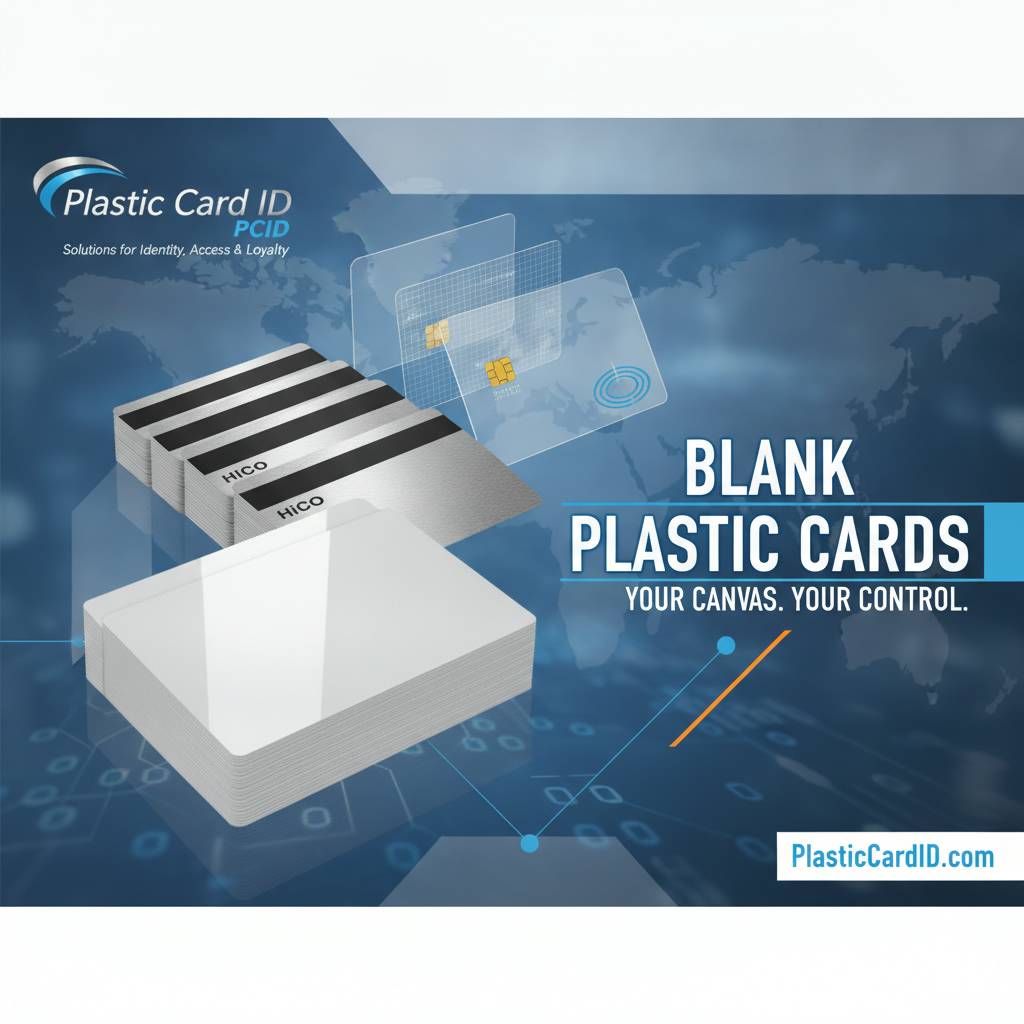 The answer to "who uses blank plastic cards" is, in practical terms, almost every category of organized business and institution in the United States. The applications are diverse enough that enumerating them quickly reveals how fundamental the blank plastic card has become to modern operational infrastructure. From small retail shops to large enterprise organizations, the card program is a standard tool of membership, access, identity, and loyalty management.
What varies across these use cases is the card type, the printing or encoding technology applied, and the volume of cards required. A community fitness center printing 50 membership cards per month has very different requirements than a regional casino issuing player cards to tens of thousands of visitors. Both programs, however, start with the same fundamental product: a blank plastic card built to specification and ready for transformation.
Employee ID and Access Control Applications
Employee identification is one of the most consistent and large-scale uses of blank plastic cards across industries. From hospitals and schools to corporate offices and manufacturing facilities, employee ID cards carry printed photos, names, titles, and - in many cases - encoded access credentials that determine which doors, systems, and resources each person can reach. The blank card becomes a security asset the moment it enters the printing and encoding process.
Access control card programs require careful card specification. The choice between proximity cards, smart chip cards, and magnetic stripe cards must align with the reader infrastructure in place. Organizations building new systems have flexibility; those expanding existing systems need cards that match their current reader technology precisely. CPE guides clients through these specifications to ensure every card works correctly from day one.
Loyalty, Gift, and Membership Card Programs
Retail loyalty programs, gift card programs, and membership organizations represent perhaps the highest-visibility category of blank plastic card use. These are the cards that end up in customer wallets, on keychains, and in desk drawers - cards that carry brand identity and drive repeat engagement with the businesses that issued them. A well-designed loyalty card program is a growth engine, and the blank plastic card is its raw material.
Gift card programs powered by plastic rather than paper dramatically outperform their paper counterparts in both sales volume and redemption behavior. Customers treat plastic gift cards more like currency and are more likely to carry them, spend them fully, and purchase additional amounts. Membership organizations that issue plastic cards see higher retention and stronger member identification with the organization. The card is not incidental - it is part of what makes the program work.
Event, Hotel, and Casino Applications
- Hotel key cards require HiCo magnetic stripe encoding compatible with property management systems and door lock controllers.
- Event credentials benefit from clear or specialty-format cards that visually distinguish access levels - staff, VIP, general admission - at a glance.
- Casino player cards often use RFID or smart chip technology to track play, manage comps, and authenticate identity across multiple property locations.
- Conference and trade show passes use barcode or QR-encoded plastic cards for entry scanning, session tracking, and attendee management.
- Temporary access cards for contractors, visitors, or event staff are often produced in small batches on demand using blank cards and in-house printers.
Each of these applications has specific card requirements that differ in meaningful ways. The hotel key card program needs bulk blank cards with reliably encoded HiCo stripes. The casino player program needs smart chip or RFID cards with appropriate security architecture. The event credential program needs visual differentiation and perhaps barcode compatibility. Getting the specification right for each use case is where experience matters - and CPE brings over 25 years of that experience to every client conversation.
Card Printers and Everything You Need to Print In-House
Blank plastic cards only fulfill their potential when paired with the right printing equipment and supplies. CPE carries a full lineup of card printers from three of the most respected manufacturers in the industry - Evolis, Zebra, and Fargo - covering every production volume and application type from desktop single-sided ID printing to high-throughput dual-sided production with encoding modules. The printer and the card are a system, and both components need to be right.
Selecting a card printer without considering the card stock it will run is a common and costly mistake. Different printers use different ribbon types, operate at different print resolutions, and are optimized for different card substrates. Buying blank cards and printers through the same experienced supplier ensures compatibility and eliminates the guesswork that leads to poor print quality, card jams, and premature printhead wear.
Ribbons, Cleaning Kits, and Maintenance Supplies
A card printer performs reliably only when it receives regular maintenance and is loaded with ribbons matched to both the printer model and the card substrate. CPE supplies full-color YMCKO ribbons, monochrome ribbons, resin ribbons for overlay and panel printing, and cleaning kits - everything required to keep production consistent and print quality high. Skimping on maintenance supplies is a false economy that leads to expensive printhead replacements and inconsistent card output.
Cleaning kits - typically including cleaning cards, swabs, and cleaning solutions formulated for specific printer models - should be used on a regular schedule tied to print volume. Most printer manufacturers specify cleaning intervals in the equipment documentation, and following those intervals is the single most effective way to extend printer life. CPE makes it easy to source the right cleaning supplies for every printer in its lineup.
Card Carriers, Sleeves, and Mailing Services
Once cards are printed and encoded, getting them to end users in professional, undamaged condition requires appropriate packaging. Card carriers - typically folded paper or card stock holders that present the finished card professionally - add a layer of presentation quality that matters for loyalty programs, membership organizations, and any program where the first impression of the card carries branding weight. Protective sleeves extend card life in wallets and badge holders.
For organizations that mail cards directly to members, employees, or customers, CPE offers card affixing and mailing services that handle the logistics of attaching cards to carriers, inserting them in envelopes, and delivering them ready for the mail stream. This turn-key fulfillment capability transforms a printing operation into a complete card program without requiring organizations to manage manual mailing processes in-house. Call 800.835.7919 to learn more about fulfillment options.
Frequently Asked Questions About Blank Plastic Cards
After more than 25 years in the industry, CPE has heard every question a buyer can ask about blank plastic cards. The questions below represent the ones that come up most consistently - and the answers that help organizations make confident, informed decisions before they commit to a card program or a card order.
How Many Cards Should I Order at Once?
Order quantity decisions depend on two variables: your consumption rate and your tolerance for design changes. If your card design is stable and your monthly usage is predictable, ordering in larger quantities reduces per-card cost meaningfully. If your program is new, your design is still evolving, or you are testing a loyalty concept before scaling, ordering a smaller initial quantity preserves flexibility. There is no single right answer - the right answer depends on your program's stage and stability.
CPE serves programs ranging from 50 cards per month to mass production in the tens of thousands, which means the ordering conversation is calibrated to your specific situation rather than a one-size-fits-all minimum. New programs often benefit from starting smaller, validating the card program's performance, and scaling volume as usage patterns become clear. Experienced card program operators typically find that bulk ordering delivers the best economics once design stability is established.
Can I Mix Card Types in a Single Program?
Yes - and many sophisticated programs do exactly this. A hotel might use standard white CR80 cards for employee IDs while running HiCo magnetic stripe cards for guest room keys and RFID proximity cards for staff access control. Each card type is sourced separately and printed or encoded through the appropriate equipment. Managing multiple card types in a single program is straightforward when your supplier can source all of them.
Organizations running multi-tier loyalty programs sometimes use different card formats to visually distinguish membership levels - standard white cards for entry-level members, black or gold-finish cards for premium tiers, and clear or metal cards for VIP status. This differentiation creates genuine perceived value at each tier and motivates upgrade behavior among program participants. The visual hierarchy of the card itself does real marketing work.
What Is the Difference Between In-House Printing and Custom Ordering?
In-house printing means purchasing blank cards and a card printer, then producing finished cards on demand within your own operation. Custom ordering means sending your design to a card manufacturer who produces pre-printed finished cards and ships them to you. Each approach has genuine advantages that depend on your program's characteristics.
- In-house printing offers maximum flexibility - cards can be personalized with individual names, photos, and unique barcodes, and reprints happen immediately without vendor lead times.
- Custom ordering delivers professional offset-quality print results and is cost-effective for large runs of identically designed cards with no variable data.
- Hybrid programs use custom-ordered cards for the background design and in-house printers for personalization overlay - combining print quality with operational flexibility.
- In-house programs require ongoing investment in ribbon and cleaning supply inventory; custom orders shift fulfillment responsibility to the supplier.
- Organizations with security requirements often prefer in-house production for access and ID credentials to maintain full data control throughout the card lifecycle.
Build a Better Card Program with Plastic Card ID
What separates a card program that quietly drives revenue and retention from one that disappoints and gets abandoned is rarely the idea behind the program - it is the execution. The right card type, specified correctly, produced reliably, and supported by quality equipment and supplies, is the difference between a program that works and one that frustrates everyone involved. That execution gap is exactly where Plastic Card ID delivers genuine value.
With over 25 years of experience, more than 100,000 customers served, and more than 50 million cards sold, CPE brings a depth of practical knowledge to card program conversations that goes well beyond catalog browsing. The goal is not simply to fulfill an order - it is to help every client build and run a card program that performs reliably, scales smoothly, and delivers measurable results over time. That is what a strategic partner does, and that is the role CPE fills for organizations across the United States.
A Partner at Every Stage of Your Program
Whether you are launching a new loyalty program, replacing an aging ID card system, scaling a gift card program that has outgrown its current setup, or simply restocking blank cards for an established operation, Plastic Card ID is positioned to support you at every stage. The catalog covers every card type, every printer brand, and every supply category your program might require. One supplier, one relationship, every card need covered.
New program operators benefit most from the consultative approach - working through card type selection, printer specifications, ribbon and supply requirements, and production volume planning before placing a first order. Experienced operators benefit from reliable supply continuity, competitive volume pricing, and a supplier that understands their existing setup and can recommend compatible products without compatibility risk. Plastic Card ID is built to serve both.
Ready to Get Started?
Your card program starts with a single decision: the right blank plastic card for your application. Every successful card program - from the small retail loyalty card to the enterprise-wide employee ID system - was launched by someone who made that first choice correctly and built from there. The knowledge and product range at Plastic Card ID make that first choice as straightforward as possible.
Contact the team at Plastic Card ID today. Reach out at 800.835.7919 to speak with a card program specialist who can walk through your requirements, recommend the right card types and equipment, and help you move from concept to fully operational program faster than you might expect. Plastic Card ID has been doing exactly this for over 25 years - and your program is the next success story.
Previous Page